 Français
 English
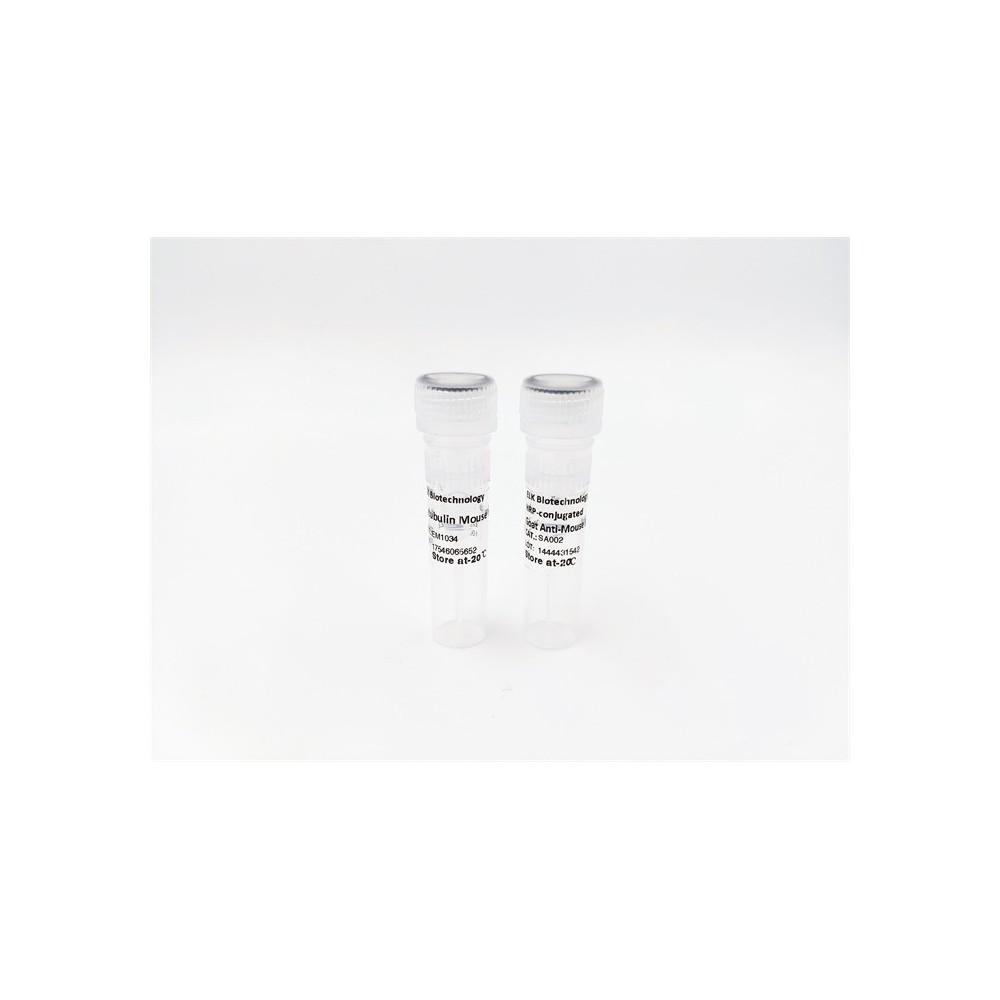

| ELK.No | ES2960 |
| Product name | NGFR p75 rabbit pAb |
| Reactivity | Human;Mouse;Rat |
| Applications | WB;IF;ELISA |
| Other name | NGFR; TNFRSF16; Tumor necrosis factor receptor superfamily member 16; Gp80-LNGFR; Low affinity neurotrophin receptor p75NTR; Low-affinity nerve growth factor receptor; NGF receptor; p75 ICD; CD antigen CD271 |
| Size | 50μL |
| Unit price ($) | 148 |
| Human gene ID | 4804 |
| Human Swiss-Prot | P08138 |
| Source | Rabbit |
| Isotype | IgG |
| Target | NGFR p75 |
| Fields | >>MAPK signaling pathway;>>Ras signaling pathway;>>Rap1 signaling pathway;>>Cytokine-cytokine receptor interaction;>>PI3K-Akt signaling pathway;>>Apoptosis - multiple species;>>Neurotrophin signaling pathway;>>Transcriptional misregulation in cancer |
| Gene name | NGFR |
| Protein name | Tumor necrosis factor receptor superfamily member 16 |
| Human gene link | View Human Gene |
| Human Swiss link | View Human Swiss-Prot |
| Mouse gene ID | |
| Mouse gene link | |
| Mouse Swiss-Prot | Q9Z0W1 |
| Mouse Swiss link | View Mouse Swiss-Prot |
| Rat gene ID | 24596 |
| Rat gene link | View Rat Gene |
| Rat Swiss-Prot | P07174 |
| Rat Swiss link | View Rat Swiss-Prot |
| Immunogen | The antiserum was produced against synthesized peptide derived from human TNR16. AA range:121-170 |
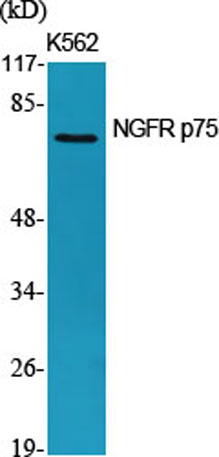
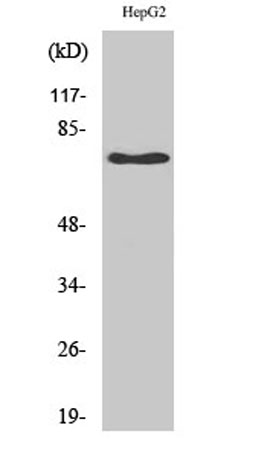
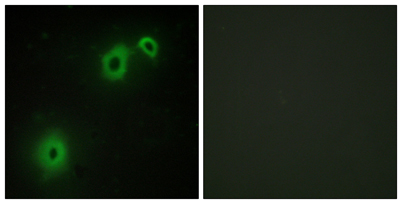
| Specificity | NGFR p75 Polyclonal Antibody detects endogenous levels of NGFR p75 protein. |
| Formulation | Liquid in PBS containing 50% glycerol, 0.5% BSA and 0.02% sodium azide. |
| Clonality | Polyclonal |
| Dilution | Western Blot: 1/500 - 1/2000. Immunofluorescence: 1/200 - 1/1000. ELISA: 1/40000. Not yet tested in other applications. |
| Purification | The antibody was affinity-purified from rabbit antiserum by affinity-chromatography using epitope-specific immunogen. |
| Concentration | 1 mg/ml |
| Storage stability | -20°C/1 year |
| Molecular Weight (Da) | |
| Observed band (KD) | 75kD |
| Background | Nerve growth factor receptor contains an extracellular domain containing four 40-amino acid repeats with 6 cysteine residues at conserved positions followed by a serine/threonine-rich region, a single transmembrane domain, and a 155-amino acid cytoplasmic domain. The cysteine-rich region contains the nerve growth factor binding domain. [provided by RefSeq, Jul 2008], |
| Function | domain:Death domain is responsible for interaction with RANBP9.,domain:The extracellular domain is responsible for interaction with NTRK1.,function:Low affinity receptor which can bind to NGF, BDNF, NT-3, and NT-4. Can mediate cell survival as well as cell death of neural cells.,PTM:N- and O-glycosylated.,PTM:O-linked glycans consist of Gal(1-3)GalNAc core elongated by 1 or 2 NeuNAc.,PTM:Phosphorylated on serine residues.,similarity:Contains 1 death domain.,similarity:Contains 4 TNFR-Cys repeats.,subunit:Homodimer; disulfide-linked. Interacts with p75NTR-associated cell death executor. Interacts with TRAF2, TRAF4, TRAF6, PTPN13 and RANBP9. Interacts through TRAF6 with SQSTM1 which bridges NGFR to NTRK1. Interacts with BEX1 and NGFRAP1/BEX3. Interacts with KIDINS220 and NTRK1. Can form a ternary complex with NTRK1 and KIDINS220 and this complex is affected by the expression levels of KIDI |
| Subcellular location | Cell membrane ; Single-pass type I membrane protein . Perikaryon . Cell projection, growth cone . Cell projection, dendritic spine . |
| Expression | Brain, |

Use collapsible tabs for more detailed information that will help customers make a purchasing decision.
Ex: Shipping and return policies, size guides, and other common questions.