 Français
 English
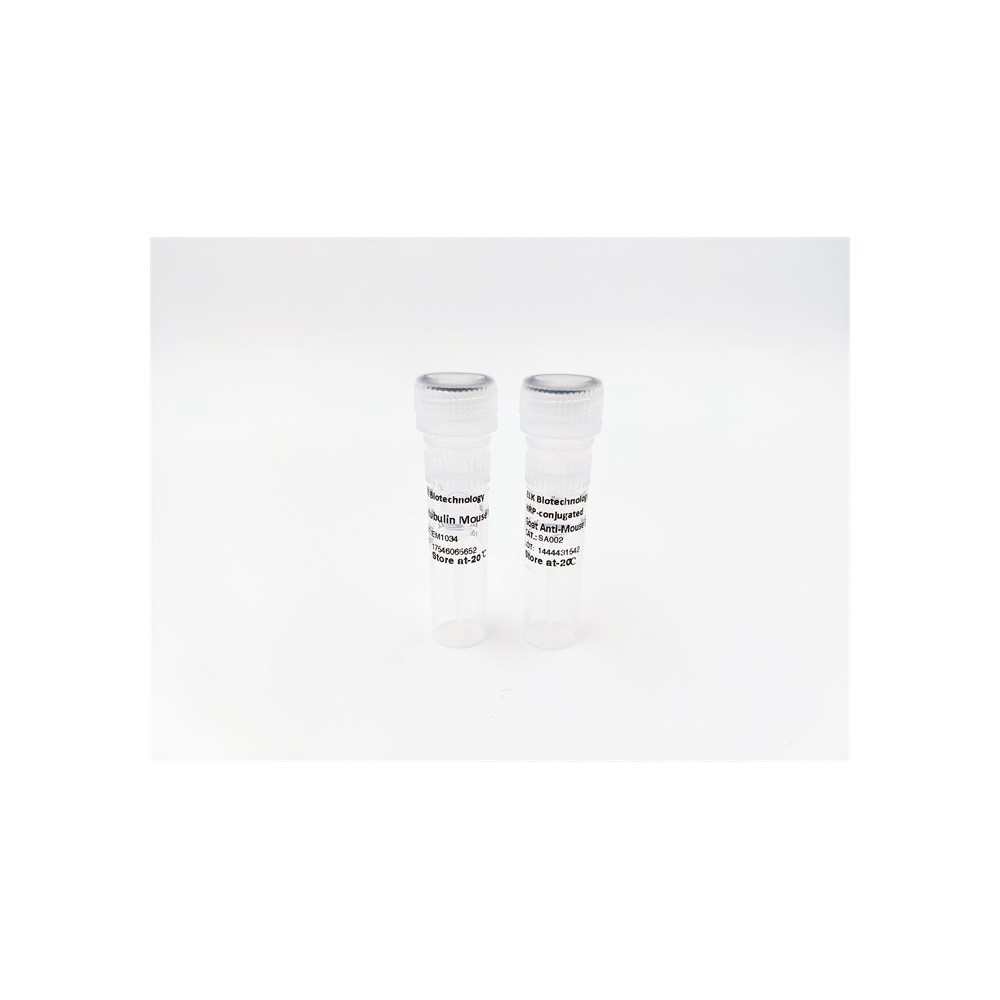

| ELK.No | ES3161 |
| Product name | Pdcd-4 rabbit pAb |
| Reactivity | Human;Mouse;Rat |
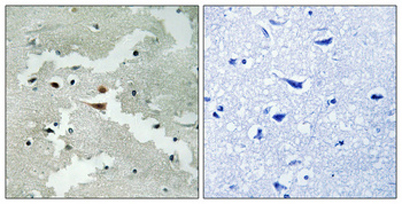
| Applications | WB;IHC;IF;ELISA |
| Other name | PDCD4; H731; Programmed cell death protein 4; Neoplastic transformation inhibitor protein; Nuclear antigen H731-like; Protein 197/15a |
| Size | 50μL |
| Unit price ($) | 148 |
| Human gene ID | 27250 |
| Human Swiss-Prot | Q53EL6 |
| Source | Rabbit |
| Isotype | IgG |
| Target | PDCD4 |
| Fields | >>Proteoglycans in cancer;>>MicroRNAs in cancer |
| Gene name | PDCD4 |
| Protein name | Programmed cell death protein 4 |
| Human gene link | View Human Gene |
| Human Swiss link | View Human Swiss-Prot |
| Mouse gene ID | 18569 |
| Mouse gene link | View Mouse Gene |
| Mouse Swiss-Prot | Q61823 |
| Mouse Swiss link | View Mouse Swiss-Prot |
| Rat gene ID | 64031 |
| Rat gene link | View Rat Gene |
| Rat Swiss-Prot | Q9JID1 |
| Rat Swiss link | View Rat Swiss-Prot |
| Immunogen | The antiserum was produced against synthesized peptide derived from human PDCD4. AA range:420-469 |
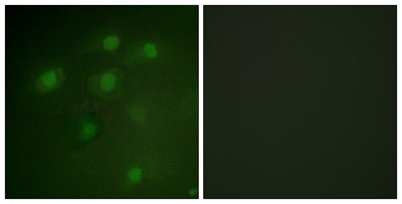
| Specificity | Pdcd-4 Polyclonal Antibody detects endogenous levels of Pdcd-4 protein. |
| Formulation | Liquid in PBS containing 50% glycerol, 0.5% BSA and 0.02% sodium azide. |
| Clonality | Polyclonal |
| Dilution | Western Blot: 1/500 - 1/2000. Immunohistochemistry: 1/100 - 1/300. Immunofluorescence: 1/200 - 1/1000. ELISA: 1/20000. Not yet tested in other applications. |
| Purification | The antibody was affinity-purified from rabbit antiserum by affinity-chromatography using epitope-specific immunogen. |
| Concentration | 1 mg/ml |
| Storage stability | -20°C/1 year |
| Molecular Weight (Da) | |
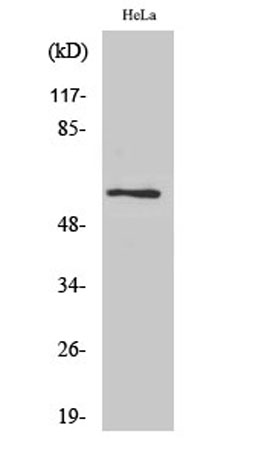
| Observed band (KD) | 51kD |
| Background | This gene is a tumor suppressor and encodes a protein that binds to the eukaryotic translation initiation factor 4A1 and inhibits its function by preventing RNA binding. Alternative splicing results in multiple transcript variants. [provided by RefSeq, Dec 2010], |
| Function | caution:The sequence shown here is derived from an Ensembl automatic analysis pipeline and should be considered as preliminary data.,disease:Loss of expression correlated with tumor progression of lung and colon carcinoma.,domain:Binds EIF4A1 via the MA3 domains.,function:Tumor suppressor. Inhibits tumor promoter-induced neoplastic transformation. Down-regulates the expression of MAP4K1, thus inhibiting events important in driving invasion, namely, MAPK85 activation and consequent JUN-dependent transcription. May play a role in apoptosis. Inhibits the helicase activity of EIF4A and cap-dependent translation. Binds RNA.,induction:IL2 stimulation inhibits expression, while IL12 increases expression.,sequence caution:Contaminating sequence. Potential poly-A sequence.,similarity:Belongs to the PDCD4 family.,similarity:Contains 2 MI domains.,subcellular location:Shuttles between the nucleus a |
| Subcellular location | Nucleus . Cytoplasm . Shuttles between the nucleus and cytoplasm (By similarity). Predominantly nuclear under normal growth conditions, and when phosphorylated at Ser-457 (PubMed:16357133). . |
| Expression | Up-regulated in proliferative cells. Highly expressed in epithelial cells of the mammary gland. Reduced expression in lung cancer and colon carcinoma. |

Use collapsible tabs for more detailed information that will help customers make a purchasing decision.
Ex: Shipping and return policies, size guides, and other common questions.