 Français
 English

| ELK.No | ES3402 |
| Product name | S-100 α rabbit pAb |
| Reactivity | Human;Mouse;Rat |
| Applications | WB;IHC;IF;ELISA |
| Other name | S100A1; S100A; Protein S100-A1; S-100 protein alpha chain; S-100 protein subunit alpha; S100 calcium-binding protein A1 |
| Size | 100μL |
| Unit price ($) | 248 |
| Human gene ID | 6271 |
| Human Swiss-Prot | P23297 |
| Source | Rabbit |
| Isotype | IgG |
| Target | S-100 α |
| Fields | |
| Gene name | S100A1 |
| Protein name | Protein S100-A1 |
| Human gene link | View Human Gene |
| Human Swiss link | View Human Swiss-Prot |
| Mouse gene ID | 20193 |
| Mouse gene link | View Mouse Gene |
| Mouse Swiss-Prot | P56565 |
| Mouse Swiss link | View Mouse Swiss-Prot |
| Rat gene ID | 295214 |
| Rat gene link | View Rat Gene |
| Rat Swiss-Prot | P35467 |
| Rat Swiss link | View Rat Swiss-Prot |
| Immunogen | The antiserum was produced against synthesized peptide derived from human S100 A1. AA range:10-59 |
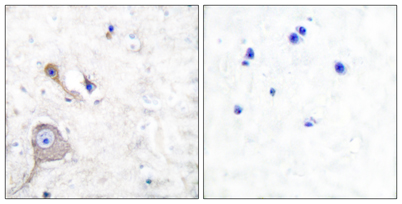
| Specificity | S-100 α Polyclonal Antibody detects endogenous levels of S-100 α protein. |
| Formulation | Liquid in PBS containing 50% glycerol, 0.5% BSA and 0.02% sodium azide. |
| Clonality | Polyclonal |
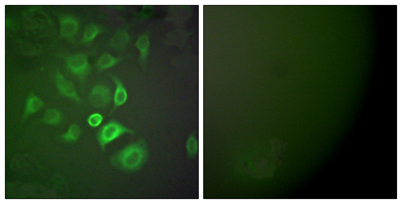
| Dilution | Western Blot: 1/500 - 1/2000. Immunohistochemistry: 1/100 - 1/300. Immunofluorescence: 1/200 - 1/1000. ELISA: 1/20000. Not yet tested in other applications. |
| Purification | The antibody was affinity-purified from rabbit antiserum by affinity-chromatography using epitope-specific immunogen. |
| Concentration | 1 mg/ml |
| Storage stability | -20°C/1 year |
| Molecular Weight (Da) | |
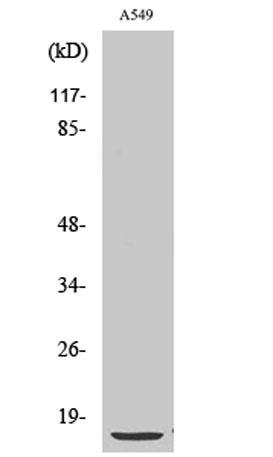
| Observed band (KD) | 10kD |
| Background | S100 calcium binding protein A1(S100A1) Homo sapiens The protein encoded by this gene is a member of the S100 family of proteins containing 2 EF-hand calcium-binding motifs. S100 proteins are localized in the cytoplasm and/or nucleus of a wide range of cells, and involved in the regulation of a number of cellular processes such as cell cycle progression and differentiation. S100 genes include at least 13 members which are located as a cluster on chromosome 1q21. This protein may function in stimulation of Ca2+-induced Ca2+ release, inhibition of microtubule assembly, and inhibition of protein kinase C-mediated phosphorylation. Reduced expression of this protein has been implicated in cardiomyopathies. [provided by RefSeq, Jul 2008], |
| Function | function:Weakly binds calcium but binds zinc very tightly-distinct binding sites with different affinities exist for both ions on each monomer. Physiological concentrations of potassium ion antagonize the binding of both divalent cations, especially affecting high-affinity calcium-binding sites.,similarity:Belongs to the S-100 family.,similarity:Contains 2 EF-hand domains.,subunit:Dimer of either two alpha chains, or two beta chains, or one alpha and one beta chain.,tissue specificity:Highly prevalent in heart. Also found in lesser quantities in skeletal muscle and brain., |
| Subcellular location | Cytoplasm . Sarcoplasmic reticulum . Mitochondrion . |
| Expression | Highly prevalent in heart (PubMed:12804600, PubMed:1384693). Also found in lesser quantities in skeletal muscle and brain (PubMed:1384693). |

Use collapsible tabs for more detailed information that will help customers make a purchasing decision.
Ex: Shipping and return policies, size guides, and other common questions.