 Français
 English

| ELK.No | ES3448 |
| Product name | Six3/6 rabbit pAb |
| Reactivity | Human;Mouse;Rat |
| Applications | WB;ELISA;IHC |
| Other name | SIX6; OPTX2; SIX9; Homeobox protein SIX6; Homeodomain protein OPTX2; Optic homeobox 2; Sine oculis homeobox homolog 6 |
| Size | 50μL |
| Unit price ($) | 148 |
| Human gene ID | 4990 |
| Human Swiss-Prot | O95475 |
| Source | Rabbit |
| Isotype | IgG |
| Target | Six3/6 |
| Fields | |
| Gene name | SIX6 |
| Protein name | Homeobox protein SIX6 |
| Human gene link | View Human Gene |
| Human Swiss link | View Human Swiss-Prot |
| Mouse gene ID | 20476 |
| Mouse gene link | View Mouse Gene |
| Mouse Swiss-Prot | Q9QZ28 |
| Mouse Swiss link | View Mouse Swiss-Prot |
| Rat gene ID | |
| Rat gene link | |
| Rat Swiss-Prot | |
| Rat Swiss link | |
| Immunogen | The antiserum was produced against synthesized peptide derived from human SIX6. AA range:121-170 |
| Specificity | Six3/6 Polyclonal Antibody detects endogenous levels of Six3/6 protein. |
| Formulation | Liquid in PBS containing 50% glycerol, 0.5% BSA and 0.02% sodium azide. |
| Clonality | Polyclonal |
| Dilution | WB 1:500-2000;IHC-p 1:50-300; ELISA 2000-20000 |
| Purification | The antibody was affinity-purified from rabbit antiserum by affinity-chromatography using epitope-specific immunogen. |
| Concentration | 1 mg/ml |
| Storage stability | -20°C/1 year |
| Molecular Weight (Da) | |
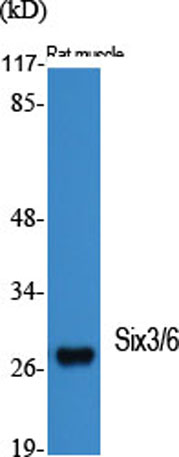
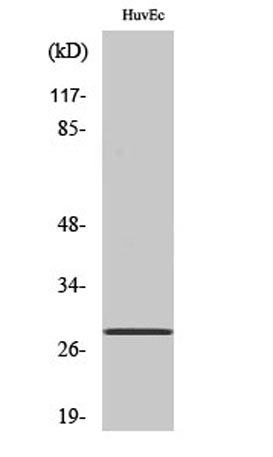
| Observed band (KD) | 28kD |
| Background | The protein encoded by this gene is a homeobox protein that is similar to the Drosophila 'sine oculis' gene product. This gene is found in a cluster of related genes on chromosome 14 and is thought to be involved in eye development. Defects in this gene are a cause of isolated microphthalmia with cataract type 2 (MCOPCT2). [provided by RefSeq, Jul 2008], |
| Function | disease:Defects in SIX6 are the cause of microphthalmia isolated with cataract type 2 (MCOPCT2) [MIM:212550]. Microphthalmia is a clinically heterogeneous disorder of eye formation, ranging from small size of a single eye to complete bilateral absence of ocular tissues. Ocular abnormalities like opacities of the cornea and lens, scaring of the retina and choroid, cataractand other abnormalities like cataract may also be present.,function:May be involved in eye development.,similarity:Belongs to the SIX/Sine oculis homeobox family.,similarity:Contains 1 homeobox DNA-binding domain.,tissue specificity:Expressed in the developing and adult retina. Also expressed in the hypothalamic and the pituitary regions., |
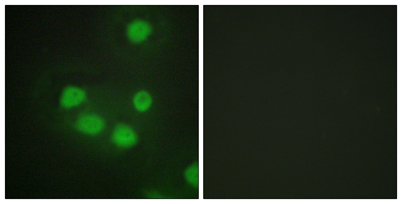
| Subcellular location | Nucleus . |
| Expression | Expressed in the developing and adult retina. Also expressed in the hypothalamic and the pituitary regions. |

Use collapsible tabs for more detailed information that will help customers make a purchasing decision.
Ex: Shipping and return policies, size guides, and other common questions.