 Français
 English
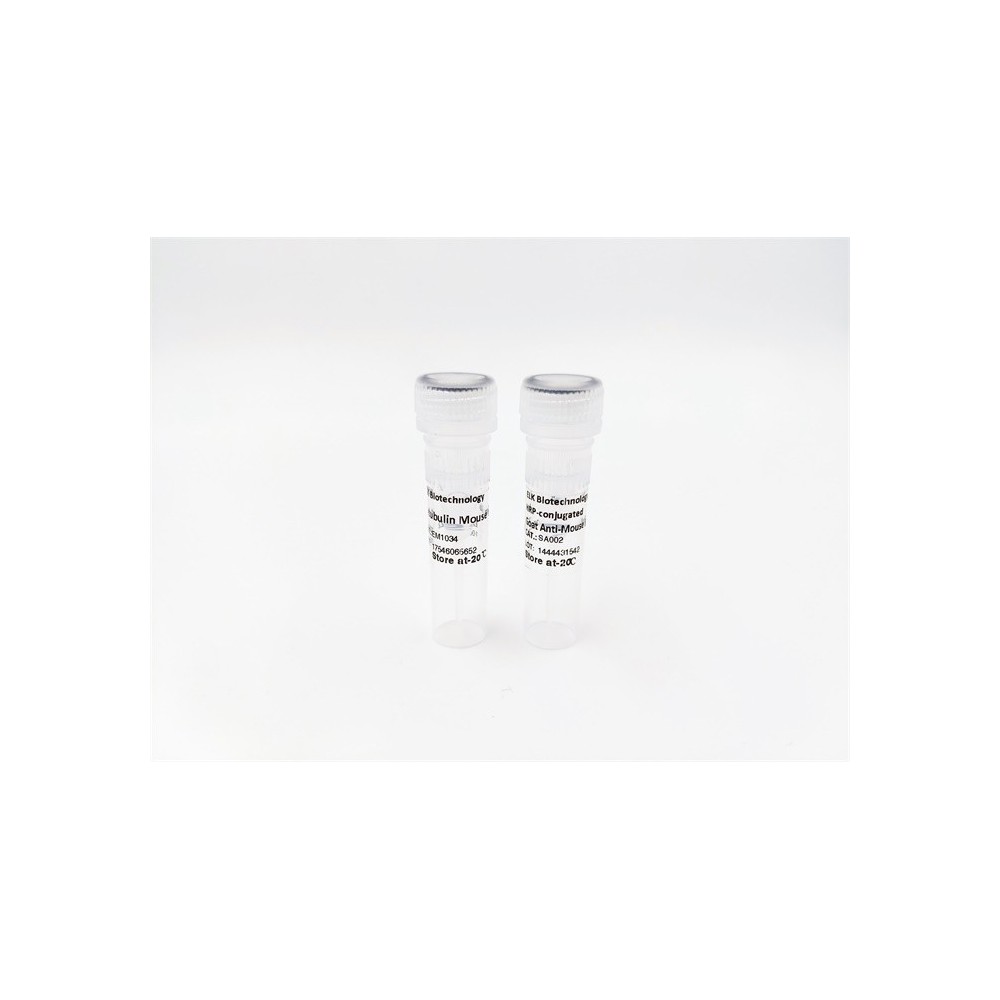

| ELK.No | ES3526 |
| Product name | SUMO-1 rabbit pAb |
| Reactivity | Human;Mouse;Rat |
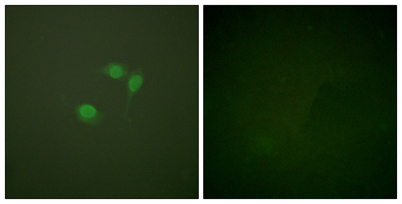
| Applications | WB;IHC;IF;ELISA |
| Other name | SUMO1; SMT3C; SMT3H3; UBL1; OK/SW-cl.43; Small ubiquitin-related modifier 1; SUMO-1; GAP-modifying protein 1; GMP1; SMT3 homolog 3; Sentrin; Ubiquitin-homology domain protein PIC1; Ubiquitin-like protein SMT3C; Smt3C; Ubiquitin-like protein |
| Size | 50μL |
| Unit price ($) | 148 |
| Human gene ID | 7341 |
| Human Swiss-Prot | P63165 |
| Source | Rabbit |
| Isotype | IgG |
| Target | SUMO-1 |
| Fields | >>Nucleocytoplasmic transport;>>Fluid shear stress and atherosclerosis |
| Gene name | SUMO1 |
| Protein name | Small ubiquitin-related modifier 1 |
| Human gene link | View Human Gene |
| Human Swiss link | View Human Swiss-Prot |
| Mouse gene ID | 22218 |
| Mouse gene link | View Mouse Gene |
| Mouse Swiss-Prot | P63166 |
| Mouse Swiss link | View Mouse Swiss-Prot |
| Rat gene ID | 301442 |
| Rat gene link | View Rat Gene |
| Rat Swiss-Prot | Q5I0H3 |
| Rat Swiss link | View Rat Swiss-Prot |
| Immunogen | The antiserum was produced against synthesized peptide derived from human Sumo1. AA range:1-50 |
| Specificity | SUMO-1 Polyclonal Antibody detects endogenous levels of SUMO-1 protein. |
| Formulation | Liquid in PBS containing 50% glycerol, 0.5% BSA and 0.02% sodium azide. |
| Clonality | Polyclonal |
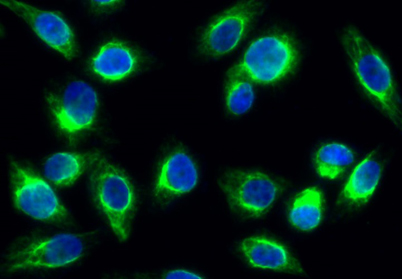
| Dilution | Western Blot: 1/500 - 1/2000. Immunohistochemistry: 1/100 - 1/300. Immunofluorescence: 1/200 - 1/1000. ELISA: 1/20000. Not yet tested in other applications. |
| Purification | The antibody was affinity-purified from rabbit antiserum by affinity-chromatography using epitope-specific immunogen. |
| Concentration | 1 mg/ml |
| Storage stability | -20°C/1 year |
| Molecular Weight (Da) | |
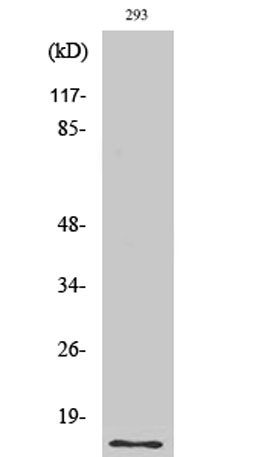
| Observed band (KD) | 12kD |
| Background | This gene encodes a protein that is a member of the SUMO (small ubiquitin-like modifier) protein family. It functions in a manner similar to ubiquitin in that it is bound to target proteins as part of a post-translational modification system. However, unlike ubiquitin which targets proteins for degradation, this protein is involved in a variety of cellular processes, such as nuclear transport, transcriptional regulation, apoptosis, and protein stability. It is not active until the last four amino acids of the carboxy-terminus have been cleaved off. Several pseudogenes have been reported for this gene. Alternate transcriptional splice variants encoding different isoforms have been characterized. [provided by RefSeq, Jul 2008], |
| Function | caution:The sequence shown here is derived from an Ensembl automatic analysis pipeline and should be considered as preliminary data.,function:Ubiquitin-like protein which can be covalently attached to target lysines as a monomer. Does not seem to be involved in protein degradation and may function as an antagonist of ubiquitin in the degradation process. Plays a role in a number of cellular processes such as nuclear transport, DNA replication and repair, mitosis and signal transduction. Involved in targeting RANGAP1 to the nuclear pore complex protein RANBP2. Covalent attachment to its substrates requires prior activation by the E1 complex SAE1-SAE2 and linkage to the E2 enzyme UBE2I, and can be promoted by an E3 ligase such as PIAS1-4, RANBP2 or CBX4.,online information:SUMO protein entry,PTM:Cleavage of precursor form by SENP1 or SENP2 is necessary for function.,similarity:Belongs to t |
| Subcellular location | Nucleus membrane . Nucleus speckle . Cytoplasm . Nucleus, PML body . Cell membrane . Nucleus . Recruited by BCL11A into the nuclear body (By similarity). In the presence of ZFHX3, sequesterd to nuclear body (NB)-like dots in the nucleus some of which overlap or closely associate with PML body (PubMed:24651376). . |
| Expression | Brain,Colon adenocarcinoma,Epithelium,Placenta, |

Use collapsible tabs for more detailed information that will help customers make a purchasing decision.
Ex: Shipping and return policies, size guides, and other common questions.