 Français
 English
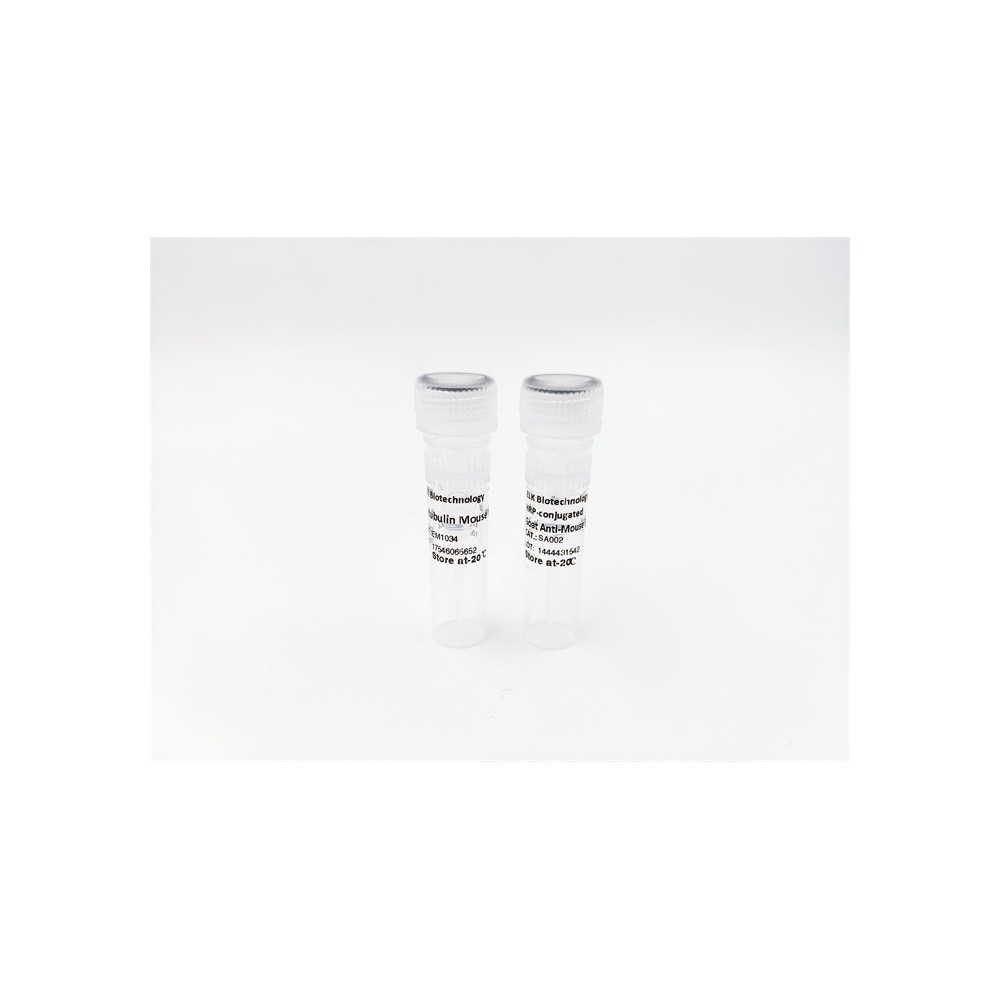

| ELK.No | ES3565 |
| Product name | TBX1 rabbit pAb |
| Reactivity | Human;Rat;Mouse; |
| Applications | WB;IHC;IF;ELISA |
| Other name | TBX1; T-box transcription factor TBX1; T-box protein 1; Testis-specific T-box protein |
| Size | 50μL |
| Unit price ($) | 148 |
| Human gene ID | 6899 |
| Human Swiss-Prot | O43435 |
| Source | Rabbit |
| Isotype | IgG |
| Target | TBX1 |
| Fields | |
| Gene name | TBX1 |
| Protein name | T-box transcription factor TBX1 |
| Human gene link | View Human Gene |
| Human Swiss link | View Human Swiss-Prot |
| Mouse gene ID | |
| Mouse gene link | |
| Mouse Swiss-Prot | P70323 |
| Mouse Swiss link | View Mouse Swiss-Prot |
| Rat gene ID | |
| Rat gene link | |
| Rat Swiss-Prot | |
| Rat Swiss link | |
| Immunogen | The antiserum was produced against synthesized peptide derived from human TBX1. AA range:311-360 |
| Specificity | TBX1 Polyclonal Antibody detects endogenous levels of TBX1 protein. |
| Formulation | Liquid in PBS containing 50% glycerol, 0.5% BSA and 0.02% sodium azide. |
| Clonality | Polyclonal |
| Dilution | Western Blot: 1/500 - 1/2000. Immunohistochemistry: 1/100 - 1/300. Immunofluorescence: 1/200 - 1/1000. ELISA: 1/20000. Not yet tested in other applications. |
| Purification | The antibody was affinity-purified from rabbit antiserum by affinity-chromatography using epitope-specific immunogen. |
| Concentration | 1 mg/ml |
| Storage stability | -20°C/1 year |
| Molecular Weight (Da) | |
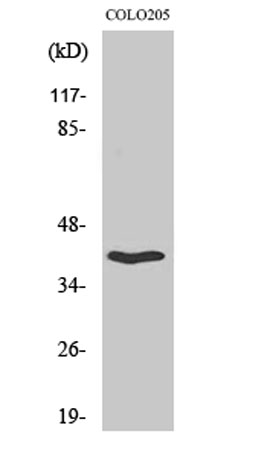
| Observed band (KD) | 43kD |
| Background | This gene is a member of a phylogenetically conserved family of genes that share a common DNA-binding domain, the T-box. T-box genes encode transcription factors involved in the regulation of developmental processes. This gene product shares 98% amino acid sequence identity with the mouse ortholog. DiGeorge syndrome (DGS)/velocardiofacial syndrome (VCFS), a common congenital disorder characterized by neural-crest-related developmental defects, has been associated with deletions of chromosome 22q11.2, where this gene has been mapped. Studies using mouse models of DiGeorge syndrome suggest a major role for this gene in the molecular etiology of DGS/VCFS. Several alternatively spliced transcript variants encoding different isoforms have been described for this gene. [provided by RefSeq, Jul 2008], |
| Function | disease:Defects in TBX1 are a cause of conotruncal heart malformations (CTHM) [MIM:217095]. CTHM consist of cardiac outflow tract defects, such as tetralogy of Fallot, pulmonary atresia, double-outlet right ventricle, truncus arteriosus communis, and aortic arch anomalies.,disease:Defects in TBX1 are a cause of DiGeorge syndrome (DGS) [MIM:188400].,disease:Defects in TBX1 are a cause of velocardiofacial syndrome (VCFS) [MIM:192430].,disease:Haploinsufficiency of the TBX1 gene is responsible for most of the physical malformations present in DiGeorge syndrome (DGS) and velocardiofacial syndrome (VCFS) [MIM:188400, 192430]. DGS is characterized by the association of several malformations: hypoplastic thymus and parathyroid glands, congenital conotruncal cardiopathy, and a subtle but characteristic facial dysmorphology. VCFS is marked by the association of congenital conotruncal heart defect |
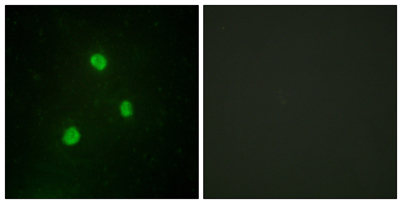
| Subcellular location | Nucleus . |
| Expression | Skeletal muscle,Testis, |

Use collapsible tabs for more detailed information that will help customers make a purchasing decision.
Ex: Shipping and return policies, size guides, and other common questions.