 Français
 English
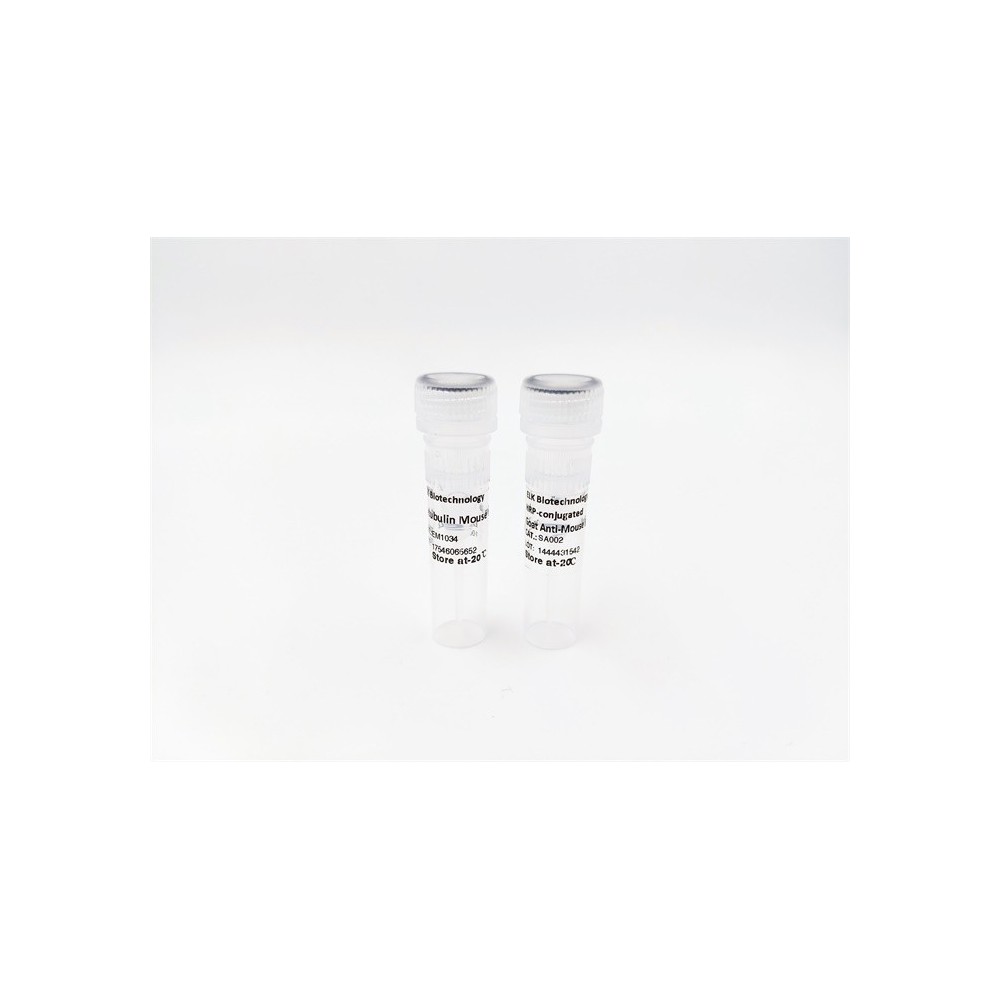

| ELK.No | ES3659 |
| Product name | TYR rabbit pAb |
| Reactivity | Human;Monkey |
| Applications | WB;ELISA |
| Other name | TYR; Tyrosinase; LB24-AB; Monophenol monooxygenase; SK29-AB; Tumor rejection antigen AB |
| Size | 100μL |
| Unit price ($) | 248 |
| Human gene ID | 7299 |
| Human Swiss-Prot | P14679 |
| Source | Rabbit |
| Isotype | IgG |
| Target | Tyrosinase |
| Fields | >>Tyrosine metabolism;>>Metabolic pathways;>>Melanogenesis |
| Gene name | TYR |
| Protein name | Tyrosinase |
| Human gene link | View Human Gene |
| Human Swiss link | View Human Swiss-Prot |
| Mouse gene ID | |
| Mouse gene link | |
| Mouse Swiss-Prot | P11344 |
| Mouse Swiss link | View Mouse Swiss-Prot |
| Rat gene ID | |
| Rat gene link | |
| Rat Swiss-Prot | |
| Rat Swiss link | |
| Immunogen | The antiserum was produced against synthesized peptide derived from human Tyrosinase. AA range:471-520 |
| Specificity | TYR Polyclonal Antibody detects endogenous levels of TYR protein. |
| Formulation | Liquid in PBS containing 50% glycerol, 0.5% BSA and 0.02% sodium azide. |
| Clonality | Polyclonal |
| Dilution | Western Blot: 1/500 - 1/2000. ELISA: 1/10000. Not yet tested in other applications. |
| Purification | The antibody was affinity-purified from rabbit antiserum by affinity-chromatography using epitope-specific immunogen. |
| Concentration | 1 mg/ml |
| Storage stability | -20°C/1 year |
| Molecular Weight (Da) | |
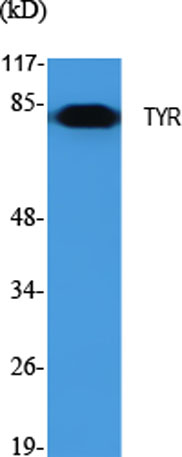
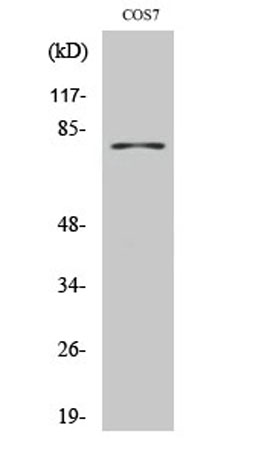
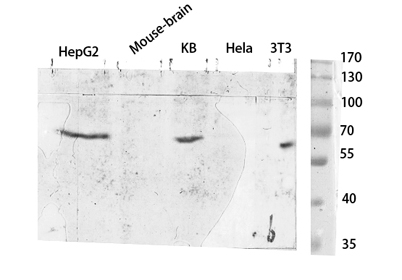
| Observed band (KD) | 80kD |
| Background | tyrosinase(TYR) Homo sapiens The enzyme encoded by this gene catalyzes the first 2 steps, and at least 1 subsequent step, in the conversion of tyrosine to melanin. The enzyme has both tyrosine hydroxylase and dopa oxidase catalytic activities, and requires copper for function. Mutations in this gene result in oculocutaneous albinism, and nonpathologic polymorphisms result in skin pigmentation variation. The human genome contains a pseudogene similar to the 3' half of this gene. [provided by RefSeq, Oct 2008], |
| Function | catalytic activity:L-tyrosine + L-dopa + O(2) = L-dopa + dopaquinone + H(2)O.,cofactor:Binds 2 copper ions per subunit.,disease:Defects in TYR are the cause of oculocutaneous albinism type I temperature-sensitive (OCA-ITS) [MIM:606952]. OCA-ITS patients have white axillary and scalp hair and pigmented arm and leg hair.,disease:Defects in TYR are the cause of oculocutaneous albinism type IA (OCA-IA) [MIM:203100]. OCA-I, also known as tyrosinase negative oculocutaneous albinism, is an autosomal recessive disorder characterized by absence of pigment in hair, skin and eyes. OCA-I is divided into 2 types: type IA, characterized by complete lack of tyrosinase activity due to production of an inactive enzyme, and type IB characterized by reduced activity of tyrosinase. OCA-IA patients presents with the life-long absence of melanin pigment after birth and manifest increased sensitivity to ultrav |
| Subcellular location | Melanosome membrane ; Single-pass type I membrane protein . Melanosome . Proper trafficking to melanosome is regulated by SGSM2, ANKRD27, RAB9A, RAB32 and RAB38. . |
| Expression | Liver,Melanoma,Skin,T-cell, |

Use collapsible tabs for more detailed information that will help customers make a purchasing decision.
Ex: Shipping and return policies, size guides, and other common questions.