 Français
 English
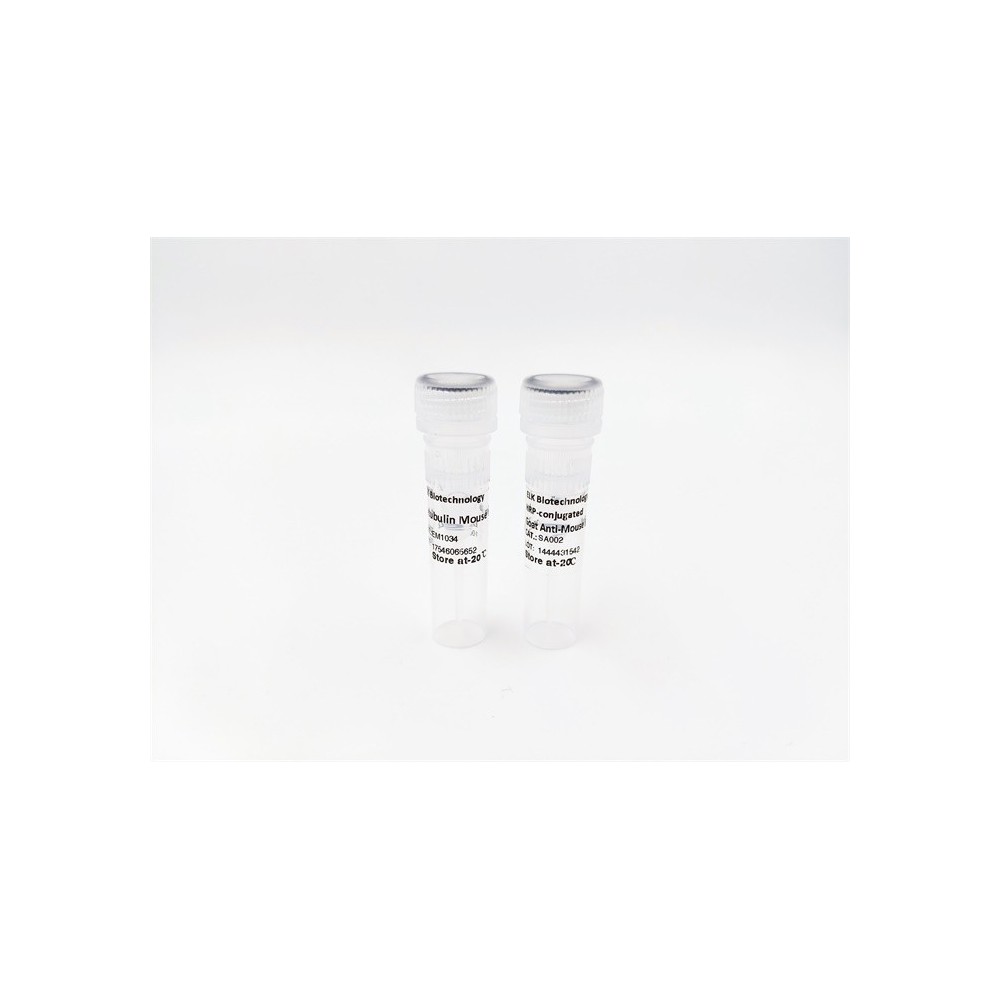

| ELK.No | ES3796 |
| Product name | UHRF1 rabbit pAb |
| Reactivity | Human;Rat;Mouse; |
| Applications | WB;ELISA |
| Other name | UHRF1; ICBP90; NP95; RNF106; E3 ubiquitin-protein ligase UHRF1; Inverted CCAAT box-binding protein of 90 kDa; Nuclear protein 95; Nuclear zinc finger protein Np95; HuNp95; hNp95; RING finger protein 106;Transcription factor ICBP90; Ubiquitin-like PHD and RING finger domain-containing protein 1; hUHRF1; Ubiquitin-like-containing PHD and RING finger domains protein 1 |
| Size | 50μL |
| Unit price ($) | 148 |
| Human gene ID | 29128 |
| Human Swiss-Prot | Q96T88 |
| Source | Rabbit |
| Isotype | IgG |
| Target | UHRF1 |
| Fields | |
| Gene name | UHRF1 |
| Protein name | E3 ubiquitin-protein ligase UHRF1 |
| Human gene link | View Human Gene |
| Human Swiss link | View Human Swiss-Prot |
| Mouse gene ID | |
| Mouse gene link | |
| Mouse Swiss-Prot | Q8VDF2 |
| Mouse Swiss link | View Mouse Swiss-Prot |
| Rat gene ID | |
| Rat gene link | |
| Rat Swiss-Prot | |
| Rat Swiss link | |
| Immunogen | Synthesized peptide derived from the Internal region of human UHRF1. |
| Specificity | UHRF1 Polyclonal Antibody detects endogenous levels of UHRF1 protein. |
| Formulation | Liquid in PBS containing 50% glycerol, 0.5% BSA and 0.02% sodium azide. |
| Clonality | Polyclonal |
| Dilution | Western Blot: 1/500 - 1/2000. ELISA: 1/40000. Not yet tested in other applications. |
| Purification | The antibody was affinity-purified from rabbit antiserum by affinity-chromatography using epitope-specific immunogen. |
| Concentration | 1 mg/ml |
| Storage stability | -20°C/1 year |
| Molecular Weight (Da) | |
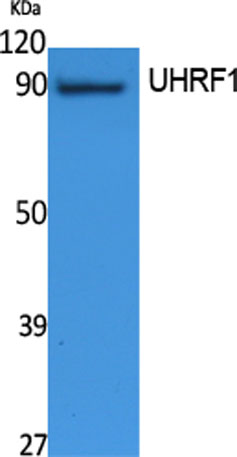
| Observed band (KD) | 89kD |
| Background | This gene encodes a member of a subfamily of RING-finger type E3 ubiquitin ligases. The protein binds to specific DNA sequences, and recruits a histone deacetylase to regulate gene expression. Its expression peaks at late G1 phase and continues during G2 and M phases of the cell cycle. It plays a major role in the G1/S transition by regulating topoisomerase IIalpha and retinoblastoma gene expression, and functions in the p53-dependent DNA damage checkpoint. It is regarded as a hub protein for the integration of epigenetic information. This gene is up-regulated in various cancers, and it is therefore considered to be a therapeutic target. Multiple transcript variants encoding different isoforms have been found for this gene. A related pseudogene exists on chromosome 12. [provided by RefSeq, Feb 2014], |
| Function | developmental stage:Expressed in fetal thymus, liver and kidney.,domain:The RING finger is required for ubiquitin ligase activity.,domain:The YDG domain mediates the interaction with histone H3.,function:Putative E3 ubiquitin-protein ligase. May participate in methylation-dependent transcriptional regulation. Binds to inverted 5'-CCAAT-3' box 2 in the TOP2A promoter, and activates TOP2A expression. Important for G1/S transition. May be involved in DNA repair and chromosomal stability.,induction:Up-regulated in proliferating cells, and down-regulated in quiescent cells. Down-regulated upon adriamycin-induced DNA damage, in a TP53/p53 and CDKN1A-dependent way. Induced by E2F1 transcription factor.,pathway:Protein modification; protein ubiquitination.,PTM:Phosphorylated on serine residues. Phosphorylation may enhance DNA-binding activity.,PTM:Ubiquitinated; which leads to proteasomal degrad |
| Subcellular location | Nucleus . Localizes to replication foci. Enriched in pericentric heterochromatin. Also localizes to euchromatic regions. |
| Expression | Expressed in thymus, bone marrow, testis, lung and heart. Overexpressed in breast cancer. |

Use collapsible tabs for more detailed information that will help customers make a purchasing decision.
Ex: Shipping and return policies, size guides, and other common questions.