 Français
 English
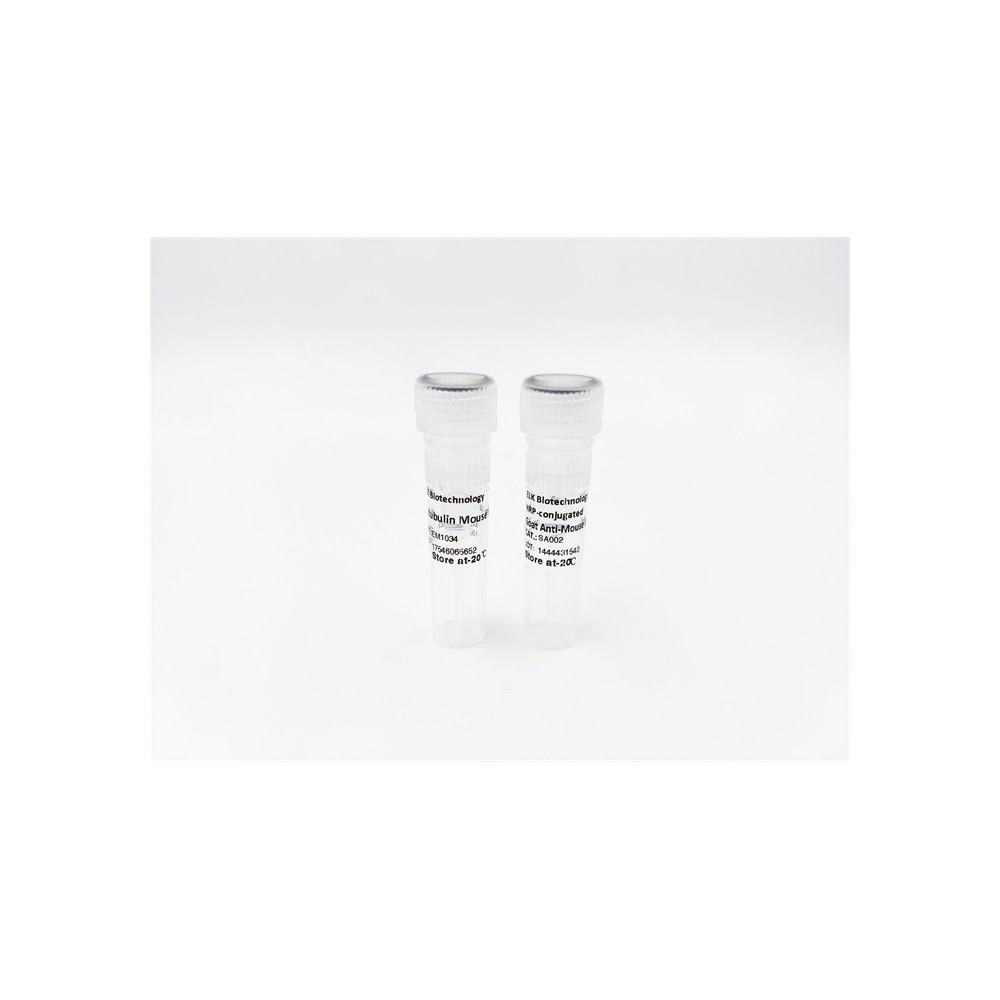

| ELK.No | ES3816 |
| Product name | NPRL2 rabbit pAb |
| Reactivity | Human;Mouse;Rat |
| Applications | WB;ELISA |
| Other name | NPRL2; TUSC4; Nitrogen permease regulator 2-like protein; NPR2-like protein; Gene 21 protein; G21 protein; Tumor suppressor candidate 4 |
| Size | 100μL |
| Unit price ($) | 248 |
| Human gene ID | 10641 |
| Human Swiss-Prot | Q8WTW4 |
| Source | Rabbit |
| Isotype | IgG |
| Target | NPRL2 |
| Fields | >>mTOR signaling pathway |
| Gene name | NPRL2 |
| Protein name | Nitrogen permease regulator 2-like protein |
| Human gene link | View Human Gene |
| Human Swiss link | View Human Swiss-Prot |
| Mouse gene ID | 56032 |
| Mouse gene link | View Mouse Gene |
| Mouse Swiss-Prot | Q9WUE4 |
| Mouse Swiss link | View Mouse Swiss-Prot |
| Rat gene ID | |
| Rat gene link | |
| Rat Swiss-Prot | |
| Rat Swiss link | |
| Immunogen | Synthesized peptide derived from the C-terminal region of human NPRL2. |
| Specificity | NPRL2 Polyclonal Antibody detects endogenous levels of NPRL2 protein. |
| Formulation | Liquid in PBS containing 50% glycerol, 0.5% BSA and 0.02% sodium azide. |
| Clonality | Polyclonal |
| Dilution | Western Blot: 1/500 - 1/2000. ELISA: 1/20000. Not yet tested in other applications. |
| Purification | The antibody was affinity-purified from rabbit antiserum by affinity-chromatography using epitope-specific immunogen. |
| Concentration | 1 mg/ml |
| Storage stability | -20°C/1 year |
| Molecular Weight (Da) | |
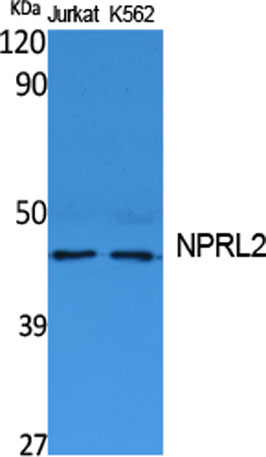
| Observed band (KD) | 43kD |
| Background | function:Suppresses Src-dependent tyrosine phosphorylation and activation of PDPK1 and its downstream signaling. Down-regulates PDPK1 kinase activity by interfering with tyrosine phosphorylation at the Tyr-9 Tyr-373 and Tyr-376 residues. May act as a tumor suppressor. Suppresses cell growth and enhanced sensitivity to various anticancer drugs.,similarity:Belongs to the NPR2 family.,subunit:Interacts with PDPK1.,tissue specificity:Most abundant in skeletal muscle, followed by brain, liver and pancreas, with lower amounts in lung, kidney, placenta and heart. Expressed in most lung cancer cell lines tested., |
| Function | function:Suppresses Src-dependent tyrosine phosphorylation and activation of PDPK1 and its downstream signaling. Down-regulates PDPK1 kinase activity by interfering with tyrosine phosphorylation at the Tyr-9 Tyr-373 and Tyr-376 residues. May act as a tumor suppressor. Suppresses cell growth and enhanced sensitivity to various anticancer drugs.,similarity:Belongs to the NPR2 family.,subunit:Interacts with PDPK1.,tissue specificity:Most abundant in skeletal muscle, followed by brain, liver and pancreas, with lower amounts in lung, kidney, placenta and heart. Expressed in most lung cancer cell lines tested., |
| Subcellular location | Lysosome membrane . Localization to lysosomes is amino acid-independent. . |
| Expression | Most abundant in skeletal muscle, followed by brain, liver and pancreas, with lower amounts in lung, kidney, placenta and heart. Expressed in the frontal lobe cortex as well as in the temporal, parietal, and occipital lobes (PubMed:27173016, PubMed:26505888). Expressed in most lung cancer cell lines tested. |

Use collapsible tabs for more detailed information that will help customers make a purchasing decision.
Ex: Shipping and return policies, size guides, and other common questions.