 Français
 English
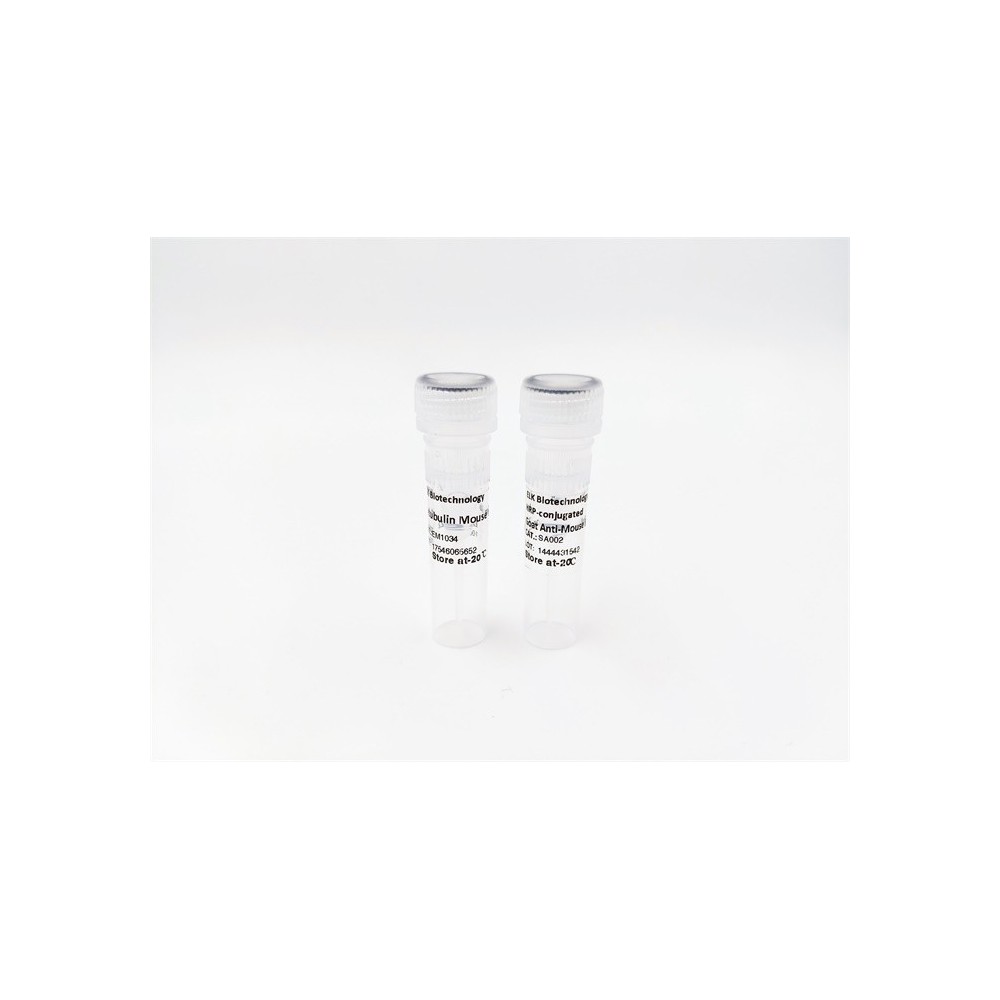

| ELK.No | ES3833 |
| Product name | NCX1 rabbit pAb |
| Reactivity | Human;Mouse;Rat |
| Applications | WB;ELISA |
| Other name | SLC8A1; CNC; NCX1; Sodium/calcium exchanger 1; Na(+)/Ca(2+)-exchange protein 1 |
| Size | 100μL |
| Unit price ($) | 248 |
| Human gene ID | 6546 |
| Human Swiss-Prot | P32418 |
| Source | Rabbit |
| Isotype | IgG |
| Target | NCX1 |
| Fields | >>Calcium signaling pathway;>>cGMP-PKG signaling pathway;>>Cardiac muscle contraction;>>Adrenergic signaling in cardiomyocytes;>>Apelin signaling pathway;>>Olfactory transduction;>>Endocrine and other factor-regulated calcium reabsorption;>>Protein digestion and absorption;>>Mineral absorption;>>Hypertrophic cardiomyopathy;>>Arrhythmogenic right ventricular cardiomyopathy;>>Dilated cardiomyopathy |
| Gene name | SLC8A1 |
| Protein name | Sodium/calcium exchanger 1 |
| Human gene link | View Human Gene |
| Human Swiss link | View Human Swiss-Prot |
| Mouse gene ID | 20541 |
| Mouse gene link | View Mouse Gene |
| Mouse Swiss-Prot | P70414 |
| Mouse Swiss link | View Mouse Swiss-Prot |
| Rat gene ID | 29715 |
| Rat gene link | View Rat Gene |
| Rat Swiss-Prot | Q01728 |
| Rat Swiss link | View Rat Swiss-Prot |
| Immunogen | Synthesized peptide derived from NCX1 . at AA range: 270-350 |
| Specificity | NCX1 Polyclonal Antibody detects endogenous levels of NCX1 protein. |
| Formulation | Liquid in PBS containing 50% glycerol, 0.5% BSA and 0.02% sodium azide. |
| Clonality | Polyclonal |
| Dilution | Western Blot: 1/500 - 1/2000. ELISA: 1/5000. Not yet tested in other applications. |
| Purification | The antibody was affinity-purified from rabbit antiserum by affinity-chromatography using epitope-specific immunogen. |
| Concentration | 1 mg/ml |
| Storage stability | -20°C/1 year |
| Molecular Weight (Da) | |
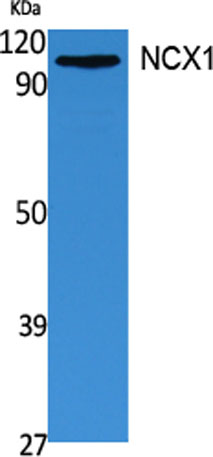
| Observed band (KD) | 108kD |
| Background | In cardiac myocytes, Ca(2+) concentrations alternate between high levels during contraction and low levels during relaxation. The increase in Ca(2+) concentration during contraction is primarily due to release of Ca(2+) from intracellular stores. However, some Ca(2+) also enters the cell through the sarcolemma (plasma membrane). During relaxation, Ca(2+) is sequestered within the intracellular stores. To prevent overloading of intracellular stores, the Ca(2+) that entered across the sarcolemma must be extruded from the cell. The Na(+)-Ca(2+) exchanger is the primary mechanism by which the Ca(2+) is extruded from the cell during relaxation. In the heart, the exchanger may play a key role in digitalis action. The exchanger is the dominant mechanism in returning the cardiac myocyte to its resting state following excitation.[supplied by OMIM, Apr 2004], |
| Function | alternative products:Additional isoforms seem to exist,enzyme regulation:By ATP.,function:Rapidly transports Ca(2+) during excitation-contraction coupling. Ca(2+) is extruded from the cell during relaxation so as to prevent overloading of intracellular stores.,similarity:Belongs to the sodium/potassium/calcium exchanger family. SLC8 subfamily.,similarity:Contains 2 Calx-beta domains.,tissue specificity:Cardiac sarcolemma., |
| Subcellular location | Cell membrane ; Multi-pass membrane protein . |
| Expression | Detected primarily in heart and at lower levels in brain (PubMed:1374913). Expressed in cardiac sarcolemma, brain, kidney, liver, pancreas, skeletal muscle, placenta and lung (PubMed:1476165). |

Use collapsible tabs for more detailed information that will help customers make a purchasing decision.
Ex: Shipping and return policies, size guides, and other common questions.