 Français
 English
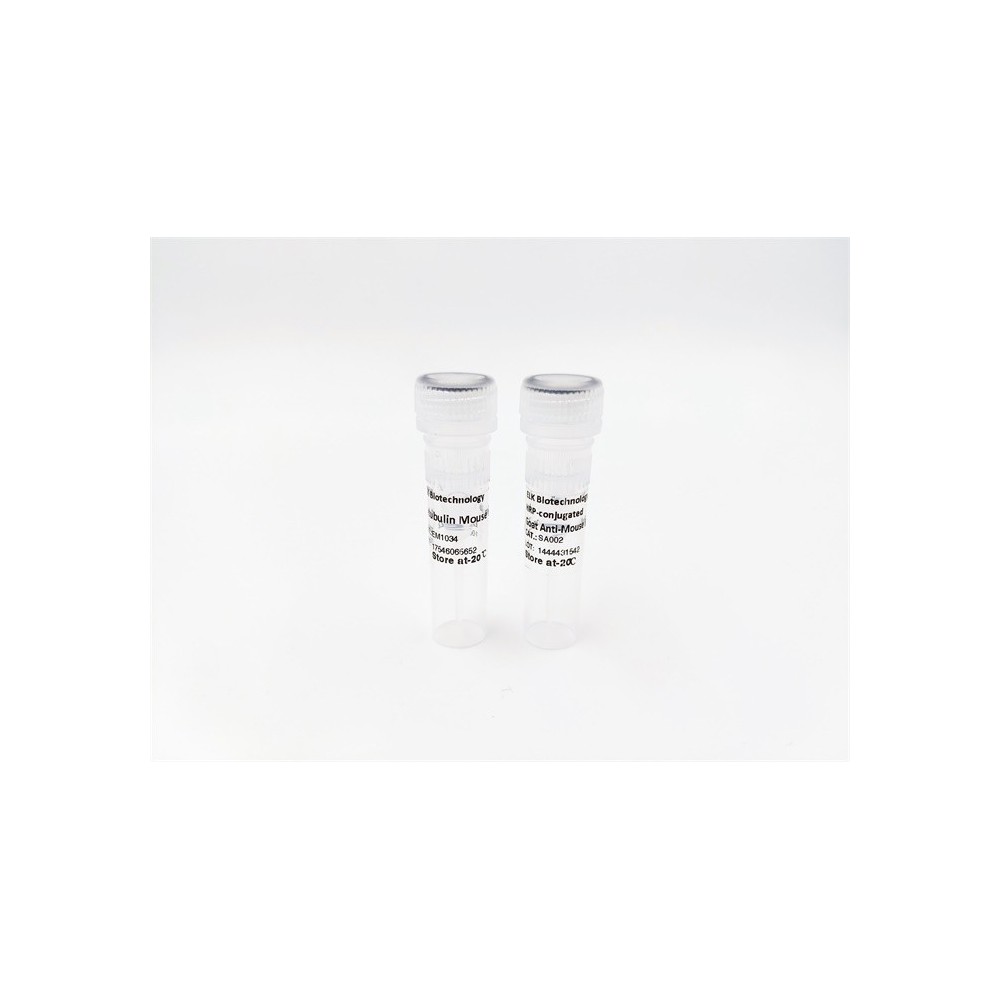

| ELK.No | ES3893 |
| Product name | Apelin rabbit pAb |
| Reactivity | Human;Mouse;Rat |
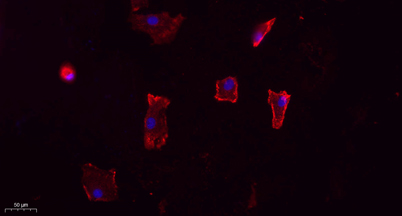
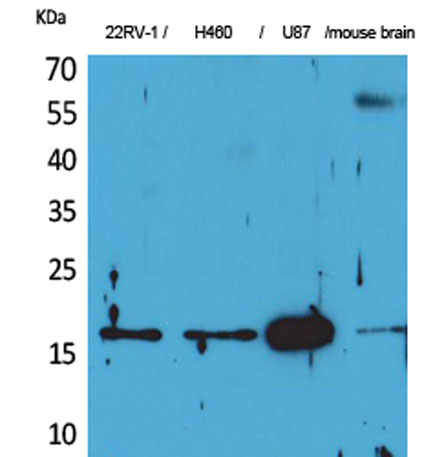
| Applications | WB;IHC;IF;ELISA |
| Other name | APLN; APEL; Apelin; APJ endogenous ligand |
| Size | 100μL |
| Unit price ($) | 248 |
| Human gene ID | 8862 |
| Human Swiss-Prot | Q9ULZ1 |
| Source | Rabbit |
| Isotype | IgG |
| Target | Apelin |
| Fields | >>Neuroactive ligand-receptor interaction;>>Apelin signaling pathway |
| Gene name | APLN |
| Protein name | Apelin |
| Human gene link | View Human Gene |
| Human Swiss link | View Human Swiss-Prot |
| Mouse gene ID | 30878 |
| Mouse gene link | View Mouse Gene |
| Mouse Swiss-Prot | Q9R0R4 |
| Mouse Swiss link | View Mouse Swiss-Prot |
| Rat gene ID | 58812 |
| Rat gene link | View Rat Gene |
| Rat Swiss-Prot | Q9R0R3 |
| Rat Swiss link | View Rat Swiss-Prot |
| Immunogen | The antiserum was produced against synthesized peptide derived from the C-terminal region of human APLN. AA range:28-77 |
| Specificity | Apelin Polyclonal Antibody detects endogenous levels of Apelin protein. |
| Formulation | Liquid in PBS containing 50% glycerol, 0.5% BSA and 0.02% sodium azide. |
| Clonality | Polyclonal |
| Dilution | Western Blot: 1/500 - 1/2000. IHC-p: 1:100-300 ELISA: 1/20000. IF 1:100-300 Not yet tested in other applications. |
| Purification | The antibody was affinity-purified from rabbit antiserum by affinity-chromatography using epitope-specific immunogen. |
| Concentration | 1 mg/ml |
| Storage stability | -20°C/1 year |
| Molecular Weight (Da) | |
| Observed band (KD) | 16kD |
| Background | This gene encodes a peptide that functions as an endogenous ligand for the G-protein coupled apelin receptor. The encoded preproprotein is proteolytically processed into biologically active C-terminal peptide fragments. These peptide fragments activate different tissue specific signaling pathways that regulate diverse biological functions including fluid homeostasis, cardiovascular function and insulin secretion. This protein also functions as a coreceptor for the human immunodeficiency virus 1. [provided by RefSeq, Feb 2016], |
| Function | function:Endogenous ligand for APJ, an alternative coreceptor with CD4 for HIV-1 infection. Inhibits HIV-1 entry in cells coexpressing CD4 and APJ. Apelin-36 has a greater inhibitory activity on HIV infection than other synthetic apelin derivatives. The oral intake in the colostrum and the milk could have a role in the modulation of the immune responses in neonates. May also have a role in the central control of body fluid homeostasis by influencing AVP release and drinking behavior.,PTM:Several active peptides may be produced by proteolytic processing of the peptide precursor.,similarity:Belongs to the apelin family.,tissue specificity:Expressed in the brain with highest levels in the frontal cortex, thalamus, hypothalamus and midbrain. Secreted by the mammary gland into the colostrum and the milk., |
| Subcellular location | Secreted . Secreted, extracellular space . Abundantly secreted in the colostrum. Lower level in milk. Decreases rapidly within several days after parturition in milk, but is still detectable even in commercial milk. . |
| Expression | Expressed in the brain with highest levels in the frontal cortex, thalamus, hypothalamus and midbrain (PubMed:10617103). Secreted by the mammary gland into the colostrum and the milk. |

Use collapsible tabs for more detailed information that will help customers make a purchasing decision.
Ex: Shipping and return policies, size guides, and other common questions.