 Français
 English

| ELK.No | ES3905 |
| Product name | IL-16 rabbit pAb |
| Reactivity | Human;Rat;Mouse; |
| Applications | WB;IHC;IF;ELISA |
| Other name | IL16; Pro-interleukin-16 |
| Size | 100μL |
| Unit price ($) | 248 |
| Human gene ID | 3603 |
| Human Swiss-Prot | Q14005 |
| Source | Rabbit |
| Isotype | IgG |
| Target | IL16 |
| Fields | >>Cytokine-cytokine receptor interaction |
| Gene name | IL16 |
| Protein name | Pro-interleukin-16 |
| Human gene link | View Human Gene |
| Human Swiss link | View Human Swiss-Prot |
| Mouse gene ID | |
| Mouse gene link | |
| Mouse Swiss-Prot | O54824 |
| Mouse Swiss link | View Mouse Swiss-Prot |
| Rat gene ID | |
| Rat gene link | |
| Rat Swiss-Prot | |
| Rat Swiss link | |
| Immunogen | The antiserum was produced against synthesized peptide derived from the C-terminal region of human IL16. AA range:1281-1330 |
| Specificity | IL-16 Polyclonal Antibody detects endogenous levels of IL-16 protein. |
| Formulation | Liquid in PBS containing 50% glycerol, 0.5% BSA and 0.02% sodium azide. |
| Clonality | Polyclonal |
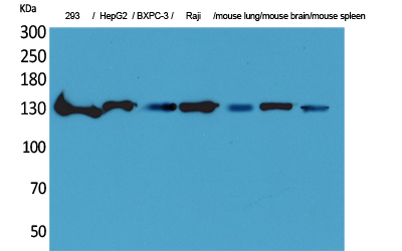
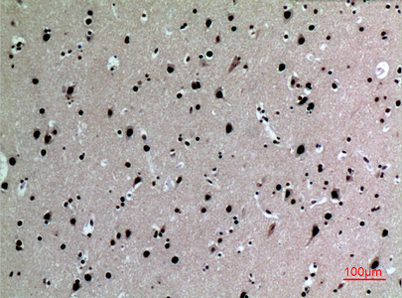
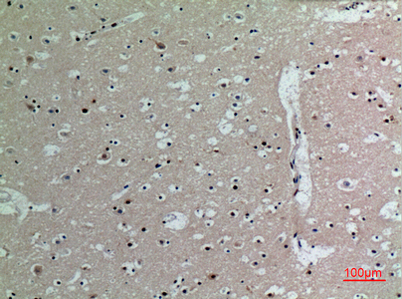
| Dilution | Western Blot: 1/500 - 1/2000. IHC-p: 1:100-300 ELISA: 1/20000. Not yet tested in other applications. |
| Purification | The antibody was affinity-purified from rabbit antiserum by affinity-chromatography using epitope-specific immunogen. |
| Concentration | 1 mg/ml |
| Storage stability | -20°C/1 year |
| Molecular Weight (Da) | |
| Observed band (KD) | 140kD |
| Background | The protein encoded by this gene is a pleiotropic cytokine that functions as a chemoattractant, a modulator of T cell activation, and an inhibitor of HIV replication. The signaling process of this cytokine is mediated by CD4. The product of this gene undergoes proteolytic processing, which is found to yield two functional proteins. The cytokine function is exclusively attributed to the secreted C-terminal peptide, while the N-terminal product may play a role in cell cycle control. Caspase 3 is reported to be involved in the proteolytic processing of this protein. Alternate splicing results in multiple transcript variants. [provided by RefSeq, Feb 2010], |
| Function | function:Interleukin-16 stimulates a migratory response in CD4+ lymphocytes, monocytes, and eosinophils. Primes CD4+ T-cells for IL-2 and IL-15 responsiveness. Also induces T-lymphocyte expression of interleukin 2 receptor. Ligand for CD4.,function:Isoform 1 may act as a scaffolding protein that anchors ion channels in the membrane.,function:Isoform 3 is involved in cell cycle progression in T-cells. Appears to be involved in transcriptional regulation of SKP2 and is probably part of a transcriptional repression complex on the core promoter of the SKP2 gene. May act as a scaffold for GABPB1 (the DNA-binding subunit the GABP transcription factor complex) and HDAC3 thus maintaining transcriptional repression and blocking cell cycle progression in resting T-cells.,induction:Isoform 3 is down-regulated in T-cells after TCR activation.,PTM:Isoform 3 is synthesized as a chemo-attractant inacti |
| Subcellular location | [Interleukin-16]: Secreted.; [Isoform 1]: Cytoplasm .; [Isoform 3]: Cytoplasm. Nucleus. |
| Expression | [Isoform 3]: Expressed in hemopoietic tissues, such as resting T-cells, but undetectable during active T-cell proliferation. |

Use collapsible tabs for more detailed information that will help customers make a purchasing decision.
Ex: Shipping and return policies, size guides, and other common questions.