 Français
 English

| ELK.No | ES3924 |
| Product name | TF rabbit pAb |
| Reactivity | Human;Rat;Mouse; |
| Applications | WB;IHC;IF;ELISA |
| Other name | F3; Tissue factor; TF; Coagulation factor III; Thromboplastin; CD142 |
| Size | 100μL |
| Unit price ($) | 248 |
| Human gene ID | 2152 |
| Human Swiss-Prot | P13726 |
| Source | Rabbit |
| Isotype | IgG |
| Target | TF |
| Fields | >>Complement and coagulation cascades;>>AGE-RAGE signaling pathway in diabetic complications |
| Gene name | F3 |
| Protein name | Tissue factor |
| Human gene link | View Human Gene |
| Human Swiss link | View Human Swiss-Prot |
| Mouse gene ID | |
| Mouse gene link | |
| Mouse Swiss-Prot | P20352 |
| Mouse Swiss link | View Mouse Swiss-Prot |
| Rat gene ID | |
| Rat gene link | |
| Rat Swiss-Prot | |
| Rat Swiss link | |
| Immunogen | The antiserum was produced against synthesized peptide derived from the Internal region of human F3. AA range:131-180 |
| Specificity | TF Polyclonal Antibody detects endogenous levels of TF protein. |
| Formulation | Liquid in PBS containing 50% glycerol, 0.5% BSA and 0.02% sodium azide. |
| Clonality | Polyclonal |
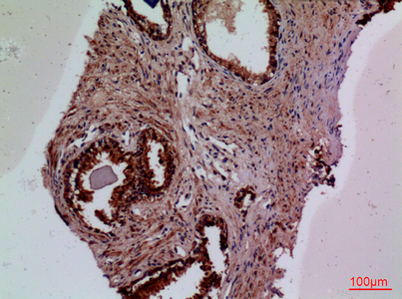
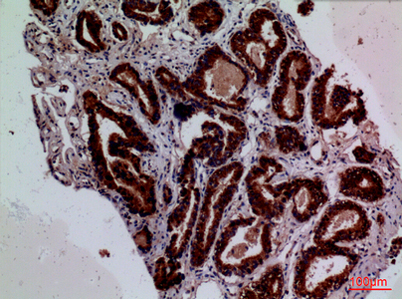
| Dilution | Western Blot: 1/500 - 1/2000. IHC-p: 1:100-300 ELISA: 1/20000. Not yet tested in other applications. |
| Purification | The antibody was affinity-purified from rabbit antiserum by affinity-chromatography using epitope-specific immunogen. |
| Concentration | 1 mg/ml |
| Storage stability | -20°C/1 year |
| Molecular Weight (Da) | |
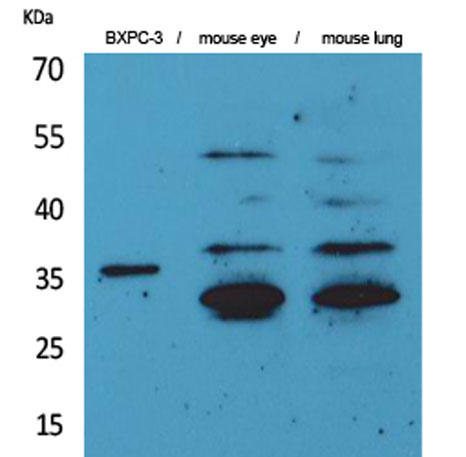
| Observed band (KD) | 33kD |
| Background | This gene encodes coagulation factor III which is a cell surface glycoprotein. This factor enables cells to initiate the blood coagulation cascades, and it functions as the high-affinity receptor for the coagulation factor VII. The resulting complex provides a catalytic event that is responsible for initiation of the coagulation protease cascades by specific limited proteolysis. Unlike the other cofactors of these protease cascades, which circulate as nonfunctional precursors, this factor is a potent initiator that is fully functional when expressed on cell surfaces. There are 3 distinct domains of this factor: extracellular, transmembrane, and cytoplasmic. This protein is the only one in the coagulation pathway for which a congenital deficiency has not been described. Alternate splicing results in multiple transcript variants.[provided by RefSeq, May 2010], |
| Function | function:Initiates blood coagulation by forming a complex with circulating factor VII or VIIa. The [TF:VIIa] complex activates factors IX or X by specific limited protolysis. TF plays a role in normal hemostasis by initiating the cell-surface assembly and propagation of the coagulation protease cascade.,induction:TF expression is highly dependent upon cell type. TF can also be induced by the inflammatory mediators interleukin 1 and TNF, as well as by endotoxin, to appear on monocytes and vascular endothelial cells as a component of cellular immune response.,online information:The Singapore human mutation and polymorphism database,online information:Tissue factor entry,similarity:Belongs to the tissue factor family., |
| Subcellular location | [Isoform 1]: Membrane ; Single-pass type I membrane protein .; [Isoform 2]: Secreted . |
| Expression | Lung, placenta and pancreas. |

Use collapsible tabs for more detailed information that will help customers make a purchasing decision.
Ex: Shipping and return policies, size guides, and other common questions.