 Français
 English
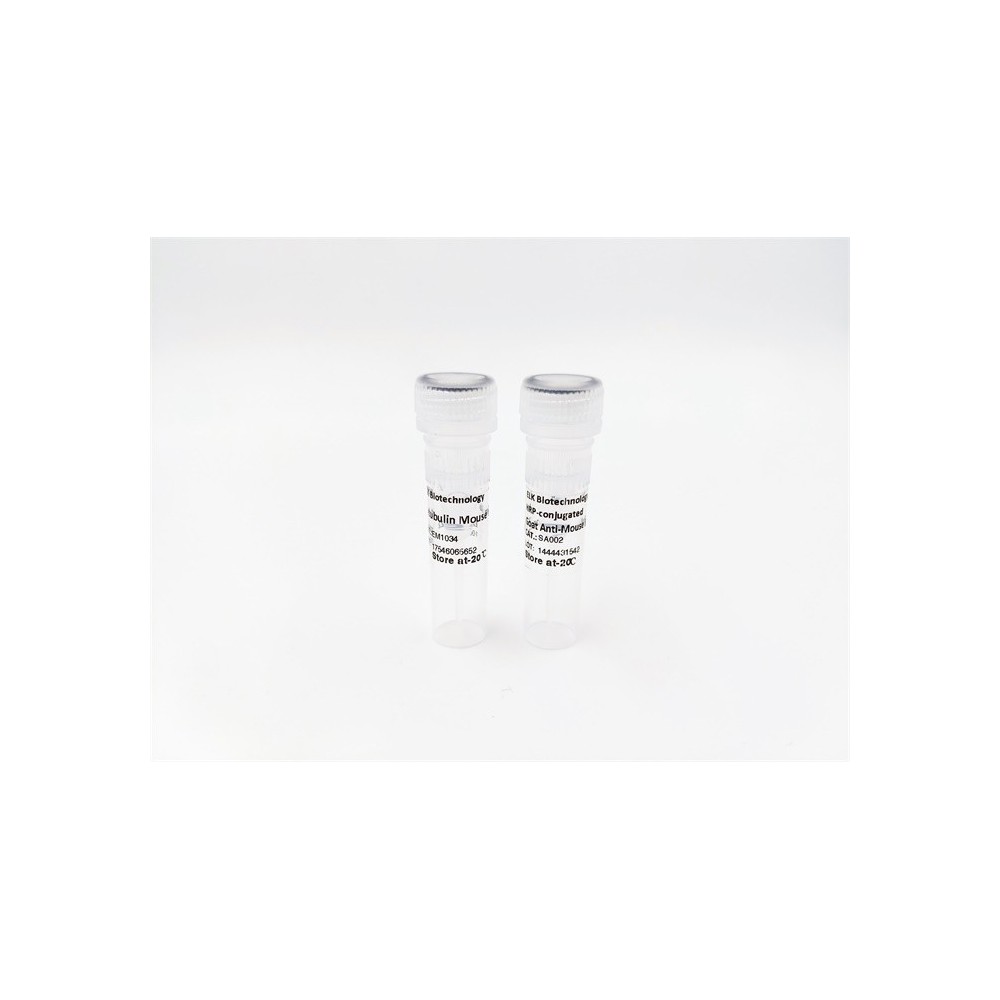

| ELK.No | ES3930 |
| Product name | ASIC3 rabbit pAb |
| Reactivity | Human;Rat;Mouse; |
| Applications | WB;ELISA |
| Other name | ASIC3; ACCN3; SLNAC1; TNAC1; Acid-sensing ion channel 3; ASIC3; hASIC3; Amiloride-sensitive cation channel 3; Neuronal amiloride-sensitive cation channel 3; Testis sodium channel 1; hTNaC1 |
| Size | 100μL |
| Unit price ($) | 248 |
| Human gene ID | 9311 |
| Human Swiss-Prot | Q9UHC3 |
| Source | Rabbit |
| Isotype | IgG |
| Target | ASIC3 |
| Fields | >>Inflammatory mediator regulation of TRP channels |
| Gene name | ASIC3 |
| Protein name | Acid-sensing ion channel 3 |
| Human gene link | View Human Gene |
| Human Swiss link | View Human Swiss-Prot |
| Mouse gene ID | |
| Mouse gene link | |
| Mouse Swiss-Prot | Q6X1Y6 |
| Mouse Swiss link | View Mouse Swiss-Prot |
| Rat gene ID | |
| Rat gene link | |
| Rat Swiss-Prot | |
| Rat Swiss link | |
| Immunogen | The antiserum was produced against synthesized peptide derived from the Internal region of human ASIC3. AA range:191-240 |
| Specificity | ASIC3 Polyclonal Antibody detects endogenous levels of ASIC3 protein. |
| Formulation | Liquid in PBS containing 50% glycerol, 0.5% BSA and 0.02% sodium azide. |
| Clonality | Polyclonal |
| Dilution | Western Blot: 1/500 - 1/2000. ELISA: 1/20000. Not yet tested in other applications. |
| Purification | The antibody was affinity-purified from rabbit antiserum by affinity-chromatography using epitope-specific immunogen. |
| Concentration | 1 mg/ml |
| Storage stability | -20°C/1 year |
| Molecular Weight (Da) | |
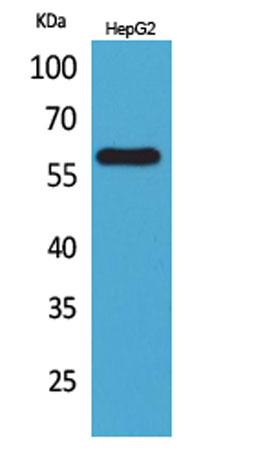
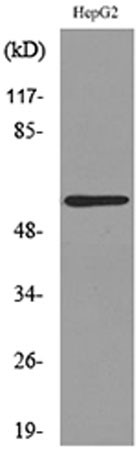
| Observed band (KD) | 58kD |
| Background | This gene encodes a member of the degenerin/epithelial sodium channel (DEG/ENaC) superfamily. The members of this family are amiloride-sensitive sodium channels that contain intracellular N and C termini, two hydrophobic transmembrane regions, and a large extracellular loop, which has many cysteine residues with conserved spacing. The member encoded by this gene is an acid sensor and may play an important role in the detection of lasting pH changes. In addition, a heteromeric association between this member and acid-sensing (proton-gated) ion channel 2 has been observed as proton-gated channels sensitive to gadolinium. Alternatively spliced transcript variants have been described. [provided by RefSeq, Feb 2012], |
| Function | developmental stage:Expressed in fetal tissues, expression increases in lung and kidney adult tissues.,domain:The PDZ domain-binding motif is involved in interaction with LIN7A, GOPC and MAGI1.,function:Cation channel with high affinity for sodium, which is gated by extracellular protons and inhibited by the diuretic amiloride. Generates a biphasic current with a fast inactivating and a slow sustained phase. In sensory neurons is proposed to mediate the pain induced by acidosis that occurs in ischemic, damaged or inflamed tissue. May be involved in hyperalgesia. May play a role in mechanoreception. Heteromeric channel assembly seems to modulate channel properties.,miscellaneous:Potentiated by FMRFamide-related neuropeptides. Sensitized and potentiated by NPSF. Regulated by lactate and Ca(2+). Inhibited by anti-inflammatory drugs, like salicylic acid (By similarity). Sensitized and potent |
| Subcellular location | Cell membrane ; Multi-pass membrane protein . Cytoplasm . Cell surface expression may be stabilized by interaction with LIN7B and cytoplasmic retention by interaction with DLG4. In part cytoplasmic in cochlea cells (By similarity). . |
| Expression | Expressed by sensory neurons. Strongly expressed in brain, spinal chord, lung, lymph nodes, kidney, pituitary, heart and testis. |

Use collapsible tabs for more detailed information that will help customers make a purchasing decision.
Ex: Shipping and return policies, size guides, and other common questions.