 Français
 English

| ELK.No | ES3996 |
| Product name | GGT1 rabbit pAb |
| Reactivity | Human;Rat;Mouse; |
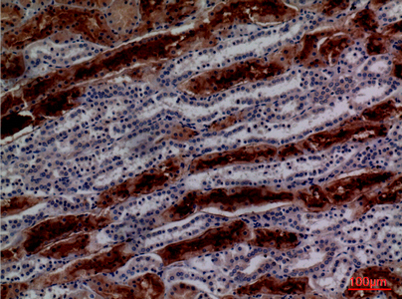
| Applications | WB;IHC;IF;ELISA |
| Other name | GGT1; GGT; Gamma-glutamyltranspeptidase 1; GGT 1; Gamma-glutamyltransferase 1; Glutathione hydrolase 1; Leukotriene-C4 hydrolase; CD224 |
| Size | 100μL |
| Unit price ($) | 248 |
| Human gene ID | 2678 |
| Human Swiss-Prot | P19440 |
| Source | Rabbit |
| Isotype | IgG |
| Target | GGT1 |
| Fields | >>Taurine and hypotaurine metabolism;>>Glutathione metabolism;>>Arachidonic acid metabolism;>>Metabolic pathways |
| Gene name | GGT1 |
| Protein name | Gamma-glutamyltranspeptidase 1 |
| Human gene link | View Human Gene |
| Human Swiss link | View Human Swiss-Prot |
| Mouse gene ID | |
| Mouse gene link | |
| Mouse Swiss-Prot | Q60928 |
| Mouse Swiss link | View Mouse Swiss-Prot |
| Rat gene ID | |
| Rat gene link | |
| Rat Swiss-Prot | |
| Rat Swiss link | |
| Immunogen | The antiserum was produced against synthesized peptide derived from the N-terminal region of human GGT1. AA range:21-70 |
| Specificity | GGT1 Polyclonal Antibody detects endogenous levels of GGT1 protein. |
| Formulation | Liquid in PBS containing 50% glycerol, 0.5% BSA and 0.02% sodium azide. |
| Clonality | Polyclonal |
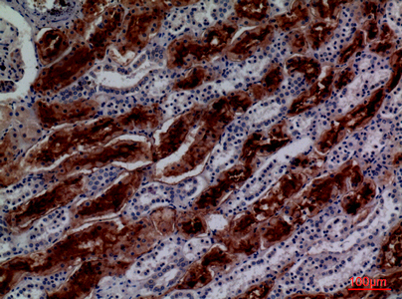
| Dilution | Western Blot: 1/500 - 1/2000. IHC-p: 1:100-300 ELISA: 1/20000. Not yet tested in other applications. |
| Purification | The antibody was affinity-purified from rabbit antiserum by affinity-chromatography using epitope-specific immunogen. |
| Concentration | 1 mg/ml |
| Storage stability | -20°C/1 year |
| Molecular Weight (Da) | |
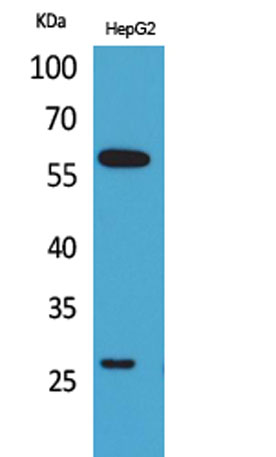
| Observed band (KD) | 61kD |
| Background | The enzyme encoded by this gene is a type I gamma-glutamyltransferase that catalyzes the transfer of the glutamyl moiety of glutathione to a variety of amino acids and dipeptide acceptors. The enzyme is composed of a heavy chain and a light chain, which are derived from a single precursor protein. It is expressed in tissues involved in absorption and secretion and may contribute to the etiology of diabetes and other metabolic disorders. Multiple alternatively spliced variants have been identified. There are a number of related genes present on chromosomes 20 and 22, and putative pseudogenes for this gene on chromosomes 2, 13, and 22. [provided by RefSeq, Jan 2014], |
| Function | catalytic activity:(5-L-glutamyl)-peptide + an amino acid = peptide + 5-L-glutamyl amino acid.,disease:Defects in GGT1 are a cause of glutathionuria [MIM:231950]; also known as gamma-glutamyltranspeptidase deficiency. It is an autosomal recessive disease.,function:Initiates extracellular glutathione (GSH) breakdown, provides cells with a local cysteine supply and contributes to maintain intracelular GSH level. It is part of the cell antioxidant defense mechanism. Catalyzes the transfer of the glutamyl moiety of glutathione to amino acids and dipeptide acceptors. Alternatively, glutathione can be hydrolyzed to give Cys-Gly and gamma glutamate. Isoform 3 seems to be inactive.,function:Initiates extracellular glutathione (GSH) breakdown; catalyzes the transfer of the glutamyl moiety of glutathione to amino acids and dipeptide acceptors.,miscellaneous:Corresponds to the light chain of other |
| Subcellular location | Cell membrane ; Single-pass type II membrane protein . |
| Expression | Detected in fetal and adult kidney and liver, adult pancreas, stomach, intestine, placenta and lung. There are several other tissue-specific forms that arise from alternative promoter usage but that produce the same protein.; [Isoform 3]: Lung-specific. |

Use collapsible tabs for more detailed information that will help customers make a purchasing decision.
Ex: Shipping and return policies, size guides, and other common questions.