 Français
 English
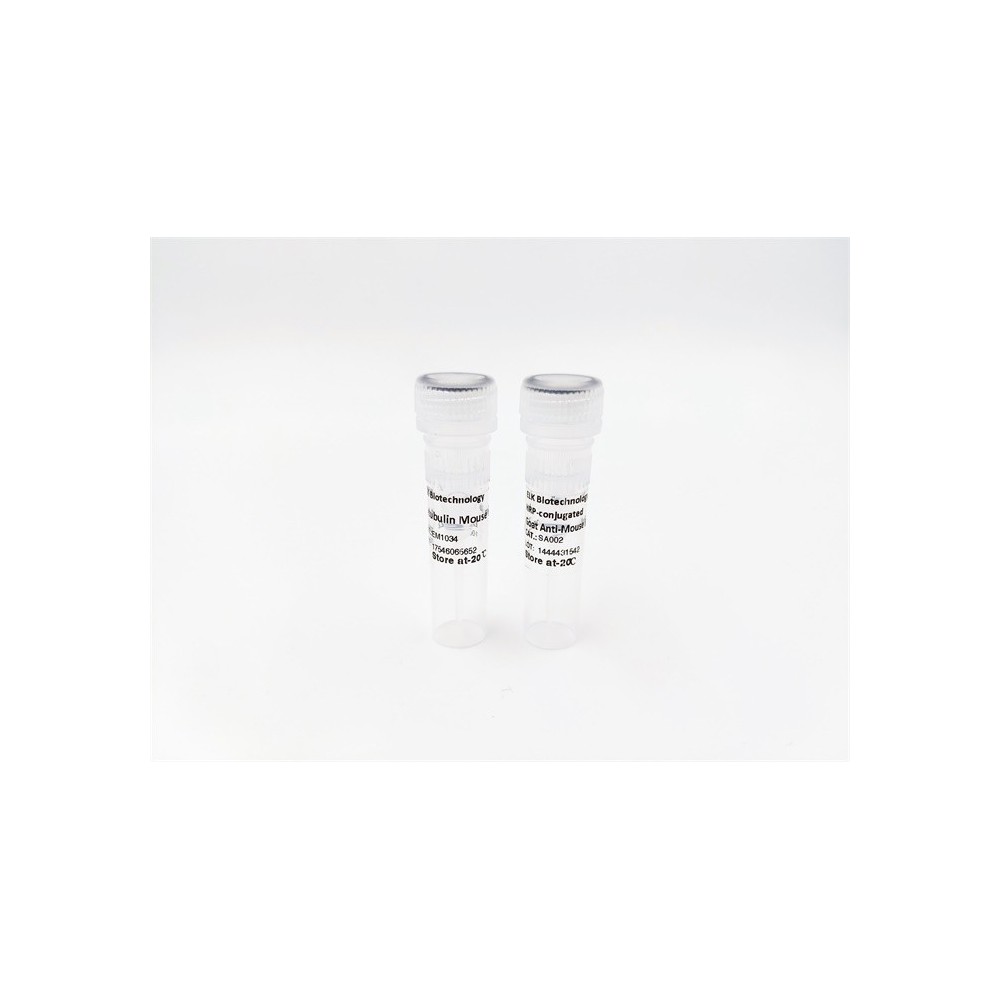

| ELK.No | ES4000 |
| Product name | Siglec-5/14 rabbit pAb |
| Reactivity | Human;Rat;Mouse; |
| Applications | WB;IHC;IF;ELISA |
| Other name | SIGLEC5; CD33L2; OBBP2; Sialic acid-binding Ig-like lectin 5; Siglec-5; CD33 antigen-like 2; Obesity-binding protein 2; OB-BP2; OB-binding protein 2; CD170; SIGLEC14; Sialic acid-binding Ig-like lectin 14; Siglec-14 |
| Size | 100μL |
| Unit price ($) | 248 |
| Human gene ID | 8778 |
| Human Swiss-Prot | O15389 |
| Source | Rabbit |
| Isotype | IgG |
| Target | Siglec-5/14 |
| Fields | |
| Gene name | SIGLEC5/SIGLEC14 |
| Protein name | Sialic acid-binding Ig-like lectin 5/Sialic acid-binding Ig-like lectin 14 |
| Human gene link | View Human Gene |
| Human Swiss link | View Human Swiss-Prot |
| Mouse gene ID | |
| Mouse gene link | |
| Mouse Swiss-Prot | Q920G3 |
| Mouse Swiss link | View Mouse Swiss-Prot |
| Rat gene ID | |
| Rat gene link | |
| Rat Swiss-Prot | |
| Rat Swiss link | |
| Immunogen | Synthesized peptide derived from Sialic acid-binding Ig-like lectin 5/Sialic acid-binding Ig-like lectin 14 at AA range: 91-140 |
| Specificity | Siglec-5/14 Polyclonal Antibody detects endogenous levels of Siglec-5/14 protein. |
| Formulation | Liquid in PBS containing 50% glycerol, 0.5% BSA and 0.02% sodium azide. |
| Clonality | Polyclonal |
| Dilution | Western Blot: 1/500 - 1/2000. IHC-p: 1:100-300 ELISA: 1/20000. Not yet tested in other applications. |
| Purification | The antibody was affinity-purified from rabbit antiserum by affinity-chromatography using epitope-specific immunogen. |
| Concentration | 1 mg/ml |
| Storage stability | -20°C/1 year |
| Molecular Weight (Da) | |
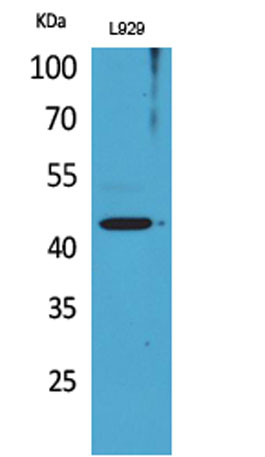
| Observed band (KD) | 60kD |
| Background | This gene encodes a member of the sialic acid-binding immunoglobulin-like lectin (Siglec) family. These cell surface lectins are characterized by structural motifs in the immunoglobulin (Ig)-like domains and sialic acid recognition sites in the first Ig V set domain. The encoded protein is a member of the CD33-related subset of Siglecs and inhibits the activation of several cell types including monocytes, macrophages and neutrophils. Binding of group B Streptococcus (GBS) to the encoded protein plays a role in GBS immune evasion. [provided by RefSeq, Feb 2012], |
| Function | domain:Contains 1 copy of a cytoplasmic motif that is referred to as the immunoreceptor tyrosine-based inhibitor motif (ITIM). This motif is involved in modulation of cellular responses. The phosphorylated ITIM motif can bind the SH2 domain of several SH2-containing phosphatases.,function:Putative adhesion molecule that mediates sialic-acid dependent binding to cells. Binds equally to alpha-2,3-linked and alpha-2,6-linked sialic acid. The sialic acid recognition site may be masked by cis interactions with sialic acids on the same cell surface.,online information:Siglec-5,similarity:Belongs to the immunoglobulin superfamily. SIGLEC (sialic acid binding Ig-like lectin) family.,similarity:Contains 1 Ig-like V-type (immunoglobulin-like) domain.,similarity:Contains 2 Ig-like C2-type (immunoglobulin-like) domains.,tissue specificity:Expressed by monocytic/myeloid lineage cells. Found at high l |
| Subcellular location | Membrane; Single-pass type I membrane protein. |
| Expression | Expressed by monocytic/myeloid lineage cells. Found at high levels in peripheral blood leukocytes, spleen, bone marrow and at lower levels in lymph node, lung, appendix, placenta, pancreas and thymus. Expressed by monocytes and neutrophils but absent from leukemic cell lines representing early stages of myelomonocytic differentiation. |



Use collapsible tabs for more detailed information that will help customers make a purchasing decision.
Ex: Shipping and return policies, size guides, and other common questions.