 Français
 English

| ELK.No | ES4058 |
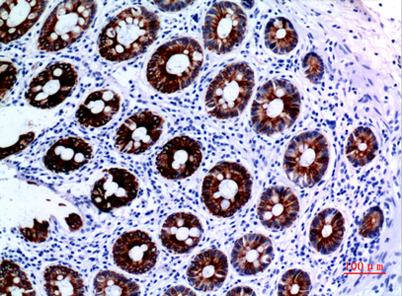
| Product name | Cytokeratin 8 rabbit pAb |
| Reactivity | Human;Rat;Mouse; |
| Applications | WB;IHC;IF;ELISA |
| Other name | KRT8; CYK8; Keratin, type II cytoskeletal 8; Cytokeratin-8; CK-8; Keratin-8; K8; Type-II keratin Kb8 |
| Size | 50μL |
| Unit price ($) | 148 |
| Human gene ID | 3856 |
| Human Swiss-Prot | P05787 |
| Source | Rabbit |
| Isotype | IgG |
| Target | Cytokeratin 8 |
| Fields | |
| Gene name | KRT8 |
| Protein name | Keratin type II cytoskeletal 8 |
| Human gene link | View Human Gene |
| Human Swiss link | View Human Swiss-Prot |
| Mouse gene ID | |
| Mouse gene link | |
| Mouse Swiss-Prot | P11679 |
| Mouse Swiss link | View Mouse Swiss-Prot |
| Rat gene ID | |
| Rat gene link | |
| Rat Swiss-Prot | |
| Rat Swiss link | |
| Immunogen | The antiserum was produced against synthesized peptide derived from human K8 around the non-acetylation site of Lys483. AA range:434-483 |
| Specificity | Cytokeratin 8 Polyclonal Antibody detects endogenous levels of Cytokeratin 8 protein. |
| Formulation | Liquid in PBS containing 50% glycerol, 0.5% BSA and 0.02% sodium azide. |
| Clonality | Polyclonal |
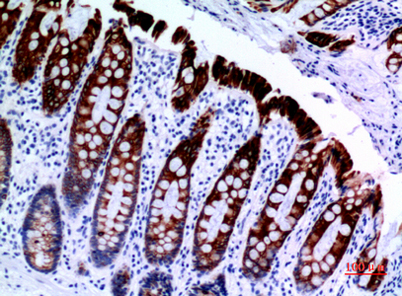
| Dilution | Western Blot: 1/500 - 1/2000. IHC-p: 1/100-1/300. ELISA: 1/20000. Not yet tested in other applications. |
| Purification | The antibody was affinity-purified from rabbit antiserum by affinity-chromatography using epitope-specific immunogen. |
| Concentration | 1 mg/ml |
| Storage stability | -20°C/1 year |
| Molecular Weight (Da) | |
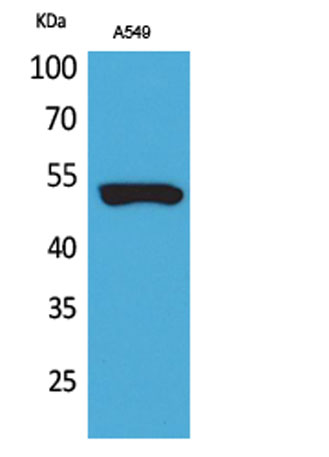
| Observed band (KD) | 53kD |
| Background | keratin 8(KRT8) Homo sapiens This gene is a member of the type II keratin family clustered on the long arm of chromosome 12. Type I and type II keratins heteropolymerize to form intermediate-sized filaments in the cytoplasm of epithelial cells. The product of this gene typically dimerizes with keratin 18 to form an intermediate filament in simple single-layered epithelial cells. This protein plays a role in maintaining cellular structural integrity and also functions in signal transduction and cellular differentiation. Mutations in this gene cause cryptogenic cirrhosis. Alternatively spliced transcript variants have been found for this gene. [provided by RefSeq, Jan 2012], |
| Function | disease:Defects in KRT8 are a cause of cryptogenic cirrhosis [MIM:215600].,function:Together with KRT19, helps to link the contractile apparatus to dystrophin at the costameres of striated muscle.,miscellaneous:There are two types of cytoskeletal and microfibrillar keratin: I (acidic; 40-55 kDa) and II (neutral to basic; 56-70 kDa).,PTM:O-glycosylated at multiple sites; glycans consist of single N-acetylglucosamine residues.,PTM:Phosphorylation on serine residues is enhanced during EGF stimulation and mitosis. Ser-74 phosphorylation plays an important role in keratin filament reorganization.,similarity:Belongs to the intermediate filament family.,subunit:Heterotetramer of two type I and two type II keratins. keratin-8 associates with keratin-18. Associates with KRT20. Interacts with HCV core protein and PNN. When associated with KRT19, interacts with DMD. Interacts with TCHP.,tissue spec |
| Subcellular location | Cytoplasm . Nucleus, nucleoplasm . Nucleus matrix . |
| Expression | Observed in muscle fibers accumulating in the costameres of myoplasm at the sarcolemma membrane in structures that contain dystrophin and spectrin. Expressed in gingival mucosa and hard palate of the oral cavity. |

Use collapsible tabs for more detailed information that will help customers make a purchasing decision.
Ex: Shipping and return policies, size guides, and other common questions.