 Français
 English

| ELK.No | ES4084 |
| Product name | Fractalkine rabbit pAb |
| Reactivity | Human;Rat;Mouse; |
| Applications | WB;IHC;IF;ELISA |
| Other name | CX3CL1; FKN; NTT; SCYD1; A-152E5.2; Fractalkine; C-X3-C motif chemokine 1; CX3C membrane-anchored chemokine; Neurotactin; Small-inducible cytokine D1 |
| Size | 50μL |
| Unit price ($) | 148 |
| Human gene ID | 6376 |
| Human Swiss-Prot | P78423 |
| Source | Rabbit |
| Isotype | IgG |
| Target | Fractalkine |
| Fields | >>Cytokine-cytokine receptor interaction;>>Viral protein interaction with cytokine and cytokine receptor;>>Chemokine signaling pathway;>>TNF signaling pathway;>>Human cytomegalovirus infection |
| Gene name | CX3CL1 |
| Protein name | Fractalkine |
| Human gene link | View Human Gene |
| Human Swiss link | View Human Swiss-Prot |
| Mouse gene ID | |
| Mouse gene link | |
| Mouse Swiss-Prot | O35188 |
| Mouse Swiss link | View Mouse Swiss-Prot |
| Rat gene ID | |
| Rat gene link | |
| Rat Swiss-Prot | |
| Rat Swiss link | |
| Immunogen | The antiserum was produced against synthesized peptide derived from the Internal region of human CX3CL1. AA range:231-280 |
| Specificity | Fractalkine Polyclonal Antibody detects endogenous levels of Fractalkine protein. |
| Formulation | Liquid in PBS containing 50% glycerol, 0.5% BSA and 0.02% sodium azide. |
| Clonality | Polyclonal |
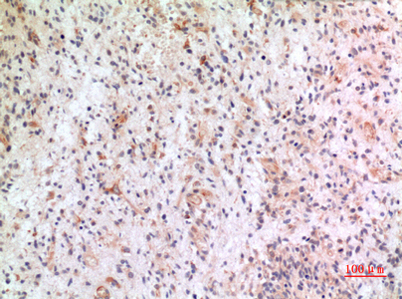
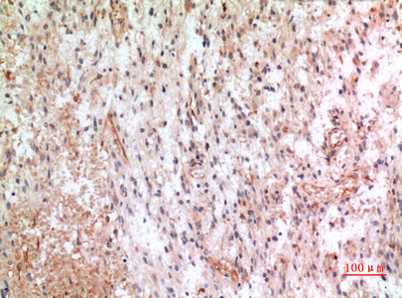
| Dilution | Western Blot: 1/500 - 1/2000. IHC-p: 1/100-1/300. ELISA: 1/20000. Not yet tested in other applications. |
| Purification | The antibody was affinity-purified from rabbit antiserum by affinity-chromatography using epitope-specific immunogen. |
| Concentration | 1 mg/ml |
| Storage stability | -20°C/1 year |
| Molecular Weight (Da) | |
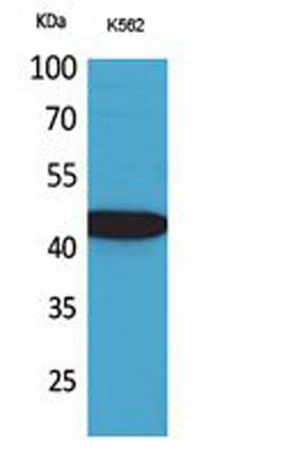
| Observed band (KD) | 42kD |
| Background | function:The soluble form is chemotactic for T-cells and monocytes, but not for neutrophils. The membrane-bound form promotes adhesion of those leukocytes to endothelial cells. May play a role in regulating leukocyte adhesion and migration processes at the endothelium. Binds to CX3CR1.,induction:By TNF and IL-1 in pulmonary endothelial cells and umbilical vein endothelial cells.,online information:CX3CL1 entry,PTM:A soluble short 95 kDa form may be released by proteolytic cleavage from the long membrane-anchored form.,similarity:Belongs to the intercrine delta family.,subunit:Monomer.,tissue specificity:Small intestine, colon, testis, prostate, heart, brain, lung, skeletal muscle, kidney and pancreas., |
| Function | function:The soluble form is chemotactic for T-cells and monocytes, but not for neutrophils. The membrane-bound form promotes adhesion of those leukocytes to endothelial cells. May play a role in regulating leukocyte adhesion and migration processes at the endothelium. Binds to CX3CR1.,induction:By TNF and IL-1 in pulmonary endothelial cells and umbilical vein endothelial cells.,online information:CX3CL1 entry,PTM:A soluble short 95 kDa form may be released by proteolytic cleavage from the long membrane-anchored form.,similarity:Belongs to the intercrine delta family.,subunit:Monomer.,tissue specificity:Small intestine, colon, testis, prostate, heart, brain, lung, skeletal muscle, kidney and pancreas., |
| Subcellular location | Cell membrane ; Single-pass type I membrane protein .; [Processed fractalkine]: Secreted . |
| Expression | Expressed in the seminal plasma, endometrial fluid and follicular fluid (at protein level). Small intestine, colon, testis, prostate, heart, brain, lung, skeletal muscle, kidney and pancreas. Most abundant in the brain and heart. |

Use collapsible tabs for more detailed information that will help customers make a purchasing decision.
Ex: Shipping and return policies, size guides, and other common questions.