 Français
 English
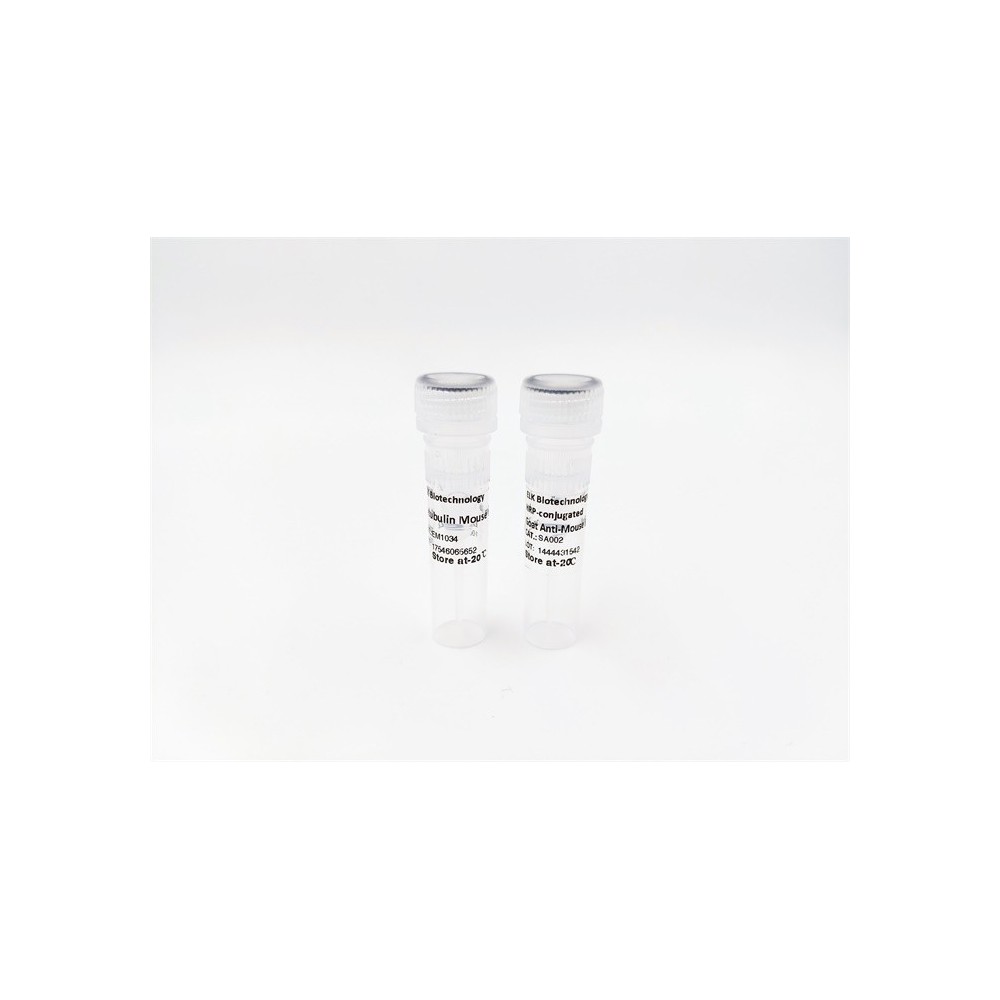

| ELK.No | ES4111 |
| Product name | NFATc1 rabbit pAb |
| Reactivity | Human;Mouse |
| Applications | WB;IHC;IF;ELISA |
| Other name | NFATC1; NFAT2; NFATC; Nuclear factor of activated T-cells, cytoplasmic 1; NF-ATc1; NFATc1; NFAT transcription complex cytosolic component; NF-ATc; NFATc |
| Size | 50μL |
| Unit price ($) | 148 |
| Human gene ID | 4772 |
| Human Swiss-Prot | O95644 |
| Source | Rabbit |
| Isotype | IgG |
| Target | NFATc1 |
| Fields | >>MAPK signaling pathway;>>cGMP-PKG signaling pathway;>>cAMP signaling pathway;>>Cellular senescence;>>Wnt signaling pathway;>>Osteoclast differentiation;>>C-type lectin receptor signaling pathway;>>Natural killer cell mediated cytotoxicity;>>Th1 and Th2 cell differentiation;>>Th17 cell differentiation;>>T cell receptor signaling pathway;>>B cell receptor signaling pathway;>>Oxytocin signaling pathway;>>AGE-RAGE signaling pathway in diabetic complications;>>Yersinia infection;>>Hepatitis B;>>Human cytomegalovirus infection;>>Human T-cell leukemia virus 1 infection;>>Kaposi sarcoma-associated herpesvirus infection;>>Human immunodeficiency virus 1 infection;>>PD-L1 expression and PD-1 checkpoint pathway in cancer;>>Inflammatory bowel disease;>>Lipid and atherosclerosis |
| Gene name | NFATC1 |
| Protein name | Nuclear factor of activated T-cells cytoplasmic 1 |
| Human gene link | View Human Gene |
| Human Swiss link | View Human Swiss-Prot |
| Mouse gene ID | |
| Mouse gene link | |
| Mouse Swiss-Prot | O88942 |
| Mouse Swiss link | View Mouse Swiss-Prot |
| Rat gene ID | |
| Rat gene link | |
| Rat Swiss-Prot | |
| Rat Swiss link | |
| Immunogen | The antiserum was produced against synthesized peptide derived from the C-terminal region of human NFATC1. AA range:881-930 |
| Specificity | NFATc1 Polyclonal Antibody detects endogenous levels of NFATc1 protein. |
| Formulation | Liquid in PBS containing 50% glycerol, 0.5% BSA and 0.02% sodium azide. |
| Clonality | Polyclonal |
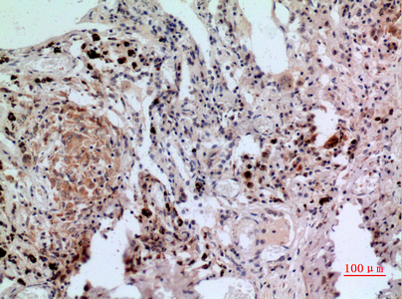
| Dilution | WB 1:500-2000;IHC-p 1:100-500;IF/ICC 1:100-500;ELISA 1:5000-20000 |
| Purification | The antibody was affinity-purified from rabbit antiserum by affinity-chromatography using epitope-specific immunogen. |
| Concentration | 1 mg/ml |
| Storage stability | -20°C/1 year |
| Molecular Weight (Da) | |
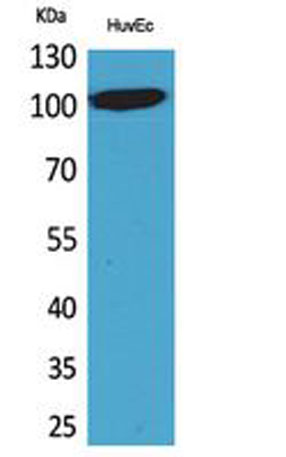
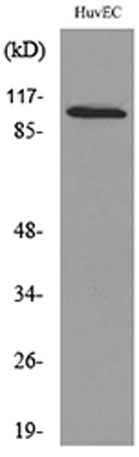
| Observed band (KD) | 105kD |
| Background | The product of this gene is a component of the nuclear factor of activated T cells DNA-binding transcription complex. This complex consists of at least two components: a preexisting cytosolic component that translocates to the nucleus upon T cell receptor (TCR) stimulation, and an inducible nuclear component. Proteins belonging to this family of transcription factors play a central role in inducible gene transcription during immune response. The product of this gene is an inducible nuclear component. It functions as a major molecular target for the immunosuppressive drugs such as cyclosporin A. Multiple alternatively spliced transcript variants encoding distinct isoforms have been identified for this gene. Different isoforms of this protein may regulate inducible expression of different cytokine genes. [provided by RefSeq, Jul 2013], |
| Function | alternative products:Isoform C-alpha and isoform C-beta are the strongest activator of gene transcription, followed by isoform A-alpha and isoform A-beta, whereas isoform B-alpha and isoform B-beta are the weakest. Isoform B-alpha, isoform B-beta, isoform C-alpha and isoform C-beta, both present in T-cells, can modulate their transcriptional activity,domain:Isoforms C have a C-terminal part with an additional trans-activation domain, TAD-B, which acts as a transcriptional activator. Isoforms B have a shorter C-terminal part without complete TAD-B which acts as a transcriptional repressor.,domain:Rel Similarity Domain (RSD) allows DNA-binding and cooperative interactions with AP1 factors.,domain:The N-terminal transactivation domain (TAD-A) binds to and is activated by Cbp/p300. The dephosphorylated form contains two unmasked nuclear localization signals (NLS), which allow translocation o |
| Subcellular location | Cytoplasm . Nucleus . Cytoplasmic for the phosphorylated form and nuclear after activation that is controlled by calcineurin-mediated dephosphorylation. Rapid nuclear exit of NFATC is thought to be one mechanism by which cells distinguish between sustained and transient calcium signals. The subcellular localization of NFATC plays a key role in the regulation of gene transcription (PubMed:16511445). Nuclear translocation of NFATC1 is enhanced in the presence of TNFSF11. Nuclear translocation is decreased in the presence of FBN1 which can bind and sequester TNFSF11 (By similarity). . |
| Expression | Expressed in thymus, peripheral leukocytes as T-cells and spleen. Isoforms A are preferentially expressed in effector T-cells (thymus and peripheral leukocytes) whereas isoforms B and isoforms C are preferentially expressed in naive T-cells (spleen). Isoforms B are expressed in naive T-cells after first antigen exposure and isoforms A are expressed in effector T-cells after second antigen exposure. Isoforms IA are widely expressed but not detected in liver nor pancreas, neural expression is strongest in corpus callosum. Isoforms IB are expressed mostly in muscle, cerebellum, placenta and thymus, neural expression in fetal and adult brain, strongest in corpus callosum. |

Use collapsible tabs for more detailed information that will help customers make a purchasing decision.
Ex: Shipping and return policies, size guides, and other common questions.