 Français
 English

| ELK.No | ES4115 |
| Product name | RFC1 rabbit pAb |
| Reactivity | Human;Rat;Mouse; |
| Applications | WB;IHC;IF;ELISA |
| Other name | RFC1; RFC140; Replication factor C subunit 1; Activator 1 140 kDa subunit; A1 140 kDa subunit; Activator 1 large subunit; Activator 1 subunit 1; DNA-binding protein PO-GAReplication factor C 140 kDa subunit; RF-C 140 kDa subunit; RFC140; Replication factor C large subunit |
| Size | 100μL |
| Unit price ($) | 248 |
| Human gene ID | 5981 |
| Human Swiss-Prot | P35251 |
| Source | Rabbit |
| Isotype | IgG |
| Target | RFC1 |
| Fields | >>DNA replication;>>Nucleotide excision repair;>>Mismatch repair |
| Gene name | RFC1 |
| Protein name | Replication factor C subunit 1 |
| Human gene link | View Human Gene |
| Human Swiss link | View Human Swiss-Prot |
| Mouse gene ID | |
| Mouse gene link | |
| Mouse Swiss-Prot | P35601 |
| Mouse Swiss link | View Mouse Swiss-Prot |
| Rat gene ID | |
| Rat gene link | |
| Rat Swiss-Prot | |
| Rat Swiss link | |
| Immunogen | The antiserum was produced against synthesized peptide derived from the C-terminal region of human RFC1. AA range:1071-1120 |
| Specificity | RFC1 Polyclonal Antibody detects endogenous levels of RFC1 protein. |
| Formulation | Liquid in PBS containing 50% glycerol, 0.5% BSA and 0.02% sodium azide. |
| Clonality | Polyclonal |
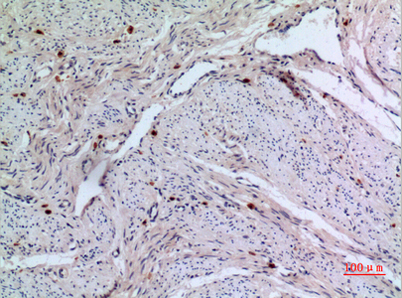
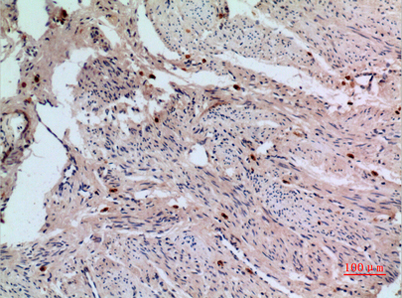
| Dilution | Western Blot: 1/500 - 1/2000. IHC-p: 1/100-1/300. ELISA: 1/20000. Not yet tested in other applications. |
| Purification | The antibody was affinity-purified from rabbit antiserum by affinity-chromatography using epitope-specific immunogen. |
| Concentration | 1 mg/ml |
| Storage stability | -20°C/1 year |
| Molecular Weight (Da) | |
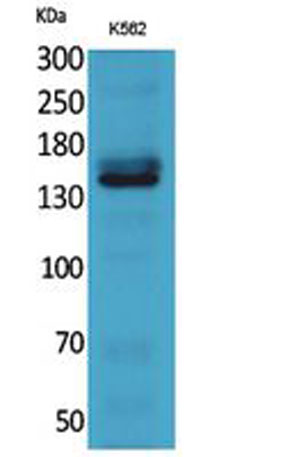
| Observed band (KD) | 130kD |
| Background | This gene encodes the large subunit of replication factor C, a five subunit DNA polymerase accessory protein, which is a DNA-dependent ATPase required for eukaryotic DNA replication and repair. The large subunit acts as an activator of DNA polymerases, binds to the 3' end of primers, and promotes coordinated synthesis of both strands. It may also have a role in telomere stability. Alternatively spliced transcript variants encoding different isoforms have been noted for this gene. [provided by RefSeq, Mar 2011], |
| Function | function:Interacts with C-terminus of PCNA. 5' phosphate residue is required for binding of the N-terminal DNA-binding domain to duplex DNA, suggesting a role in recognition of non-primer template DNA structures during replication and/or repair.,function:The elongation of primed DNA templates by DNA polymerase delta and epsilon requires the action of the accessory proteins PCNA and activator 1. This subunit binds to the primer-template junction. Binds the PO-B transcription element as well as other GA rich DNA sequences. Could play a role in DNA transcription regulation as well as DNA replication and/or repair. Can bind single- or double-stranded DNA.,PTM:Phosphorylated upon DNA damage, probably by ATM or ATR.,similarity:Belongs to the activator 1 large subunit family.,similarity:Contains 1 BRCT domain.,subunit:Heterotetramer of subunits RFC2, RFC3, RFC4 and RFC5 that can form a complex |
| Subcellular location | Nucleus. |
| Expression | Wide tissue distribution. Undetectable in placental tissue. |

Use collapsible tabs for more detailed information that will help customers make a purchasing decision.
Ex: Shipping and return policies, size guides, and other common questions.