 Français
 English
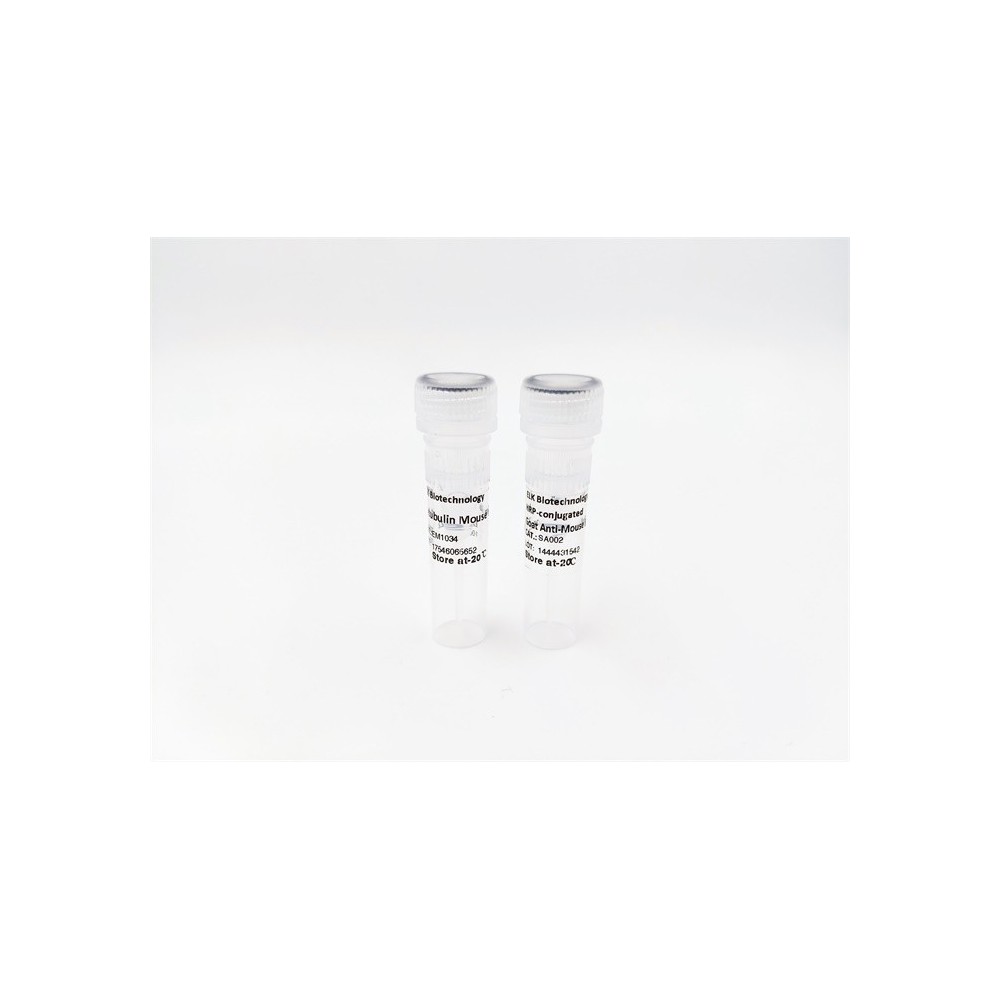

| ELK.No | ES4119 |
| Product name | CacyBP rabbit pAb |
| Reactivity | Human;Mouse;Rat |
| Applications | WB;IHC;IF;ELISA |
| Other name | CACYBP; S100A6BP; SIP; PNAS-107; Calcyclin-binding protein; CacyBP; hCacyBP; S100A6-binding protein; Siah-interacting protein |
| Size | 100μL |
| Unit price ($) | 248 |
| Human gene ID | 27101 |
| Human Swiss-Prot | Q9HB71 |
| Source | Rabbit |
| Isotype | IgG |
| Target | CacyBP |
| Fields | >>Wnt signaling pathway |
| Gene name | CACYBP |
| Protein name | Calcyclin-binding protein |
| Human gene link | View Human Gene |
| Human Swiss link | View Human Swiss-Prot |
| Mouse gene ID | 12301 |
| Mouse gene link | View Mouse Gene |
| Mouse Swiss-Prot | Q9CXW3 |
| Mouse Swiss link | View Mouse Swiss-Prot |
| Rat gene ID | 289144 |
| Rat gene link | View Rat Gene |
| Rat Swiss-Prot | Q6AYK6 |
| Rat Swiss link | View Rat Swiss-Prot |
| Immunogen | The antiserum was produced against synthesized peptide derived from the C-terminal region of human CACYBP. AA range:171-220 |
| Specificity | CacyBP Polyclonal Antibody detects endogenous levels of CacyBP protein. |
| Formulation | Liquid in PBS containing 50% glycerol, 0.5% BSA and 0.02% sodium azide. |
| Clonality | Polyclonal |
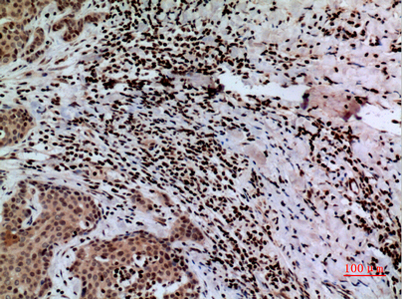
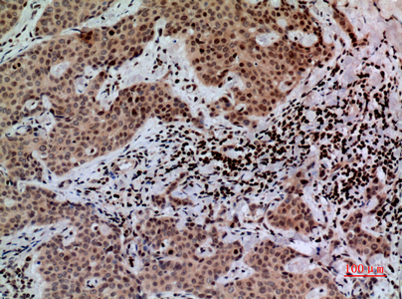
| Dilution | Western Blot: 1/500 - 1/2000. IHC-p: 1/100-1/300. ELISA: 1/20000. Not yet tested in other applications. |
| Purification | The antibody was affinity-purified from rabbit antiserum by affinity-chromatography using epitope-specific immunogen. |
| Concentration | 1 mg/ml |
| Storage stability | -20°C/1 year |
| Molecular Weight (Da) | |
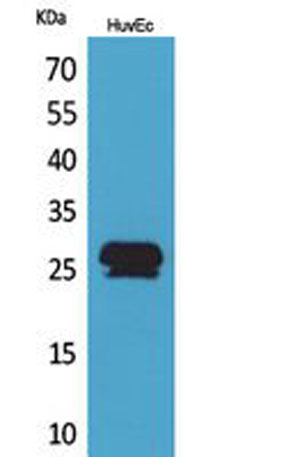
| Observed band (KD) | 25kD |
| Background | The protein encoded by this gene is a calcyclin binding protein. It may be involved in calcium-dependent ubiquitination and subsequent proteosomal degradation of target proteins. It probably serves as a molecular bridge in ubiquitin E3 complexes and participates in the ubiquitin-mediated degradation of beta-catenin. Two alternatively spliced transcript variants encoding different isoforms have been found for this gene. [provided by RefSeq, Jul 2008], |
| Function | function:May be involved in calcium-dependent ubiquitination and subsequent proteosomal degradation of target proteins. Probably serves as a molecular bridge in ubiquitin E3 complexes. Participates in the ubiquitin-mediated degradation of beta-catenin (CTNNB1).,PTM:Phosphorylated on serine residues. Phosphorylated upon induction by RA or at high calcium concentrations.,similarity:Contains 1 CS domain.,similarity:Contains 1 SGS domain.,subcellular location:Cytoplasmic at low calcium concentrations. In neuroblastoma cells, after a retinoic acid (RA) induction and calcium increase, it localizes in both the nucleus and cytoplasm. The nuclear fraction may be phosphorylated.,subunit:Interacts with protein of the S100 family S100A1, S100A6, S100B, S100P and S100A12 at physiological calcium concentrations (By similarity). Component of some large E3 complex at least composed of UBE2D1, SIAH1, CAC |
| Subcellular location | Nucleus . Cytoplasm . Cytoplasmic at low calcium concentrations. In neuroblastoma cells, after a retinoic acid (RA) induction and calcium increase, it localizes in both the nucleus and cytoplasm. The nuclear fraction may be phosphorylated. |
| Expression | Brain,Colon carcinoma,Hepatoma,Liver,Promyelocytic leukemia,Skeletal muscle |

Use collapsible tabs for more detailed information that will help customers make a purchasing decision.
Ex: Shipping and return policies, size guides, and other common questions.