 Français
 English
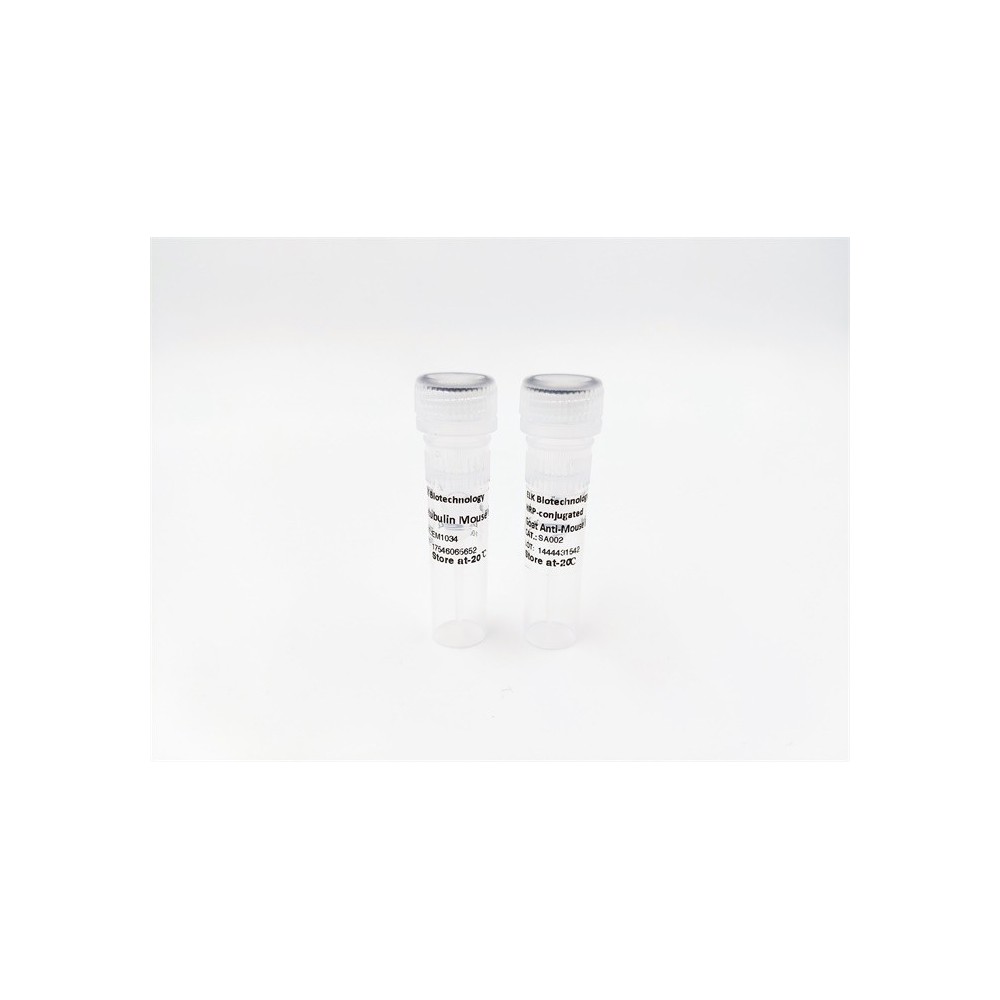

| ELK.No | ES4130 |
| Product name | CD148 rabbit pAb |
| Reactivity | Human;Rat;Mouse; |
| Applications | WB;IHC;IF;ELISA |
| Other name | PTPRJ; DEP1; Receptor-type tyrosine-protein phosphatase eta; Protein-tyrosine phosphatase eta; R-PTP-eta; Density-enhanced phosphatase 1; DEP-1; HPTP eta; Protein-tyrosine phosphatase receptor type J; R-PTP-J; CD148 |
| Size | 100μL |
| Unit price ($) | 248 |
| Human gene ID | 5795 |
| Human Swiss-Prot | Q12913 |
| Source | Rabbit |
| Isotype | IgG |
| Target | CD148 |
| Fields | >>Adherens junction;>>Chemical carcinogenesis - reactive oxygen species |
| Gene name | PTPRJ |
| Protein name | Receptor-type tyrosine-protein phosphatase eta |
| Human gene link | View Human Gene |
| Human Swiss link | View Human Swiss-Prot |
| Mouse gene ID | 19271 |
| Mouse gene link | View Mouse Gene |
| Mouse Swiss-Prot | Q64455 |
| Mouse Swiss link | View Mouse Swiss-Prot |
| Rat gene ID | |
| Rat gene link | |
| Rat Swiss-Prot | |
| Rat Swiss link | |
| Immunogen | The antiserum was produced against synthesized peptide derived from the Internal region of human PTPRJ. AA range:861-910 |
| Specificity | CD148 Polyclonal Antibody detects endogenous levels of CD148 protein. |
| Formulation | Liquid in PBS containing 50% glycerol, 0.5% BSA and 0.02% sodium azide. |
| Clonality | Polyclonal |
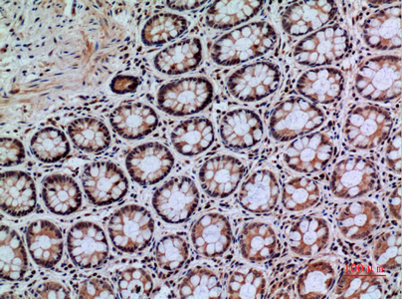
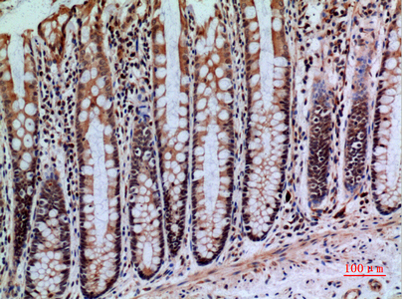
| Dilution | Western Blot: 1/500 - 1/2000. IHC-p: 1/100-1/300. ELISA: 1/20000. Not yet tested in other applications. |
| Purification | The antibody was affinity-purified from rabbit antiserum by affinity-chromatography using epitope-specific immunogen. |
| Concentration | 1 mg/ml |
| Storage stability | -20°C/1 year |
| Molecular Weight (Da) | |
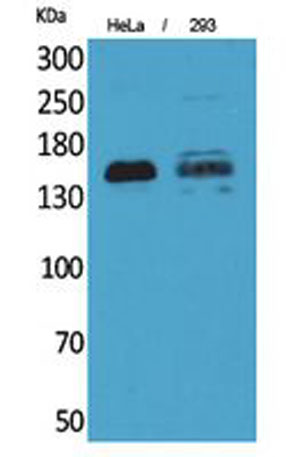
| Observed band (KD) | 150kD |
| Background | The protein encoded by this gene is a member of the protein tyrosine phosphatase (PTP) family. PTPs are known to be signaling molecules that regulate a variety of cellular processes, including cell growth, differentiation, mitotic cycle, and oncogenic transformation. This PTP possesses an extracellular region containing five fibronectin type III repeats, a single transmembrane region, and a single intracytoplasmic catalytic domain, and thus represents a receptor-type PTP. This protein is present in all hematopoietic lineages, and was shown to negatively regulate T cell receptor signaling possibly through interfering with the phosphorylation of Phospholipase C Gamma 1 and Linker for Activation of T Cells. This protein can also dephosphorylate the PDGF beta receptor, and may be involved in UV-induced signal transduction. Multiple transcript variants encoding different isoforms |
| Function | catalytic activity:Protein tyrosine phosphate + H(2)O = protein tyrosine + phosphate.,disease:Defects in PTPRJ are found in cancers of colon, lung, and breast.,function:May contribute to the mechanism of contact inhibition of cell growth.,PTM:N- and O-glycosylated.,similarity:Belongs to the protein-tyrosine phosphatase family. Receptor class 3 subfamily.,similarity:Contains 1 tyrosine-protein phosphatase domain.,similarity:Contains 9 fibronectin type-III domains., |
| Subcellular location | Cell membrane; Single-pass type I membrane protein. Cell projection, ruffle membrane . Cell junction. After T-cell stimulation, it is temporarily excluded from immunological synapses. |
| Expression | Expressed in the promyelocytic cell line HL-60, the granulocyte-macrophage colony-stimulating factor-dependent leukemic cell line F-36P, and the IL3 and erythropoietin-dependent leukemic cell line F-36E. Expressed predominantly in epithelial cells and lymphocytes. Enhanced expression at high cell density. |

Use collapsible tabs for more detailed information that will help customers make a purchasing decision.
Ex: Shipping and return policies, size guides, and other common questions.