 Français
 English
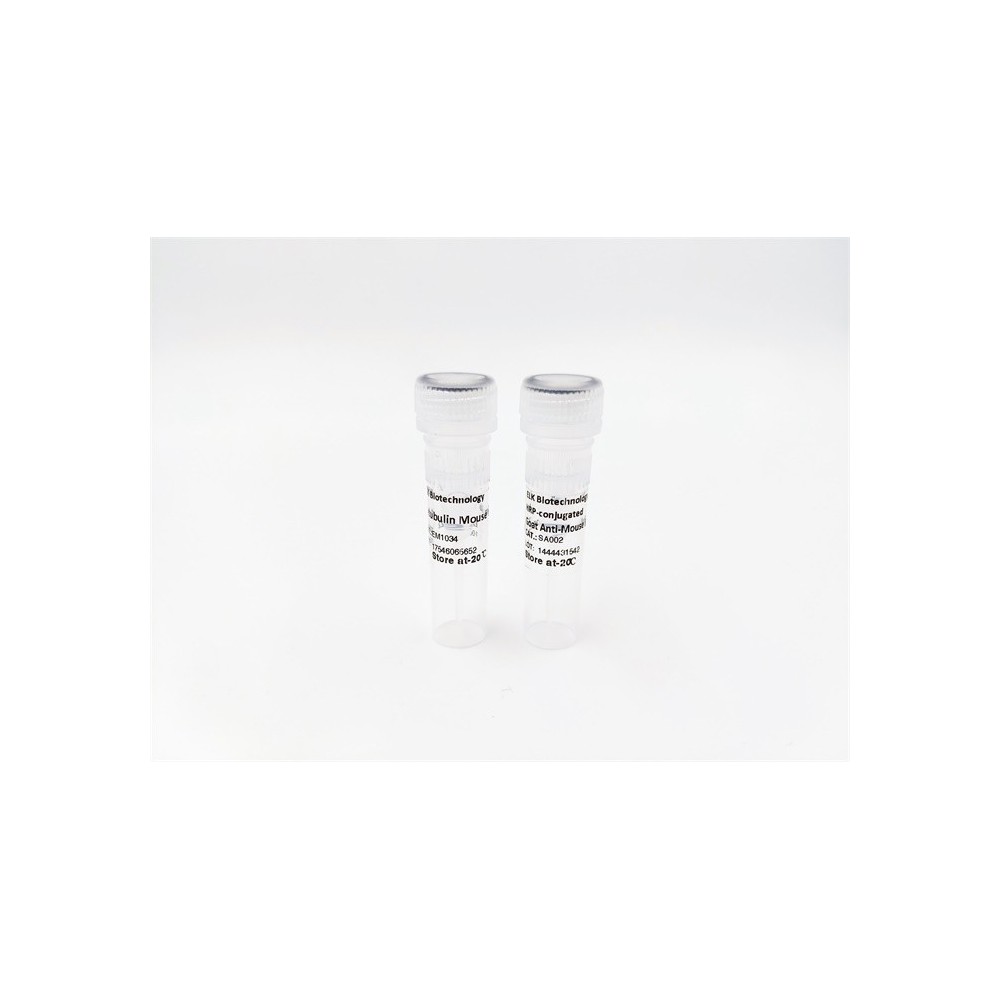

| ELK.No | ES4147 |
| Product name | DRA rabbit pAb |
| Reactivity | Human;Mouse;Rat |
| Applications | WB;ELISA |
| Other name | SLC26A3; DRA; Chloride anion exchanger; Down-regulated in adenoma; Protein DRA; Solute carrier family 26 member 3 |
| Size | 100μL |
| Unit price ($) | 248 |
| Human gene ID | 1811 |
| Human Swiss-Prot | P40879 |
| Source | Rabbit |
| Isotype | IgG |
| Target | DRA |
| Fields | >>Pancreatic secretion;>>Mineral absorption |
| Gene name | SLC26A3 |
| Protein name | Chloride anion exchanger |
| Human gene link | View Human Gene |
| Human Swiss link | View Human Swiss-Prot |
| Mouse gene ID | 13487 |
| Mouse gene link | View Mouse Gene |
| Mouse Swiss-Prot | Q9WVC8 |
| Mouse Swiss link | View Mouse Swiss-Prot |
| Rat gene ID | 114629 |
| Rat gene link | View Rat Gene |
| Rat Swiss-Prot | Q924C9 |
| Rat Swiss link | View Rat Swiss-Prot |
| Immunogen | Synthesized peptide derived from the C-terminal region of human DRA. |
| Specificity | DRA Polyclonal Antibody detects endogenous levels of DRA protein. |
| Formulation | Liquid in PBS containing 50% glycerol, 0.5% BSA and 0.02% sodium azide. |
| Clonality | Polyclonal |
| Dilution | Western Blot: 1/500 - 1/2000. ELISA: 1/20000. Not yet tested in other applications. |
| Purification | The antibody was affinity-purified from rabbit antiserum by affinity-chromatography using epitope-specific immunogen. |
| Concentration | 1 mg/ml |
| Storage stability | -20°C/1 year |
| Molecular Weight (Da) | |
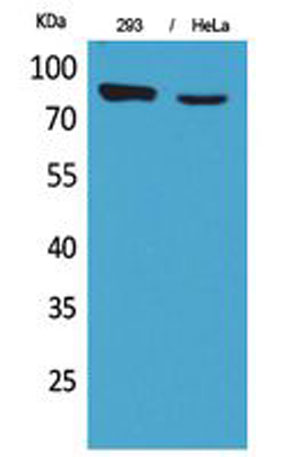
| Observed band (KD) | 84kD |
| Background | The protein encoded by this gene is a transmembrane glycoprotein that transports chloride ions across the cell membrane in exchange for bicarbonate ions. It is localized to the mucosa of the lower intestinal tract, particularly to the apical membrane of columnar epithelium and some goblet cells. The protein is essential for intestinal chloride absorption, and mutations in this gene have been associated with congenital chloride diarrhea. [provided by RefSeq, Oct 2008], |
| Function | developmental stage:Expression is significantly decreased in adenomas (polyps) and adenocarcinomas of the colon.,disease:Defects in SLC26A3 are the cause of congenital chloride diarrhea (CLD) [MIM:214700]. CLD is a disease characterized by voluminous watery stools containing an excess of chloride. The children with this disease are often premature.,function:Chloride/bicarbonate exchanger. Involved in absorbtion of in the colon. Helps mediate electrolyte and fluid absorption.,PTM:Phosphorylated upon DNA damage, probably by ATM or ATR.,similarity:Belongs to the SLC26A/SulP transporter (TC 2.A.53) family.,similarity:Contains 1 STAS domain.,subunit:Interacts with PDZK1., |
| Subcellular location | Apical cell membrane ; Multi-pass membrane protein . Membrane ; Multi-pass membrane protein . Localized in sperm membranes. Midpiece of sperm tail. Colocalizes with CFTR at the midpiece of sperm tail (By similarity). . |
| Expression | Colon,Lung,Rectum tumor, |

Use collapsible tabs for more detailed information that will help customers make a purchasing decision.
Ex: Shipping and return policies, size guides, and other common questions.