 Français
 English
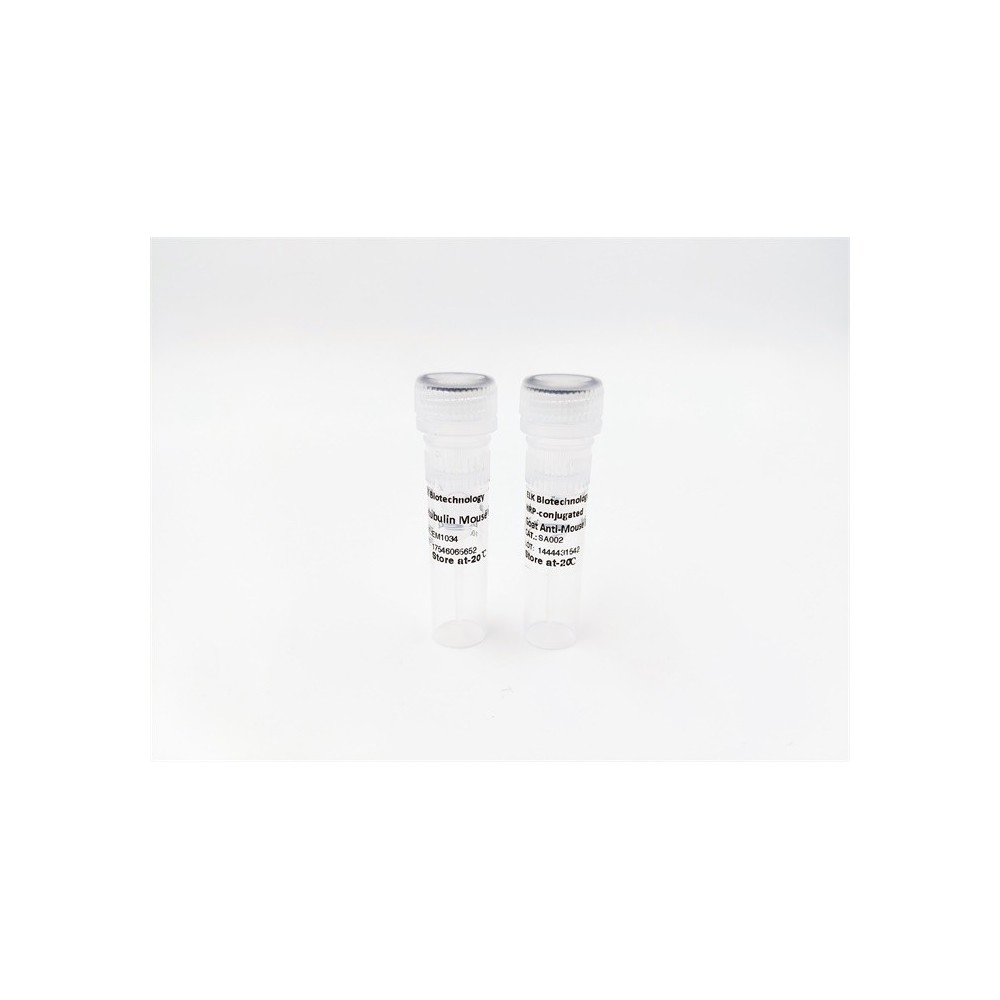

| ELK.No | ES4183 |
| Product name | FMO3 rabbit pAb |
| Reactivity | Human;Rat;Mouse; |
| Applications | WB;IHC;IF;ELISA |
| Other name | FMO3; Dimethylaniline monooxygenase [N-oxide-forming] 3; Dimethylaniline oxidase 3; FMO II; FMO form 2; Hepatic flavin-containing monooxygenase 3; FMO 3; Trimethylamine monooxygenase |
| Size | 50μL |
| Unit price ($) | 148 |
| Human gene ID | 2328 |
| Human Swiss-Prot | P31513 |
| Source | Rabbit |
| Isotype | IgG |
| Target | FMO3 |
| Fields | >>Taurine and hypotaurine metabolism;>>Drug metabolism - cytochrome P450;>>Metabolic pathways |
| Gene name | FMO3 |
| Protein name | Dimethylaniline monooxygenase [N-oxide-forming] 3 |
| Human gene link | View Human Gene |
| Human Swiss link | View Human Swiss-Prot |
| Mouse gene ID | |
| Mouse gene link | |
| Mouse Swiss-Prot | P97501 |
| Mouse Swiss link | View Mouse Swiss-Prot |
| Rat gene ID | |
| Rat gene link | |
| Rat Swiss-Prot | |
| Rat Swiss link | |
| Immunogen | The antiserum was produced against synthesized peptide derived from the Internal region of human FMO3. AA range:101-150 |
| Specificity | FMO3 Polyclonal Antibody detects endogenous levels of FMO3 protein. |
| Formulation | Liquid in PBS containing 50% glycerol, 0.5% BSA and 0.02% sodium azide. |
| Clonality | Polyclonal |
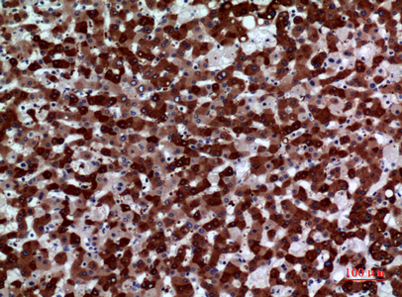
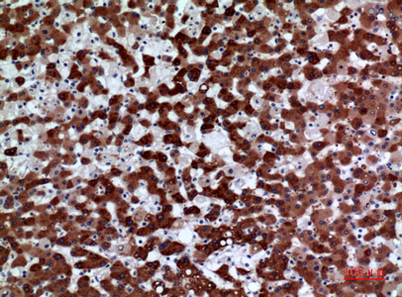
| Dilution | Western Blot: 1/500 - 1/2000. IHC-p: 1/100-1/300. ELISA: 1/20000. Not yet tested in other applications. |
| Purification | The antibody was affinity-purified from rabbit antiserum by affinity-chromatography using epitope-specific immunogen. |
| Concentration | 1 mg/ml |
| Storage stability | -20°C/1 year |
| Molecular Weight (Da) | |
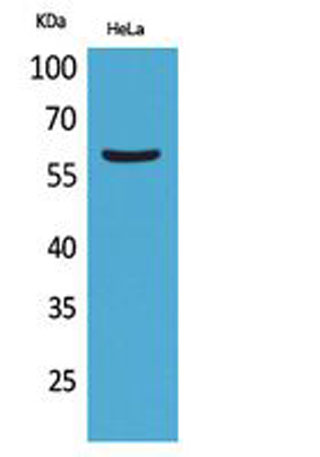
| Observed band (KD) | 58kD |
| Background | flavin containing monooxygenase 3(FMO3) Homo sapiens Flavin-containing monooxygenases (FMO) are an important class of drug-metabolizing enzymes that catalyze the NADPH-dependent oxygenation of various nitrogen-,sulfur-, and phosphorous-containing xenobiotics such as therapeutic drugs, dietary compounds, pesticides, and other foreign compounds. The human FMO gene family is composed of 5 genes and multiple pseudogenes. FMO members have distinct developmental- and tissue-specific expression patterns. The expression of this FMO3 gene, the major FMO expressed in adult liver, can vary up to 20-fold between individuals. This inter-individual variation in FMO3 expression levels is likely to have significant effects on the rate at which xenobiotics are metabolised and, therefore, is of considerable interest to the pharmaceutical industry. This transmembrane protein localizes to the endoplasmic reticulum of many tissues. Alternative splicing of this gen |
| Function | catalytic activity:N,N-dimethylaniline + NADPH + O(2) = N,N-dimethylaniline N-oxide + NADP(+) + H(2)O.,cofactor:FAD.,disease:Defects in FMO3 are the cause of trimethylaminuria (TMAU) [MIM:602079]; also known as fish-odor syndrome. TMAU is an inborn error of metabolism associated with an offensive body odor and caused by deficiency of FMO-mediated N-oxidation of amino-trimethylamine (TMA) derived from foodstuffs. Such individuals excrete relatively large amounts of TMA in their urine, sweat, and breath, and exhibit a fishy body odor characteristic of the malodorous free amine.,function:Involved in the oxidative metabolism of a variety of xenobiotics such as drugs and pesticides. It N-oxygenates primary aliphatic alkylamines as well as secondary and tertiary amines. Plays an important role in the metabolism of trimethylamine (TMA), via the production of TMA N-oxide (TMAO). Is also able to |
| Subcellular location | Microsome membrane ; Single-pass membrane protein . Endoplasmic reticulum membrane ; Single-pass membrane protein . |
| Expression | Liver. |

Use collapsible tabs for more detailed information that will help customers make a purchasing decision.
Ex: Shipping and return policies, size guides, and other common questions.