 Français
 English
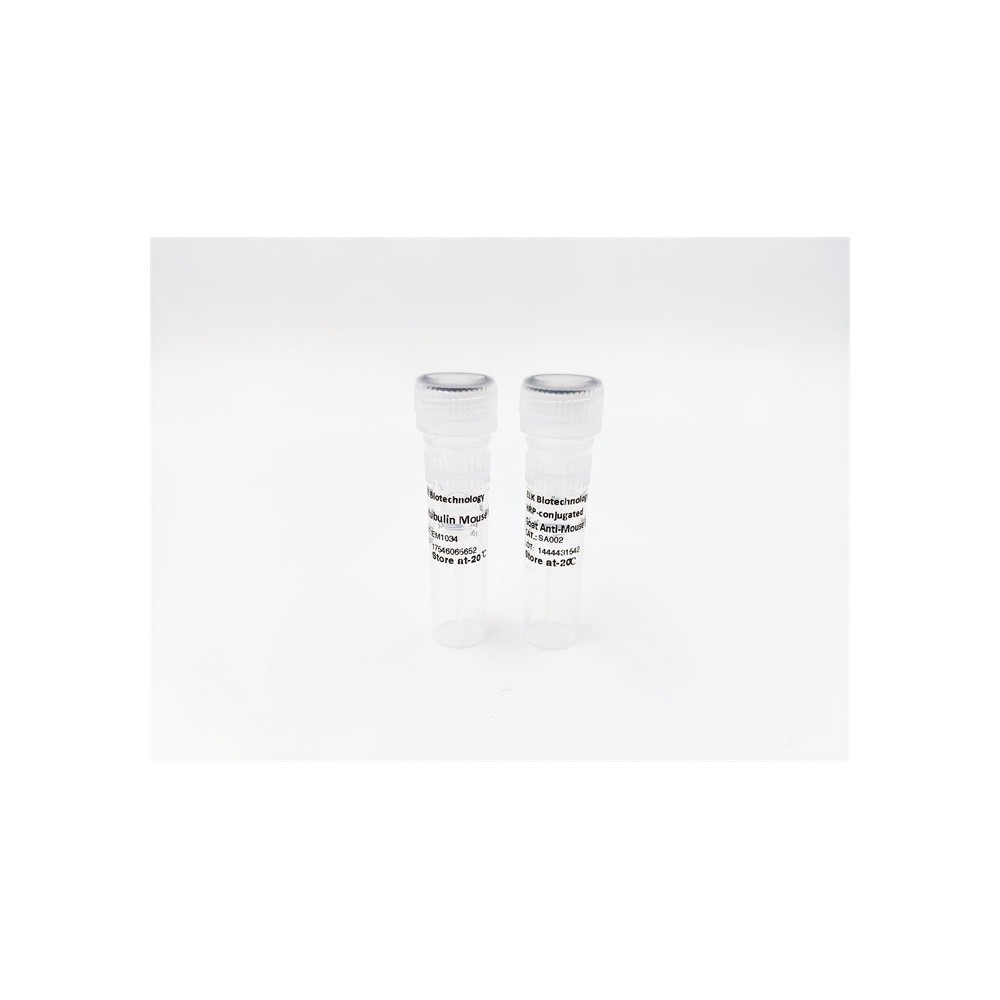

| ELK.No | ES4237 |
| Product name | NCoA-3 rabbit pAb |
| Reactivity | Human;Mouse;Rat |
| Applications | WB;IHC;IF;ELISA |
| Other name | NCOA3; AIB1; BHLHE42; RAC3; TRAM1; Nuclear receptor coactivator 3; NCoA-3; ACTR; Amplified in breast cancer 1 protein; AIB-1; CBP-interacting protein; pCIP; Class E basic helix-loop-helix protein 42; bHLHe42; Receptor-associated coactivator 3; RAC-3; Steroid receptor coactivator protein 3; SRC-3; Thyroid hormone receptor activator molecule 1; TRAM-1 |
| Size | 100μL |
| Unit price ($) | 248 |
| Human gene ID | 8202 |
| Human Swiss-Prot | Q9Y6Q9 |
| Source | Rabbit |
| Isotype | IgG |
| Target | NCoA-3 |
| Fields | >>Endocrine resistance;>>Estrogen signaling pathway;>>Thyroid hormone signaling pathway;>>Pathways in cancer;>>Breast cancer |
| Gene name | NCOA3 |
| Protein name | Nuclear receptor coactivator 3 |
| Human gene link | View Human Gene |
| Human Swiss link | View Human Swiss-Prot |
| Mouse gene ID | |
| Mouse gene link | |
| Mouse Swiss-Prot | O09000 |
| Mouse Swiss link | View Mouse Swiss-Prot |
| Rat gene ID | |
| Rat gene link | |
| Rat Swiss-Prot | Q9EPU2 |
| Rat Swiss link | View Rat Swiss-Prot |
| Immunogen | Synthesized peptide derived from the Internal region of human NCoA-3. |
| Specificity | NCoA-3 Polyclonal Antibody detects endogenous levels of NCoA-3 protein. |
| Formulation | Liquid in PBS containing 50% glycerol, 0.5% BSA and 0.02% sodium azide. |
| Clonality | Polyclonal |
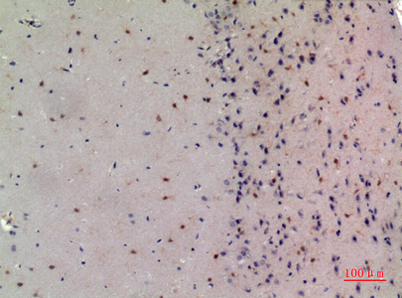
| Dilution | Western Blot: 1/500 - 1/2000. IHC-p: 1/100-1/300. ELISA: 1/20000. Not yet tested in other applications. |
| Purification | The antibody was affinity-purified from rabbit antiserum by affinity-chromatography using epitope-specific immunogen. |
| Concentration | 1 mg/ml |
| Storage stability | -20°C/1 year |
| Molecular Weight (Da) | |
| Observed band (KD) | 160kD |
| Background | The protein encoded by this gene is a nuclear receptor coactivator that interacts with nuclear hormone receptors to enhance their transcriptional activator functions. The encoded protein has histone acetyltransferase activity and recruits p300/CBP-associated factor and CREB binding protein as part of a multisubunit coactivation complex. This protein is initially found in the cytoplasm but is translocated into the nucleus upon phosphorylation. Several transcript variants encoding different isoforms have been found for this gene. In addition, a polymorphic repeat region is found in the C-terminus of the encoded protein. [provided by RefSeq, Mar 2010], |
| Function | alternative products:Additional isoforms seem to exist,catalytic activity:Acetyl-CoA + histone = CoA + acetylhistone.,domain:Contains three Leu-Xaa-Xaa-Leu-Leu (LXXLL) motifs. Motifs 1 and 2 are essential for the association with nuclear receptors, and constitute the RID domain (Receptor-interacting domain).,enzyme regulation:Coactivator activity on nuclear receptors and NF-kappa-B pathways is enhanced by various hormones, and the TNF cytokine, respectively. TNF stimulation probably enhances phosphorylation, which in turn activates coactivator function. In contrast, acetylation by CREBBP apparently suppresses coactivation of target genes by disrupting its association with nuclear receptors.,function:Nuclear receptor coactivator that directly binds nuclear receptors and stimulates the transcriptional activities in a hormone-dependent fashion. Plays a central role in creating a multisubuni |
| Subcellular location | Cytoplasm. Nucleus. Mainly cytoplasmic and weakly nuclear. Upon TNF activation and subsequent phosphorylation, it translocates from the cytoplasm to the nucleus. |
| Expression | Widely expressed. High expression in heart, skeletal muscle, pancreas and placenta. Low expression in brain, and very low in lung, liver and kidney. |


Use collapsible tabs for more detailed information that will help customers make a purchasing decision.
Ex: Shipping and return policies, size guides, and other common questions.