 Français
 English
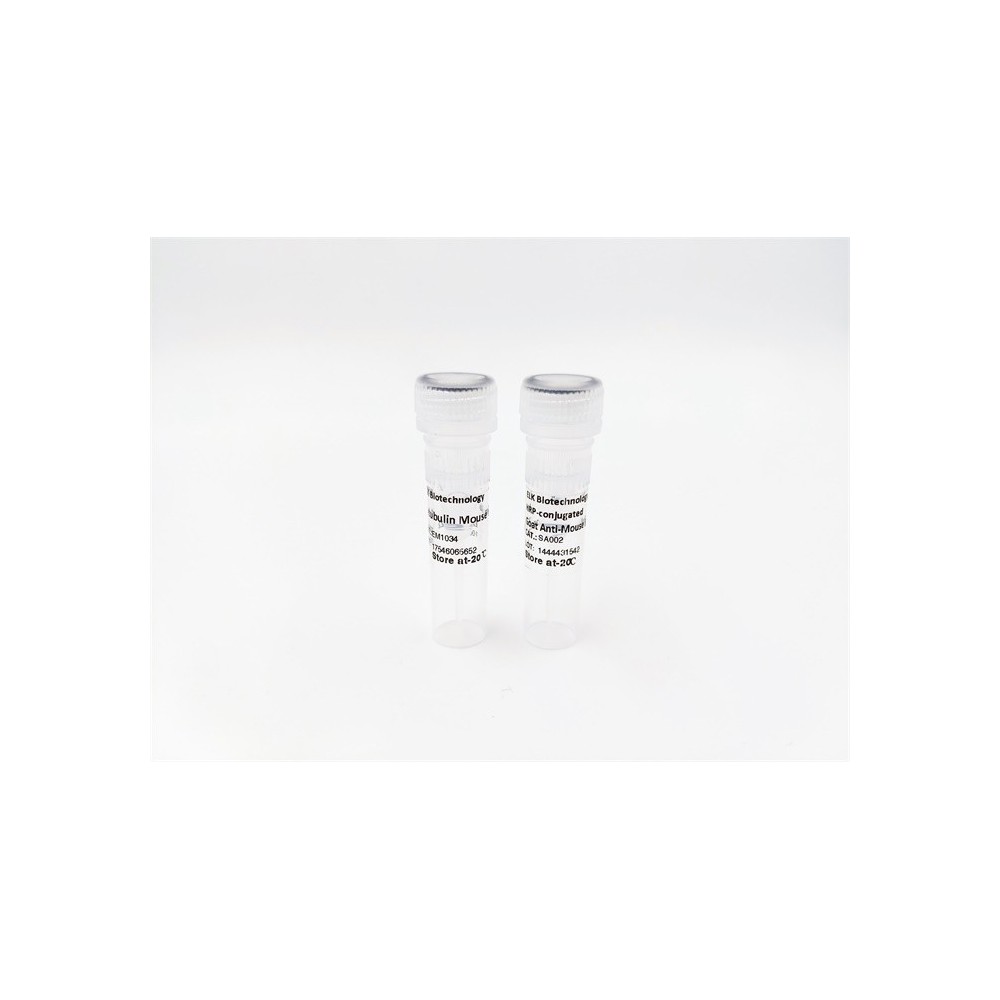

| ELK.No | ES4264 |
| Product name | RSAD2 rabbit pAb |
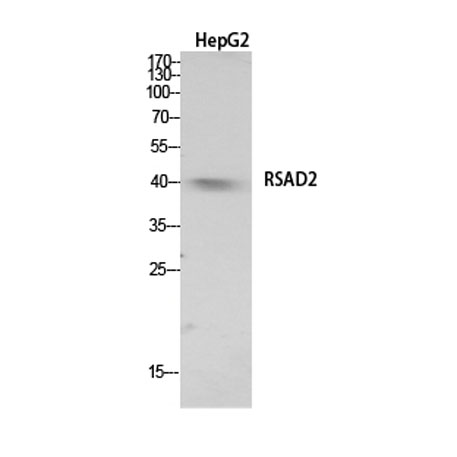
| Reactivity | Human;Rat;Mouse; |
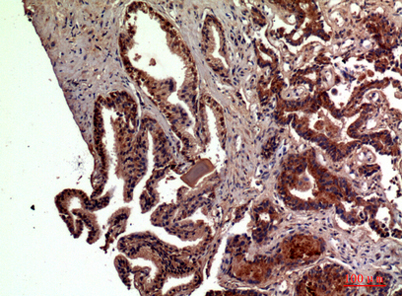
| Applications | WB;IHC;IF;ELISA |
| Other name | RSAD2; CIG5; Radical S-adenosyl methionine domain-containing protein 2; Cytomegalovirus-induced gene 5 protein; Viperin; Virus inhibitory protein, endoplasmic reticulum-associated, interferon-inducible |
| Size | 50μL |
| Unit price ($) | 148 |
| Human gene ID | 91543 |
| Human Swiss-Prot | Q8WXG1 |
| Source | Rabbit |
| Isotype | IgG |
| Target | RSAD2 |
| Fields | >>Hepatitis C;>>Influenza A |
| Gene name | RSAD2 |
| Protein name | Radical S-adenosyl methionine domain-containing protein 2 |
| Human gene link | View Human Gene |
| Human Swiss link | View Human Swiss-Prot |
| Mouse gene ID | 58185 |
| Mouse gene link | View Mouse Gene |
| Mouse Swiss-Prot | Q8CBB9 |
| Mouse Swiss link | View Mouse Swiss-Prot |
| Rat gene ID | 65190 |
| Rat gene link | View Rat Gene |
| Rat Swiss-Prot | O70600 |
| Rat Swiss link | View Rat Swiss-Prot |
| Immunogen | The antiserum was produced against synthesized peptide derived from the N-terminal region of human RSAD2. AA range:21-70 |
| Specificity | RSAD2 Polyclonal Antibody detects endogenous levels of RSAD2 protein. |
| Formulation | Liquid in PBS containing 50% glycerol, 0.5% BSA and 0.02% sodium azide. |
| Clonality | Polyclonal |
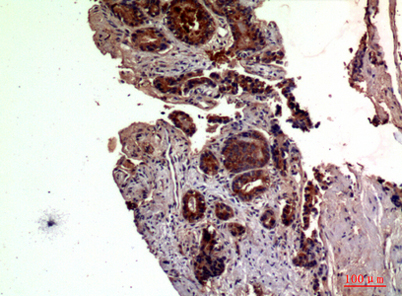
| Dilution | Western Blot: 1/500 - 1/2000. IHC-p: 1:100-1:300. ELISA: 1/20000. Not yet tested in other applications. |
| Purification | The antibody was affinity-purified from rabbit antiserum by affinity-chromatography using epitope-specific immunogen. |
| Concentration | 1 mg/ml |
| Storage stability | -20°C/1 year |
| Molecular Weight (Da) | |
| Observed band (KD) | 42kD |
| Background | cofactor:Binds 1 4Fe-4S cluster. The cluster is coordinated with 3 cysteines and an exchangeable S-adenosyl-L-methionine.,function:Involved in antiviral defense. May impair virus budding by disrupting lipid rafts at the plasma membrane, a feature which is essential for the budding process of many viruses. Acts through binding with and inactivating FPPS, an enzyme involved in synthesis of cholesterol, farnesylated and geranylated proteins, ubiquinones dolichol and heme. Plays a major role in the cell antiviral state induced by type I and type II interferon. Displays antiviral effect against HIV-1 virus, hepatitis C virus, human cytomegalovirus, and aphaviruses, but not vesiculovirus.,induction:By interferon type I, type II and LPS. Little or no induction by interferon gamma is observed in monocytic cell lines. Induced by infection with human cytomegalovirus (HMCV), hepatitis C virus, yellow fever virus and Sendai virus, presumably through type I interferon pathway.,miscellaneous:Up-regulated in atherosclerosis. Latent viruses like HCMV may be involved in atherogenesis by initiating local inflammation. This may induce up-regulation of antiviral gene RSAD2, which modulates lipids synthesis, and thus could play a role in abnormal lipid accumulation leading to atherosclerosis.,similarity:Belongs to the RSAD2 family.,subcellular location:Probably associates with the cytosolic side of the endoplasmic reticulum. Infection with human cytomegalovirus (HCMV) causes relocation to the Golgi apparatus and to cytoplasmic vacuoles which also contain HCMV proteins glycoprotein B and pp28.,subunit:Interacts with FPPS., |
| Function | cofactor:Binds 1 4Fe-4S cluster. The cluster is coordinated with 3 cysteines and an exchangeable S-adenosyl-L-methionine.,function:Involved in antiviral defense. May impair virus budding by disrupting lipid rafts at the plasma membrane, a feature which is essential for the budding process of many viruses. Acts through binding with and inactivating FPPS, an enzyme involved in synthesis of cholesterol, farnesylated and geranylated proteins, ubiquinones dolichol and heme. Plays a major role in the cell antiviral state induced by type I and type II interferon. Displays antiviral effect against HIV-1 virus, hepatitis C virus, human cytomegalovirus, and aphaviruses, but not vesiculovirus.,induction:By interferon type I, type II and LPS. Little or no induction by interferon gamma is observed in monocytic cell lines. Induced by infection with human cytomegalovirus (HMCV), hepatitis C virus, yell |
| Subcellular location | Endoplasmic reticulum membrane; Peripheral membrane protein; Cytoplasmic side. Golgi apparatus . Endoplasmic reticulum . Lipid droplet . Mitochondrion. Mitochondrion inner membrane. Mitochondrion outer membrane. Infection with human cytomegalovirus (HCMV) causes relocation to the Golgi apparatus and to cytoplasmic vacuoles which also contain HCMV proteins glycoprotein B and pp28. Interaction with human cytomegalovirus/HHV-5 protein vMIA/UL37 results in its relocalization from the endoplasmic reticulum to the mitochondria. |
| Expression | Foreskin fibroblast,Macrophage,Prostate, |

Use collapsible tabs for more detailed information that will help customers make a purchasing decision.
Ex: Shipping and return policies, size guides, and other common questions.