 Français
 English
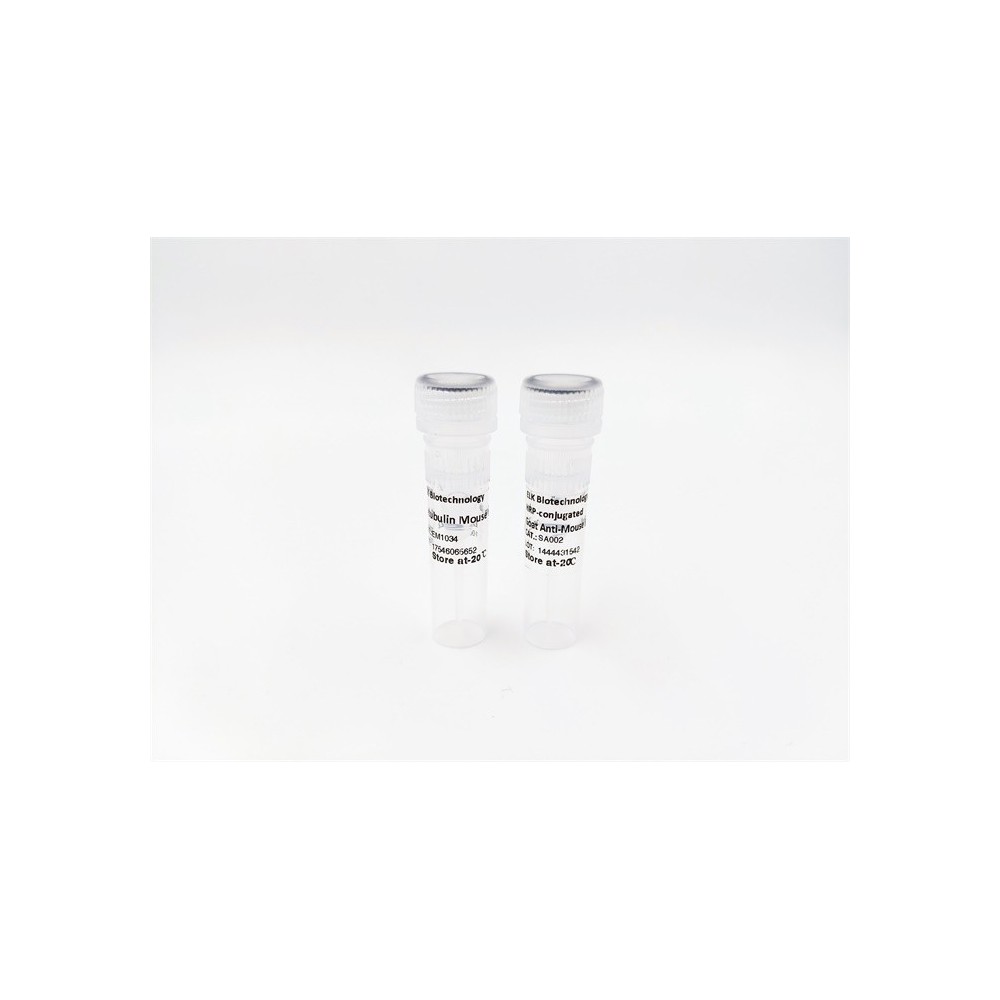

| ELK.No | ES4273 |
| Product name | ANG I rabbit pAb |
| Reactivity | Human;Rat;Mouse; |
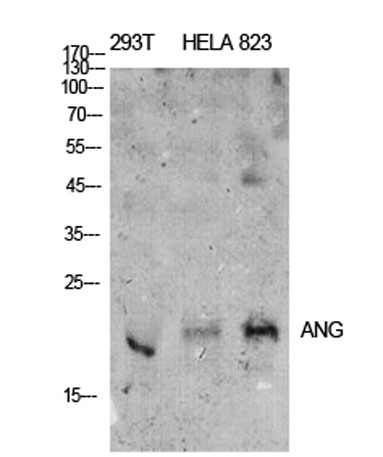
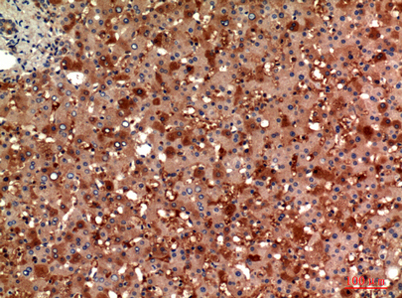
| Applications | WB;IHC;IF;ELISA |
| Other name | ANG; RNASE5; Angiogenin; Ribonuclease 5; RNase 5 |
| Size | 50μL |
| Unit price ($) | 148 |
| Human gene ID | 283 |
| Human Swiss-Prot | P03950 |
| Source | Rabbit |
| Isotype | IgG |
| Target | Ang-1 |
| Fields | >>Amyotrophic lateral sclerosis |
| Gene name | ANG |
| Protein name | Angiogenin |
| Human gene link | View Human Gene |
| Human Swiss link | View Human Swiss-Prot |
| Mouse gene ID | |
| Mouse gene link | |
| Mouse Swiss-Prot | P21570 |
| Mouse Swiss link | View Mouse Swiss-Prot |
| Rat gene ID | |
| Rat gene link | |
| Rat Swiss-Prot | |
| Rat Swiss link | |
| Immunogen | The antiserum was produced against synthesized peptide derived from the N-terminal region of human N-ternal ANG. AA range:11-60 |
| Specificity | ANG I Polyclonal Antibody detects endogenous levels of ANG I protein. |
| Formulation | Liquid in PBS containing 50% glycerol, 0.5% BSA and 0.02% sodium azide. |
| Clonality | Polyclonal |
| Dilution | Western Blot: 1/500 - 1/2000. IHC-p: 1:100-1:300. ELISA: 1/10000. Not yet tested in other applications. |
| Purification | The antibody was affinity-purified from rabbit antiserum by affinity-chromatography using epitope-specific immunogen. |
| Concentration | 1 mg/ml |
| Storage stability | -20°C/1 year |
| Molecular Weight (Da) | |
| Observed band (KD) | 17kD |
| Background | angiogenin(ANG) Homo sapiens The protein encoded by this gene is an exceedingly potent mediator of new blood vessel formation. It hydrolyzes cellular tRNAs resulting in decreased protein synthesis and is similar to pancreatic ribonuclease. In addition, the mature peptide has antimicrobial activity against some bacteria and fungi, including S. pneumoniae and C. albicans. Alternative splicing results in two transcript variants encoding the same protein. This gene and the gene that encodes ribonuclease, RNase A family, 4 share promoters and 5' exons. Each gene splices to a unique downstream exon that contains its complete coding region. [provided by RefSeq, Aug 2014], |
| Function | caution:It is uncertain whether Met-1 or Met-3 is the initiator.,developmental stage:Low level expression in the developing fetus, increased in the neonate, and maximal in the adult.,disease:Defects in ANG are the cause of susceptibility to amyotrophic lateral sclerosis type 9 (ALS9) [MIM:611895]. ALS is a degenerative disorder of motor neurons in the cortex, brain stem and spinal cord. ALS is characterized by muscular weakness and atrophy.,function:May function as a tRNA-specific ribonuclease that binds to actin on the surface of endothelial cells; once bound, angiogenin is endocytosed and translocated to the nucleus, thereby promoting the endothelial invasiveness necessary for blood vessel formation. Angiogenin induces vascularization of normal and malignant tissues. Abolishes protein synthesis by specifically hydrolyzing cellular tRNAs.,online information:Angiogenin,similarity:Belongs |
| Subcellular location | Cytoplasmic vesicle, secretory vesicle lumen . Secreted . Nucleus . Nucleus, nucleolus . Rapidly endocytosed by target cells and translocated to the nucleus where it accumulates in the nucleolus and binds to DNA (PubMed:12051708). . |
| Expression | Expressed predominantly in the liver. Also detected in endothelial cells and spinal cord neurons. |

Use collapsible tabs for more detailed information that will help customers make a purchasing decision.
Ex: Shipping and return policies, size guides, and other common questions.