 Français
 English
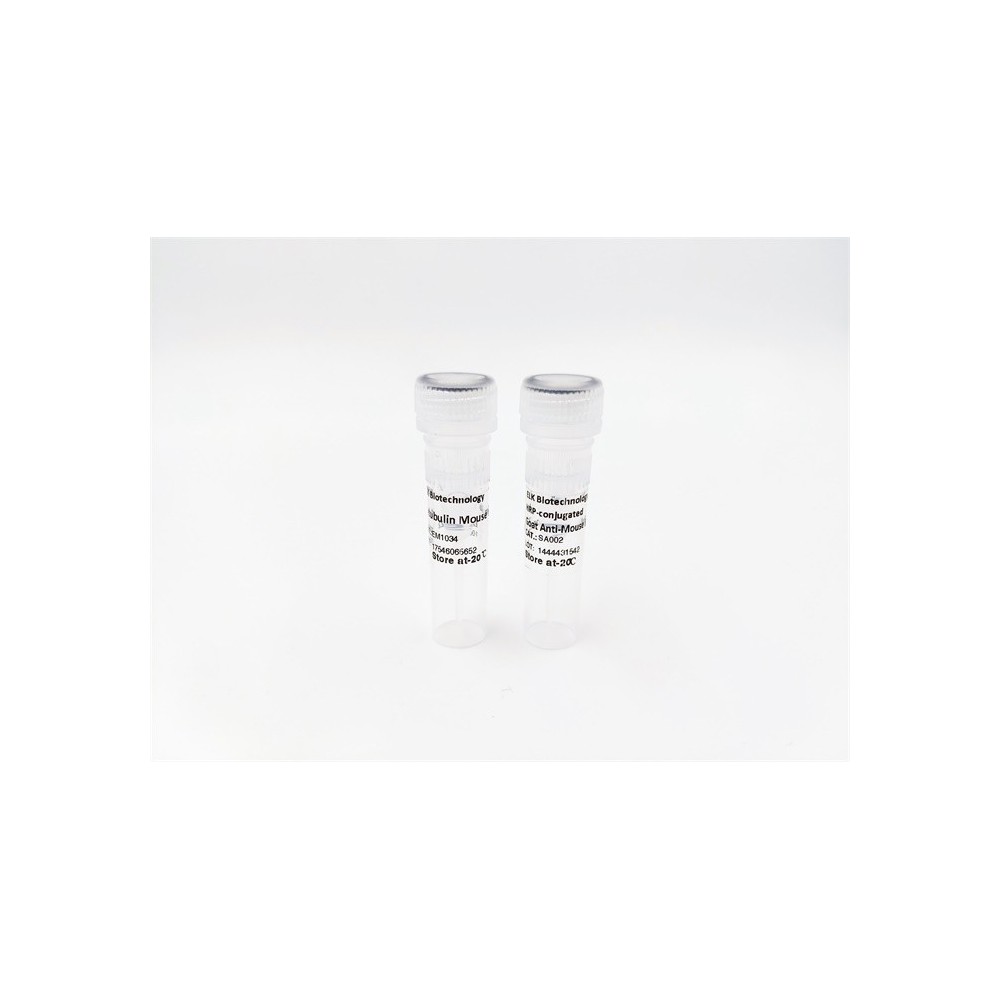

| ELK.No | ES4302 |
| Product name | PSGL-1 rabbit pAb |
| Reactivity | Human;Rat;Mouse; |
| Applications | WB;IHC;IF;ELISA |
| Other name | SELPLG; P-selectin glycoprotein ligand 1; PSGL-1; Selectin P ligand; CD162 |
| Size | 100μL |
| Unit price ($) | 248 |
| Human gene ID | 6404 |
| Human Swiss-Prot | Q14242 |
| Source | Rabbit |
| Isotype | IgG |
| Target | PSGL-1 |
| Fields | >>Cell adhesion molecules;>>Neutrophil extracellular trap formation;>>Staphylococcus aureus infection |
| Gene name | SELPLG |
| Protein name | P-selectin glycoprotein ligand 1 |
| Human gene link | View Human Gene |
| Human Swiss link | View Human Swiss-Prot |
| Mouse gene ID | |
| Mouse gene link | |
| Mouse Swiss-Prot | Q62170 |
| Mouse Swiss link | View Mouse Swiss-Prot |
| Rat gene ID | |
| Rat gene link | |
| Rat Swiss-Prot | |
| Rat Swiss link | |
| Immunogen | The antiserum was produced against synthesized peptide derived from the N-terminal region of human SELPLG. AA range:1-50 |
| Specificity | PSGL-1 Polyclonal Antibody detects endogenous levels of PSGL-1 protein. |
| Formulation | Liquid in PBS containing 50% glycerol, 0.5% BSA and 0.02% sodium azide. |
| Clonality | Polyclonal |
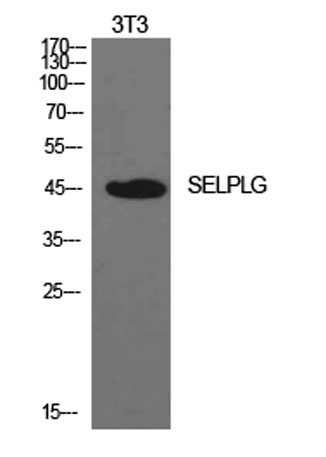
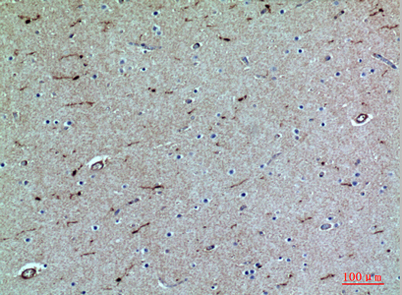
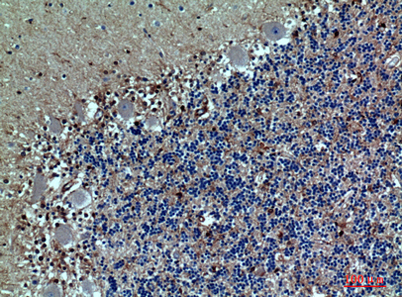
| Dilution | Western Blot: 1/500 - 1/2000. IHC-p: 1:100-1:300. ELISA: 1/10000. Not yet tested in other applications. |
| Purification | The antibody was affinity-purified from rabbit antiserum by affinity-chromatography using epitope-specific immunogen. |
| Concentration | 1 mg/ml |
| Storage stability | -20°C/1 year |
| Molecular Weight (Da) | |
| Observed band (KD) | 45 110kd(glycosylated) |
| Background | This gene encodes a glycoprotein that functions as a high affinity counter-receptor for the cell adhesion molecules P-, E- and L- selectin expressed on myeloid cells and stimulated T lymphocytes. As such, this protein plays a critical role in leukocyte trafficking during inflammation by tethering of leukocytes to activated platelets or endothelia expressing selectins. This protein requires two post-translational modifications, tyrosine sulfation and the addition of the sialyl Lewis x tetrasaccharide (sLex) to its O-linked glycans, for its high-affinity binding activity. Aberrant expression of this gene and polymorphisms in this gene are associated with defects in the innate and adaptive immune response. Alternate splicing results in multiple transcript variants.[provided by RefSeq, Apr 2011], |
| Function | function:A SLe(x)-type glycan, which through high affinity, calcium-dependent interactions with E-, P- and L-selectins, mediates rapid rolling of leukocytes over vascular surfaces during the initial steps in inflammation. PSGL1 is critical for the initial leukocyte capture.,online information:P-selectin glycoprotein ligand 1 entry,PTM:Displays complex, core-2, sialylated and fucosylated O-linked oligosaccharides, at least some of which appear to contain poly-N-acetyllactosamine with varying degrees of substitution. Mainly disialylated or neutral forms of the core-2 tetrasaccharide, Galbeta1-->4GlcNAcbeta1-->6(Galbeta1-->3)GalNAcOH. The GlcN:GalN ratio is approximately 2:1 and the Man:Fuc ratio 3:5. Contains about 14% fucose with alpha-1,3 linkage present in two forms: One species is a disialylated, monofucosylated glycan, and the other, a monosialylated, trifucosylated glycan with a poly |
| Subcellular location | Membrane; Single-pass type I membrane protein. |
| Expression | Expressed on neutrophils, monocytes and most lymphocytes. |

Use collapsible tabs for more detailed information that will help customers make a purchasing decision.
Ex: Shipping and return policies, size guides, and other common questions.