 Français
 English
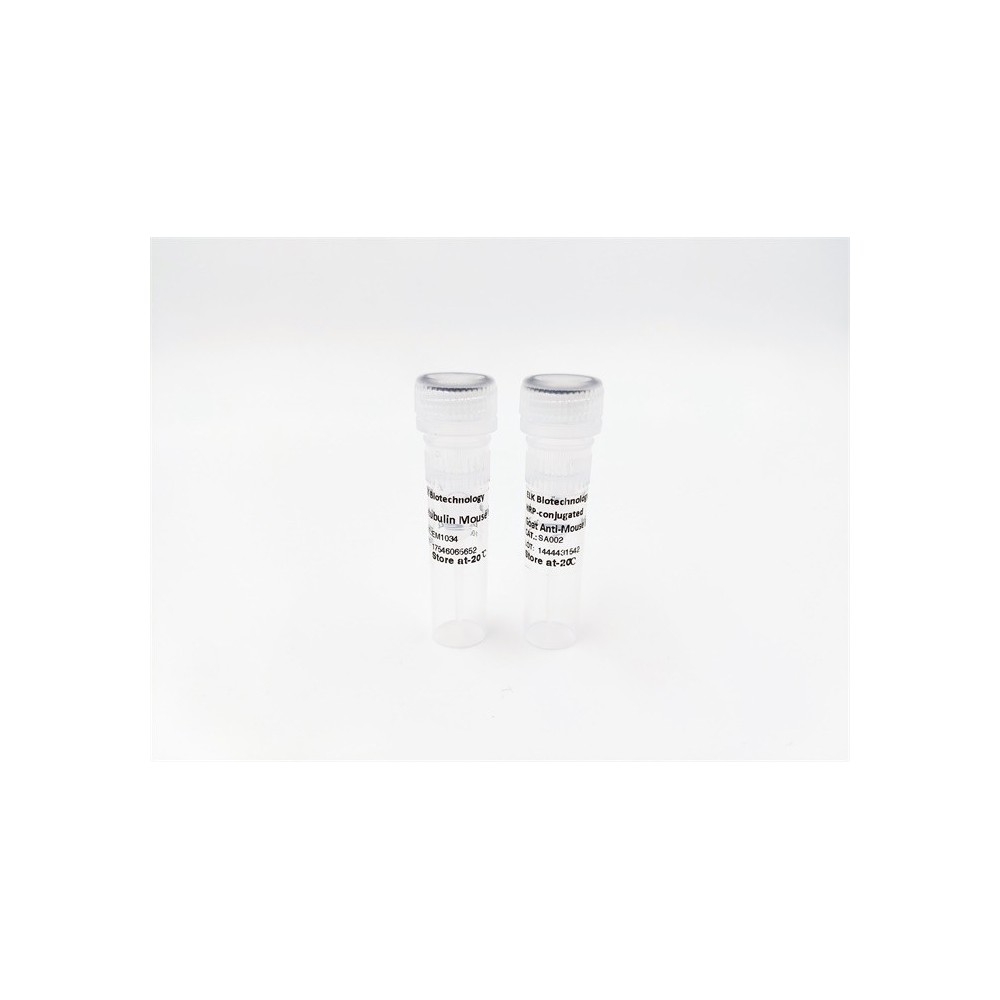

| ELK.No | ES4303 |
| Product name | GHR rabbit pAb |
| Reactivity | Human;Mouse;Rat |
| Applications | WB;ELISA |
| Other name | GHR; Growth hormone receptor; GH receptor; Somatotropin receptor |
| Size | 100μL |
| Unit price ($) | 248 |
| Human gene ID | 2690 |
| Human Swiss-Prot | P10912 |
| Source | Rabbit |
| Isotype | IgG |
| Target | GHR |
| Fields | >>Cytokine-cytokine receptor interaction;>>Neuroactive ligand-receptor interaction;>>PI3K-Akt signaling pathway;>>JAK-STAT signaling pathway;>>Growth hormone synthesis, secretion and action |
| Gene name | GHR |
| Protein name | Growth hormone receptor |
| Human gene link | View Human Gene |
| Human Swiss link | View Human Swiss-Prot |
| Mouse gene ID | 14600 |
| Mouse gene link | View Mouse Gene |
| Mouse Swiss-Prot | P16882 |
| Mouse Swiss link | View Mouse Swiss-Prot |
| Rat gene ID | 25235 |
| Rat gene link | View Rat Gene |
| Rat Swiss-Prot | P16310 |
| Rat Swiss link | View Rat Swiss-Prot |
| Immunogen | The antiserum was produced against synthesized peptide derived from the N-terminal region of human GHR. AA range:21-70 |
| Specificity | GHR Polyclonal Antibody detects endogenous levels of GHR protein. |
| Formulation | Liquid in PBS containing 50% glycerol, 0.5% BSA and 0.02% sodium azide. |
| Clonality | Polyclonal |
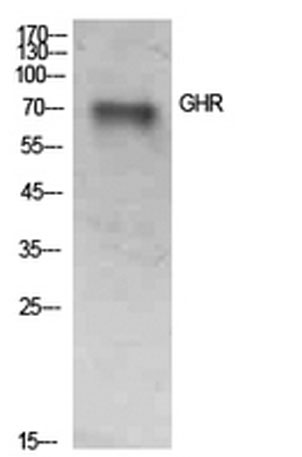
| Dilution | Western Blot: 1/500 - 1/2000. ELISA: 1/10000. Not yet tested in other applications. |
| Purification | The antibody was affinity-purified from rabbit antiserum by affinity-chromatography using epitope-specific immunogen. |
| Concentration | 1 mg/ml |
| Storage stability | -20°C/1 year |
| Molecular Weight (Da) | |
| Observed band (KD) | 140kD |
| Background | This gene encodes a member of the type I cytokine receptor family, which is a transmembrane receptor for growth hormone. Binding of growth hormone to the receptor leads to receptor dimerization and the activation of an intra- and intercellular signal transduction pathway leading to growth. Mutations in this gene have been associated with Laron syndrome, also known as the growth hormone insensitivity syndrome (GHIS), a disorder characterized by short stature. In humans and rabbits, but not rodents, growth hormone binding protein (GHBP) is generated by proteolytic cleavage of the extracellular ligand-binding domain from the mature growth hormone receptor protein. Multiple alternatively spliced transcript variants have been found for this gene.[provided by RefSeq, Jun 2011], |
| Function | disease:Defects in GHR are a cause of Laron dwarfism [MIM:262500]; also known as pituitary dwarfism II; Laron-type pituitary dwarfism I (LTD1) or Laron syndrome (LS). It is the most severe form of growth hormone insensitivity (GHI) characterized by growth impairment, dysmorphic facial features and truncal obesity. Levels of GHBP are low or undetectable in patients with Laron syndrome.,disease:Defects in GHR may be a cause of short stature [MIM:604271]. Short stature is defined by a subnormal rate of growth.,domain:The box 1 motif is required for JAK interaction and/or activation.,domain:The extracellular domain is the ligand-binding domain representing the growth hormone-binding protein (GHBP).,domain:The ubiquitination-dependent endocytosis motif (UbE) is required for recruitment of the ubiquitin conjugation system on to the receptor and for its internalization.,domain:The WSXWS motif a |
| Subcellular location | Cell membrane; Single-pass type I membrane protein. On growth hormone binding, GHR is ubiquitinated, internalized, down-regulated and transported into a degradative or non-degradative pathway. .; [Isoform 2]: Cell membrane; Single-pass type I membrane protein. Remains fixed to the cell membrane and is not internalized.; [Growth hormone-binding protein]: Secreted. Complexed to a substantial fraction of circulating GH. . |
| Expression | Expressed in various tissues with high expression in liver and skeletal muscle. Isoform 4 is predominantly expressed in kidney, bladder, adrenal gland and brain stem. Isoform 1 expression in placenta is predominant in chorion and decidua. Isoform 4 is highly expressed in placental villi. Isoform 2 is expressed in lung, stomach and muscle. Low levels in liver. |

Use collapsible tabs for more detailed information that will help customers make a purchasing decision.
Ex: Shipping and return policies, size guides, and other common questions.