 Français
 English
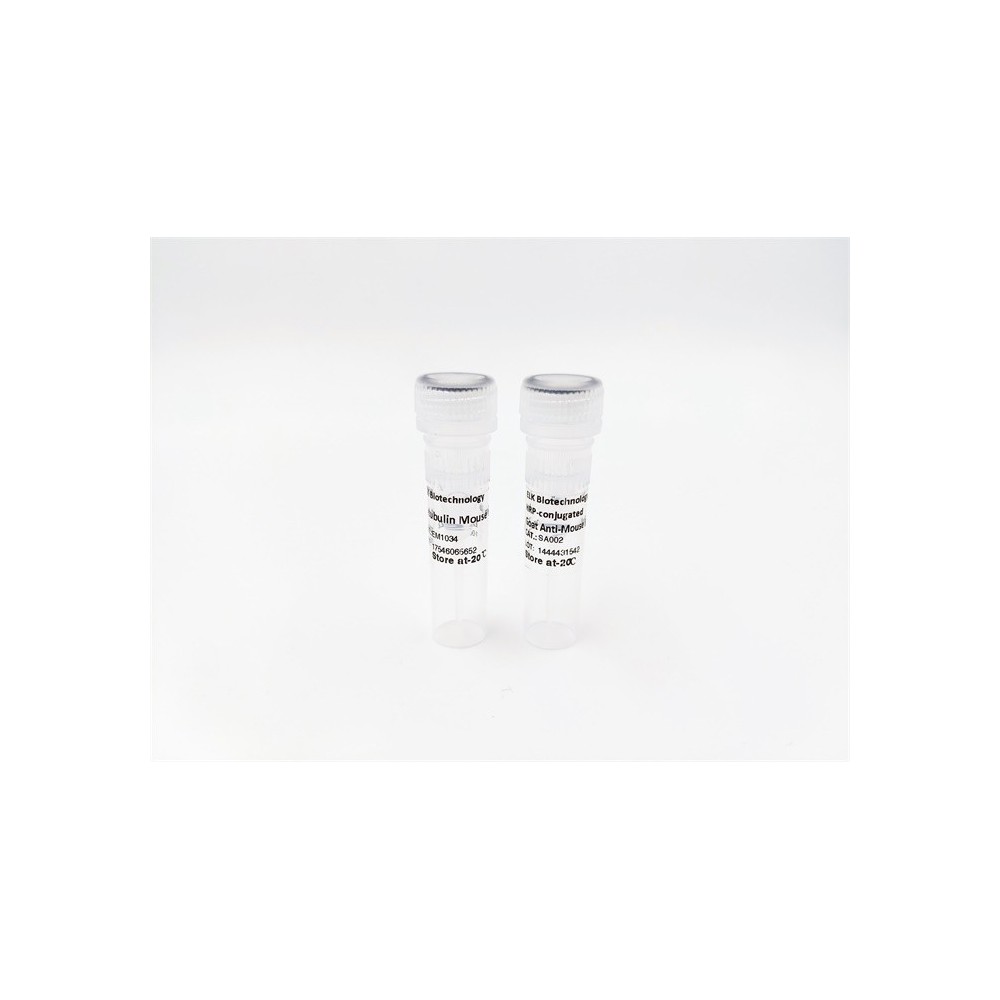

| ELK.No | ES4324 |
| Product name | CD66c/d rabbit pAb |
| Reactivity | Human;Rat;Mouse; |
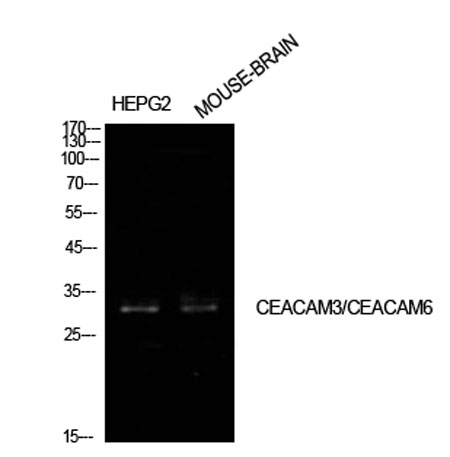
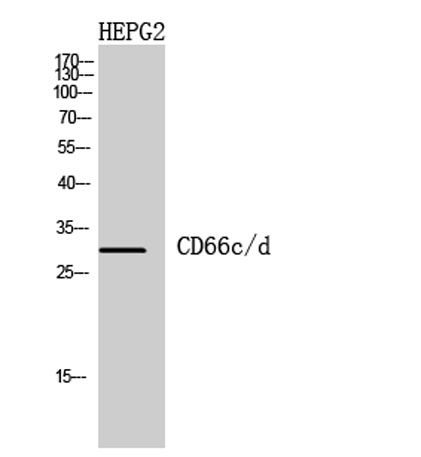
| Applications | WB;ELISA |
| Other name | CEACAM3; CD66D; CGM1; Carcinoembryonic antigen-related cell adhesion molecule 3; Carcinoembryonic antigen CGM1; CD66d; CEACAM6; NCA; Carcinoembryonic antigen-related cell adhesion molecule 6; Non-specific crossreacting antigen; Normal cross-reacting antigen; CD66c |
| Size | 100μL |
| Unit price ($) | 248 |
| Human gene ID | 1084/4680 |
| Human Swiss-Prot | P40198/P40199 |
| Source | Rabbit |
| Isotype | IgG |
| Target | CD66c/d |
| Fields | |
| Gene name | CEACAM3/CEACAM6 |
| Protein name | Carcinoembryonic antigen-related cell adhesion molecule 3/Carcinoembryonic antigen-related cell adhesion molecule 6 |
| Human gene link | View Human Gene |
| Human Swiss link | View Human Swiss-Prot |
| Mouse gene ID | |
| Mouse gene link | |
| Mouse Swiss-Prot | |
| Mouse Swiss link | |
| Rat gene ID | |
| Rat gene link | |
| Rat Swiss-Prot | |
| Rat Swiss link | |
| Immunogen | The antiserum was produced against synthesized peptide derived from the Internal region of human CEACAM3/CEACAM6. AA range:31-80 |
| Specificity | CD66c/d Polyclonal Antibody detects endogenous levels of CD66c/d protein. |
| Formulation | Liquid in PBS containing 50% glycerol, 0.5% BSA and 0.02% sodium azide. |
| Clonality | Polyclonal |
| Dilution | Western Blot: 1/500 - 1/2000. ELISA: 1/10000. Not yet tested in other applications. |
| Purification | The antibody was affinity-purified from rabbit antiserum by affinity-chromatography using epitope-specific immunogen. |
| Concentration | 1 mg/ml |
| Storage stability | -20°C/1 year |
| Molecular Weight (Da) | |
| Observed band (KD) | 30kD |
| Background | This gene encodes a member of the family of carcinoembryonic antigen-related cell adhesion molecules (CEACAMs), which are used by several bacterial pathogens to bind and invade host cells. The encoded transmembrane protein directs phagocytosis of several bacterial species that is dependent on the small GTPase Rac. It is thought to serve an important role in controlling human-specific pathogens by the innate immune system. Alternatively spliced transcript variants have been described. [provided by RefSeq, Mar 2013], |
| Function | caution:This is not the ortholog of rat CEACAM3.,domain:The cytosolic domain is involved in S100A9 interaction.,function:Major granulocyte receptor mediating recognition and efficient opsonin-independent phagocytosis of CEACAM-binding microorganisms, including Neissiria, Moxarella and Haemophilus species, thus playing an important role in the clearance of pathogens by the innate immune system. Responsible for RAC1 stimulation in the course of pathogen phagocytosis.,PTM:Tyrosine-phosphorylated in response to microbial binding. Tyr-230 and Tyr-241 are both required for phosphorylation to be detected.,similarity:Belongs to the immunoglobulin superfamily. CEA family.,similarity:Contains 1 Ig-like V-type (immunoglobulin-like) domain.,subunit:Interacts with S100A9/calprotectin. This interaction is calcium-dependent, but independent of CEACAM3 phosphorylation.,tissue specificity:CGM1a, the pred |
| Subcellular location | Membrane; Single-pass type I membrane protein. |
| Expression | CGM1a, the predominant CGM1 transcript, is granulocyte-specific. Not detected out of the granulocytic lineage, such as monocytes, lymphocytes, spleen, testis, colon, brain, liver, pancreas, thymus, ovary, placenta, skeletal muscle, prostate, small intestine, heart, lung and kidney. |

Use collapsible tabs for more detailed information that will help customers make a purchasing decision.
Ex: Shipping and return policies, size guides, and other common questions.