 Français
 English
NFAT5 (phospho Ser155) rabbit pAb
AO-06-ES4539-50

| ELK.No | ES4539 |
| Product name | NFAT5 (phospho Ser155) rabbit pAb |
| Reactivity | Human;Mouse |
| Applications | WB;IHC |
| Other name | NFAT5; KIAA0827; TONEBP; Nuclear factor of activated T-cells 5; NF-AT5; T-cell transcription factor NFAT5; Tonicity-responsive enhancer-binding protein; TonE-binding protein; TonEBP |
| Size | 50μL |
| Unit price ($) | 148 |
| Human gene ID | 10725 |
| Human Swiss-Prot | O94916 |
| Source | Rabbit |
| Isotype | IgG |
| Target | NFAT5 |
| Fields | |
| Gene name | NFAT5 |
| Protein name | Nuclear factor of activated T-cells 5 |
| Human gene link | View Human Gene |
| Human Swiss link | View Human Swiss-Prot |
| Mouse gene ID | |
| Mouse gene link | |
| Mouse Swiss-Prot | Q9WV30 |
| Mouse Swiss link | View Mouse Swiss-Prot |
| Rat gene ID | |
| Rat gene link | |
| Rat Swiss-Prot | |
| Rat Swiss link | |
| Immunogen | The antiserum was produced against synthesized peptide derived from human NFAT5/TonEBP around the phosphorylation site of Ser155. AA range:121-170 |
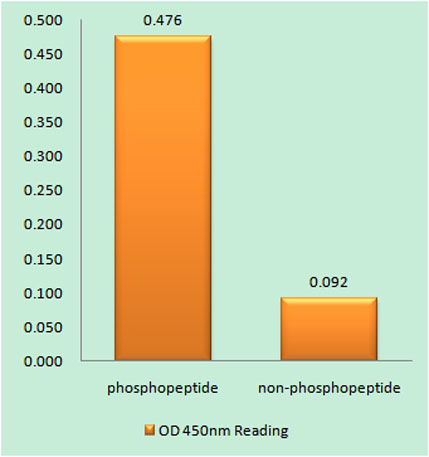
| Specificity | Phospho-NFAT5 (S155) Polyclonal Antibody detects endogenous levels of NFAT5 protein only when phosphorylated at S155. |
| Formulation | Liquid in PBS containing 50% glycerol, 0.5% BSA and 0.02% sodium azide. |
| Clonality | Polyclonal |
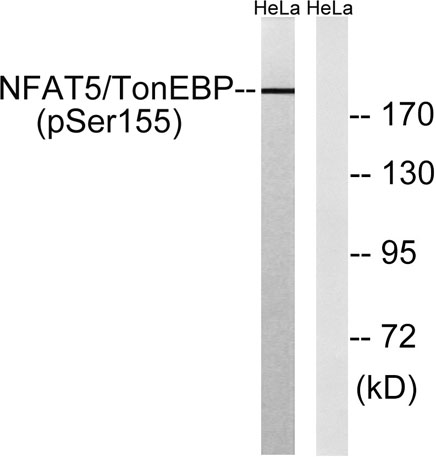
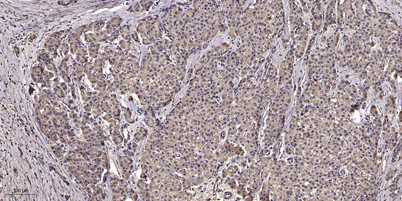
| Dilution | WB 1:500-2000;IHC-p 1:50-300 |
| Purification | The antibody was affinity-purified from rabbit antiserum by affinity-chromatography using epitope-specific immunogen. |
| Concentration | 1 mg/ml |
| Storage stability | -20°C/1 year |
| Molecular Weight (Da) | |
| Observed band (KD) | 200kD |
| Background | The product of this gene is a member of the nuclear factors of activated T cells family of transcription factors. Proteins belonging to this family play a central role in inducible gene transcription during the immune response. This protein regulates gene expression induced by osmotic stress in mammalian cells. Unlike monomeric members of this protein family, this protein exists as a homodimer and forms stable dimers with DNA elements. Multiple transcript variants encoding different isoforms have been found for this gene. [provided by RefSeq, Jul 2008], |
| Function | alternative products:Experimental confirmation may be lacking for some isoforms,function:Plays a role in the inducible expression of genes. Regulates hypertonicity-induced cellular accumulation of osmolytes.,similarity:Contains 1 RHD (Rel-like) domain.,subunit:Does not bind with Fos and Jun transcription factors. But might be capable of forming stable dimers with DNA elements.,tissue specificity:Highest levels in skeletal muscle, brain, heart and peripheral blood leukocytes. Also expressed in placenta, lung, liver, kidney, pancreas, spleen, thymus, prostate, testis, ovary, small intestine and colon., |
| Subcellular location | Nucleus . Cytoplasm . Nuclear distribution increases under hypertonic conditions. . |
| Expression | Widely expressed, with highest levels in skeletal muscle, brain, heart and peripheral blood leukocytes. |

Use collapsible tabs for more detailed information that will help customers make a purchasing decision.
Ex: Shipping and return policies, size guides, and other common questions.