 Français
 English
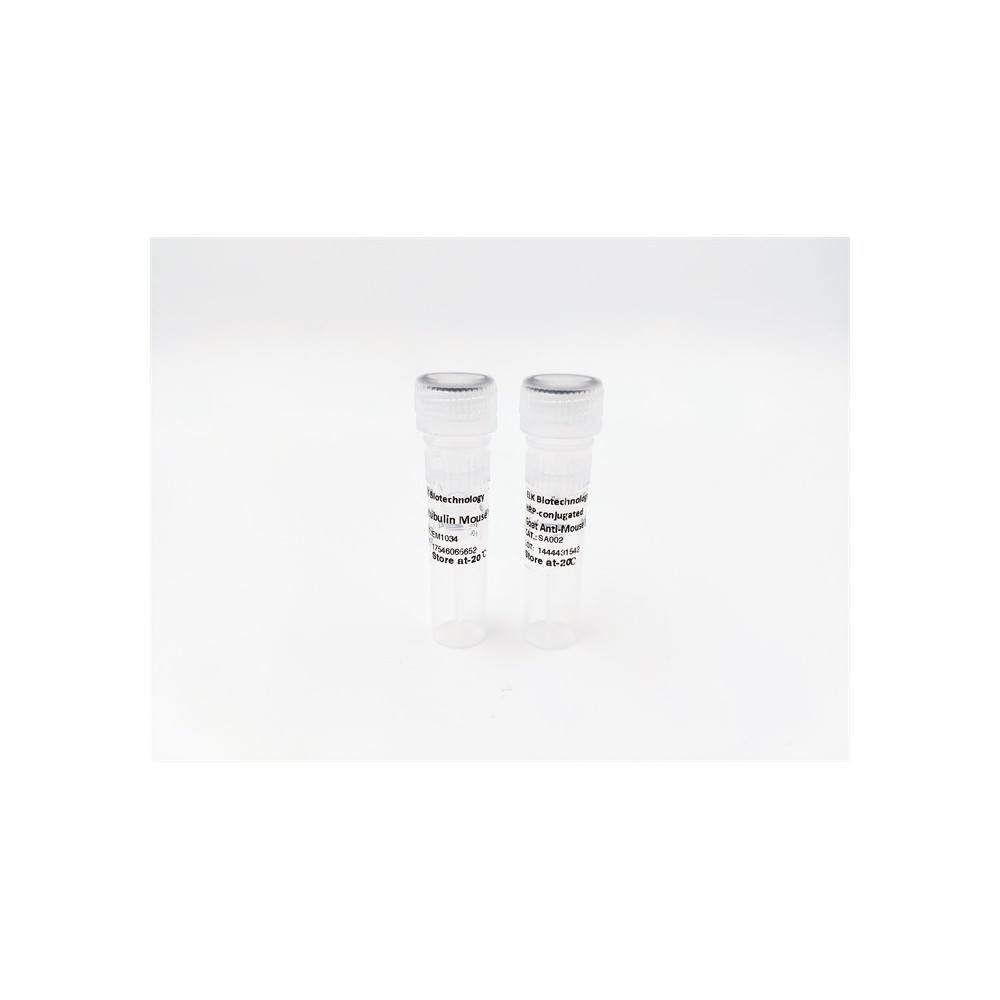

| ELK.No | ES4577 |
| Product name | ACSVL6 rabbit pAb |
| Reactivity | Human;Rat;Mouse; |
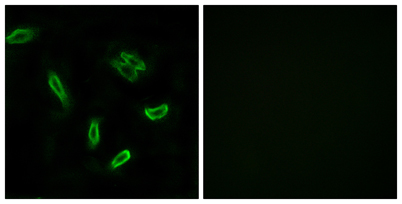
| Applications | WB;IHC;IF;ELISA |
| Other name | SLC27A5; ACSB; ACSVL6; FACVL3; FATP5; Bile acyl-CoA synthetase; BACS; Bile acid-CoA ligase; BA-CoA ligase; BAL; Cholate--CoA ligase; Fatty acid transport protein 5; FATP-5; Fatty-acid-coenzyme A ligase; very long-chain 3; Solute carrier fam |
| Size | 100μL |
| Unit price ($) | 248 |
| Human gene ID | 10998 |
| Human Swiss-Prot | Q9Y2P5 |
| Source | Rabbit |
| Isotype | IgG |
| Target | ACSVL6 |
| Fields | >>Primary bile acid biosynthesis;>>Metabolic pathways;>>PPAR signaling pathway;>>Insulin resistance;>>Bile secretion |
| Gene name | SLC27A5 |
| Protein name | Bile acyl-CoA synthetase |
| Human gene link | View Human Gene |
| Human Swiss link | View Human Swiss-Prot |
| Mouse gene ID | |
| Mouse gene link | |
| Mouse Swiss-Prot | Q4LDG0 |
| Mouse Swiss link | View Mouse Swiss-Prot |
| Rat gene ID | |
| Rat gene link | |
| Rat Swiss-Prot | |
| Rat Swiss link | |
| Immunogen | The antiserum was produced against synthesized peptide derived from human SLC27A5. AA range:481-530 |
| Specificity | ACSVL6 Polyclonal Antibody detects endogenous levels of ACSVL6 protein. |
| Formulation | Liquid in PBS containing 50% glycerol, 0.5% BSA and 0.02% sodium azide. |
| Clonality | Polyclonal |
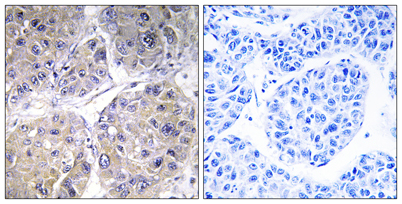
| Dilution | Western Blot: 1/500 - 1/2000. Immunohistochemistry: 1/100 - 1/300. Immunofluorescence: 1/200 - 1/1000. ELISA: 1/40000. Not yet tested in other applications. |
| Purification | The antibody was affinity-purified from rabbit antiserum by affinity-chromatography using epitope-specific immunogen. |
| Concentration | 1 mg/ml |
| Storage stability | -20°C/1 year |
| Molecular Weight (Da) | |
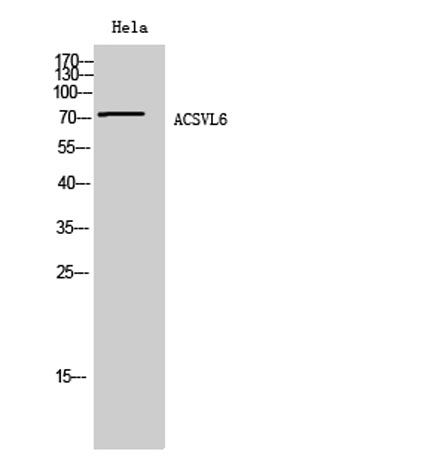
| Observed band (KD) | 75kD |
| Background | The protein encoded by this gene is an isozyme of very long-chain acyl-CoA synthetase (VLCS). It is capable of activating very long-chain fatty-acids containing 24- and 26-carbons. It is expressed in liver and associated with endoplasmic reticulum but not with peroxisomes. Its primary role is in fatty acid elongation or complex lipid synthesis rather than in degradation. This gene has a mouse ortholog. [provided by RefSeq, Jul 2008], |
| Function | catalytic activity:ATP + (25R)-3-alpha,7-alpha,12-alpha-trihydroxy-5-beta-cholestan-26-oate + CoA = AMP + diphosphate + (25R)-3-alpha,7-alpha,12-alpha-trihydroxy-5-beta-cholestanoyl-CoA.,catalytic activity:ATP + cholate + CoA = AMP + diphosphate + choloyl-CoA.,function:Acyl-CoA synthetase involved in bile acid metabolism. Proposed to catalyze the first step in the conjugation of C24 bile acids (choloneates) to glycine and taurine before excretion into bile canaliculi by activating them to their CoA thioesters. Seems to activate secondary bile acids entering the liver from the enterohepatic circulation. In vitro, also activates 3-alpha,7-alpha,12-alpha-trihydroxy-5-beta-cholestanate (THCA), the C27 precursor of cholic acid deriving from the de novo synthesis from cholesterol.,similarity:Belongs to the ATP-dependent AMP-binding enzyme family.,tissue specificity:Predominantly expressed in l |
| Subcellular location | Endoplasmic reticulum membrane ; Multi-pass membrane protein . Microsome . Cell membrane ; Multi-pass membrane protein . |
| Expression | Predominantly expressed in liver. |

Use collapsible tabs for more detailed information that will help customers make a purchasing decision.
Ex: Shipping and return policies, size guides, and other common questions.