 Français
 English

| ELK.No | ES4582 |
| Product name | ILT-3 rabbit pAb |
| Reactivity | Human;Rat;Mouse; |
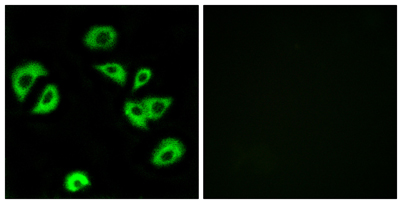
| Applications | IF;ELISA |
| Other name | LILRB4; ILT3; LIR5; Leukocyte immunoglobulin-like receptor subfamily B member 4; CD85 antigen-like family member K; Immunoglobulin-like transcript 3; ILT-3; Leukocyte immunoglobulin-like receptor 5; LIR-5; Monocyte inhibitory receptor HM18; |
| Size | 50μL |
| Unit price ($) | 148 |
| Human gene ID | 11006 |
| Human Swiss-Prot | Q8NHJ6 |
| Source | Rabbit |
| Isotype | IgG |
| Target | ILT-3 |
| Fields | >>Osteoclast differentiation;>>B cell receptor signaling pathway |
| Gene name | LILRB4 |
| Protein name | Leukocyte immunoglobulin-like receptor subfamily B member 4 |
| Human gene link | View Human Gene |
| Human Swiss link | View Human Swiss-Prot |
| Mouse gene ID | |
| Mouse gene link | |
| Mouse Swiss-Prot | Q64281 |
| Mouse Swiss link | View Mouse Swiss-Prot |
| Rat gene ID | |
| Rat gene link | |
| Rat Swiss-Prot | |
| Rat Swiss link | |
| Immunogen | The antiserum was produced against synthesized peptide derived from human LILRB4. AA range:201-250 |
| Specificity | ILT-3 Polyclonal Antibody detects endogenous levels of ILT-3 protein. |
| Formulation | Liquid in PBS containing 50% glycerol, 0.5% BSA and 0.02% sodium azide. |
| Clonality | Polyclonal |
| Dilution | Immunofluorescence: 1/200 - 1/1000. ELISA: 1/20000. Not yet tested in other applications. |
| Purification | The antibody was affinity-purified from rabbit antiserum by affinity-chromatography using epitope-specific immunogen. |
| Concentration | 1 mg/ml |
| Storage stability | -20°C/1 year |
| Molecular Weight (Da) | 49kD |
| Observed band (KD) | |
| Background | This gene is a member of the leukocyte immunoglobulin-like receptor (LIR) family, which is found in a gene cluster at chromosomal region 19q13.4. The encoded protein belongs to the subfamily B class of LIR receptors which contain two or four extracellular immunoglobulin domains, a transmembrane domain, and two to four cytoplasmic immunoreceptor tyrosine-based inhibitory motifs (ITIMs). The receptor is expressed on immune cells where it binds to MHC class I molecules on antigen-presenting cells and transduces a negative signal that inhibits stimulation of an immune response. The receptor can also function in antigen capture and presentation. It is thought to control inflammatory responses and cytotoxicity to help focus the immune response and limit autoreactivity. Multiple transcript variants encoding different isoforms have been found for this gene. [provided by RefSeq, Jul 2 |
| Function | domain:Contains 3 copies of a cytoplasmic motif that is referred to as the immunoreceptor tyrosine-based inhibitor motif (ITIM). This motif is involved in modulation of cellular responses. The phosphorylated ITIM motif can bind the SH2 domain of several SH2-containing phosphatases.,function:Receptor for class I MHC antigens. Recognizes a broad spectrum of HLA-A, HLA-B, HLA-C and HLA-G alleles. Involved in the down-regulation of the immune response and the development of tolerance, e.g. towards transplants. Interferes with TNFRSF5-signaling and NF-kappa-B up-regulation. Inhibits receptor-mediated phosphorylation of cellular proteins and mobilization of intracellular calcium ions.,induction:Upon contact with CD8(+)CD28(-) alloantigen-specific T suppressor (Ts) cells.,PTM:Phosphorylated.,similarity:Contains 2 Ig-like C2-type (immunoglobulin-like) domains.,subcellular location:Ligand binding |
| Subcellular location | Cell membrane ; Single-pass type I membrane protein . Ligand binding leads to internalization and translocation to an antigen-processing compartment. . |
| Expression | Detected on monocytes, macrophages, dendritic cells, natural killer cells and B-cells (at protein level). Expressed in the lung. |

Use collapsible tabs for more detailed information that will help customers make a purchasing decision.
Ex: Shipping and return policies, size guides, and other common questions.