 Français
 English
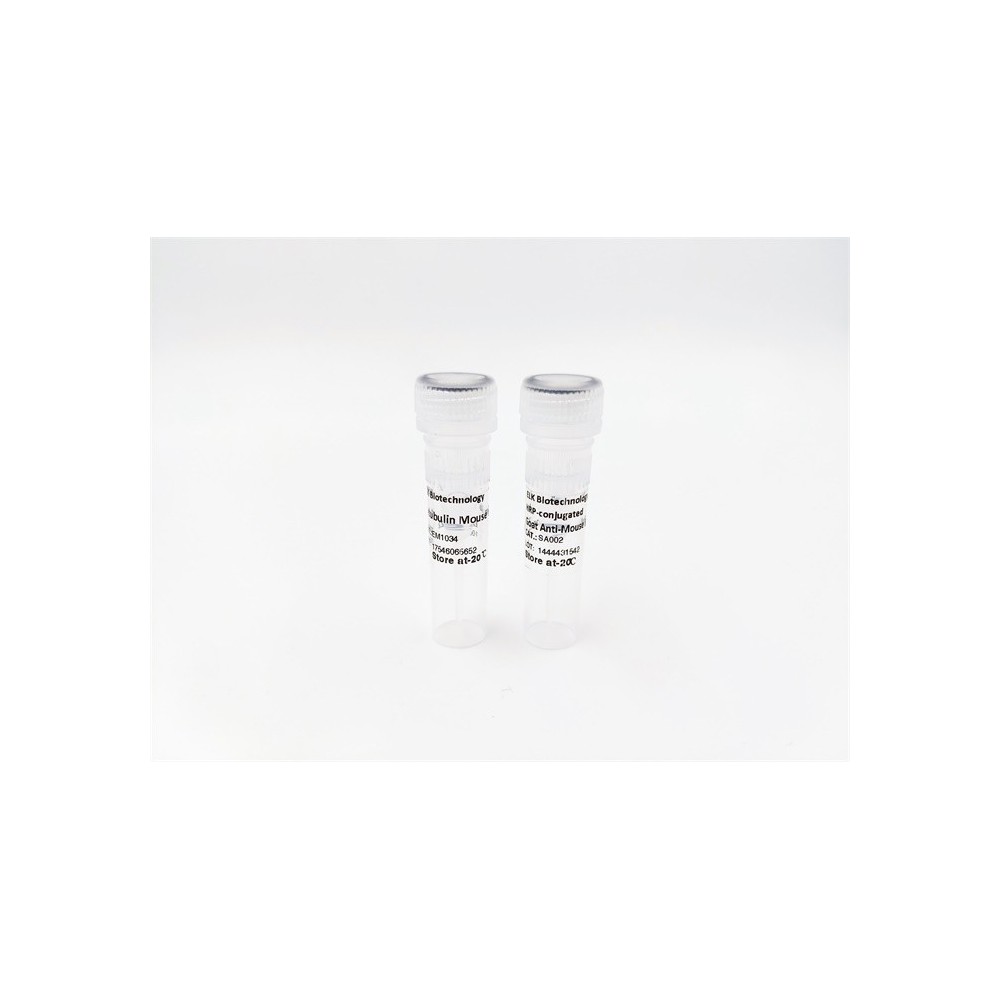

| ELK.No | ES4653 |
| Product name | Atg4A rabbit pAb |
| Reactivity | Human;Mouse |
| Applications | WB;IHC;IF;ELISA |
| Other name | ATG4A; APG4A; AUTL2; Cysteine protease ATG4A; AUT-like 2 cysteine endopeptidase; Autophagin-2; Autophagy-related cysteine endopeptidase 2; Autophagy-related protein 4 homolog A; hAPG4A |
| Size | 50μL |
| Unit price ($) | 148 |
| Human gene ID | 115201 |
| Human Swiss-Prot | Q8WYN0 |
| Source | Rabbit |
| Isotype | IgG |
| Target | ATG4A |
| Fields | >>Autophagy - other;>>Autophagy - animal |
| Gene name | ATG4A |
| Protein name | Cysteine protease ATG4A |
| Human gene link | View Human Gene |
| Human Swiss link | View Human Swiss-Prot |
| Mouse gene ID | 666468 |
| Mouse gene link | View Mouse Gene |
| Mouse Swiss-Prot | Q8C9S8 |
| Mouse Swiss link | View Mouse Swiss-Prot |
| Rat gene ID | |
| Rat gene link | |
| Rat Swiss-Prot | |
| Rat Swiss link | |
| Immunogen | The antiserum was produced against synthesized peptide derived from human ATG4A. AA range:81-130 |
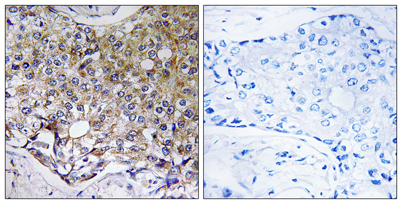
| Specificity | Atg4A Polyclonal Antibody detects endogenous levels of Atg4A protein. |
| Formulation | Liquid in PBS containing 50% glycerol, 0.5% BSA and 0.02% sodium azide. |
| Clonality | Polyclonal |
| Dilution | Western Blot: 1/500 - 1/2000. Immunohistochemistry: 1/100 - 1/300. Immunofluorescence: 1/200 - 1/1000. ELISA: 1/20000. Not yet tested in other applications. |
| Purification | The antibody was affinity-purified from rabbit antiserum by affinity-chromatography using epitope-specific immunogen. |
| Concentration | 1 mg/ml |
| Storage stability | -20°C/1 year |
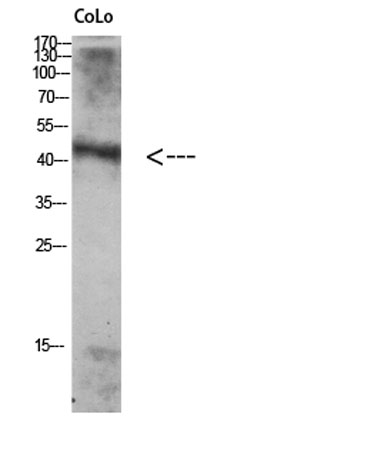
| Molecular Weight (Da) | 45kD |
| Observed band (KD) | |
| Background | Autophagy is the process by which endogenous proteins and damaged organelles are destroyed intracellularly. Autophagy is postulated to be essential for cell homeostasis and cell remodeling during differentiation, metamorphosis, non-apoptotic cell death, and aging. Reduced levels of autophagy have been described in some malignant tumors, and a role for autophagy in controlling the unregulated cell growth linked to cancer has been proposed. This gene encodes a member of the autophagin protein family. The encoded protein is also designated as a member of the C-54 family of cysteine proteases. [provided by RefSeq, Mar 2016], |
| Function | enzyme regulation:Inhibited by N-ethylmaleimide.,function:Cysteine protease required for autophagy, which cleaves the C-terminal part of either MAP1LC3, GABARAPL2 or GABARAP, allowing the liberation of form I. A subpopulation of form I is subsequently converted to a smaller form (form II). Form II, with a revealed C-terminal glycine, is considered to be the phosphatidylethanolamine (PE)-conjugated form, and has the capacity for the binding to autophagosomes. Preferred substrate is GABARAPL2 followed by MAP1LC3A and GABARAP.,similarity:Belongs to the peptidase C54 family.,tissue specificity:Widely expressed, at a low level, and the highest expression is observed in skeletal muscle and brain. Also detected in fetal liver., |
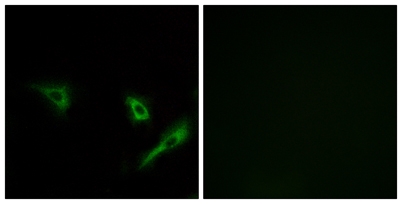
| Subcellular location | Cytoplasm . |
| Expression | Epithelium,Kidney,Ovary,Prostate,Testis, |

Use collapsible tabs for more detailed information that will help customers make a purchasing decision.
Ex: Shipping and return policies, size guides, and other common questions.