 Français
 English

| ELK.No | ES4748 |
| Product name | COL6A3 rabbit pAb |
| Reactivity | Human;Mouse |
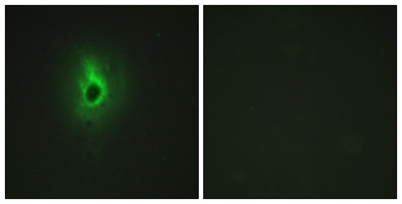
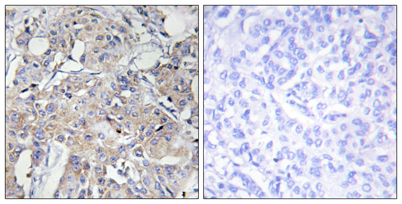
| Applications | IHC;IF;ELISA |
| Other name | COL6A3; Collagen alpha-3(VI) chain |
| Size | 50μL |
| Unit price ($) | 148 |
| Human gene ID | 1293 |
| Human Swiss-Prot | P12111 |
| Source | Rabbit |
| Isotype | IgG |
| Target | COL6A3 |
| Fields | >>PI3K-Akt signaling pathway;>>Focal adhesion;>>ECM-receptor interaction;>>Protein digestion and absorption;>>Human papillomavirus infection |
| Gene name | COL6A3 |
| Protein name | Collagen alpha-3(VI) chain |
| Human gene link | View Human Gene |
| Human Swiss link | View Human Swiss-Prot |
| Mouse gene ID | |
| Mouse gene link | |
| Mouse Swiss-Prot | |
| Mouse Swiss link | |
| Rat gene ID | |
| Rat gene link | |
| Rat Swiss-Prot | |
| Rat Swiss link | |
| Immunogen | The antiserum was produced against synthesized peptide derived from human Collagen VI alpha3. AA range:2261-2310 |
| Specificity | COL6A3 Polyclonal Antibody detects endogenous levels of COL6A3 protein. |
| Formulation | Liquid in PBS containing 50% glycerol, 0.5% BSA and 0.02% sodium azide. |
| Clonality | Polyclonal |
| Dilution | Immunohistochemistry: 1/100 - 1/300. Immunofluorescence: 1/200 - 1/1000. ELISA: 1/40000. Not yet tested in other applications. |
| Purification | The antibody was affinity-purified from rabbit antiserum by affinity-chromatography using epitope-specific immunogen. |
| Concentration | 1 mg/ml |
| Storage stability | -20°C/1 year |
| Molecular Weight (Da) | 344kD |
| Observed band (KD) | |
| Background | This gene encodes the alpha-3 chain, one of the three alpha chains of type VI collagen, a beaded filament collagen found in most connective tissues. The alpha-3 chain of type VI collagen is much larger than the alpha-1 and -2 chains. This difference in size is largely due to an increase in the number of subdomains, similar to von Willebrand Factor type A domains, that are found in the amino terminal globular domain of all the alpha chains. These domains have been shown to bind extracellular matrix proteins, an interaction that explains the importance of this collagen in organizing matrix components. Mutations in the type VI collagen genes are associated with Bethlem myopathy, a rare autosomal dominant proximal myopathy with early childhood onset. Mutations in this gene are also a cause of Ullrich congenital muscular dystrophy, also referred to as Ullrich scleroatonic muscular dystrophy, an a |
| Function | disease:Defects in COL6A3 are a cause of Bethlem myopathy (BM) [MIM:158810]. BM is a rare autosomal dominant proximal myopathy characterized by early childhood onset (complete penetrance by the age of 5) and joint contractures most frequently affecting the elbows and ankles.,disease:Defects in COL6A3 are a cause of Ullrich congenital muscular dystrophy (UCMD) [MIM:254090]; also known as Ullrich scleroatonic muscular dystrophy. UCMD is an autosomal recessive congenital myopathy characterized by muscle weakness and multiple joint contractures, generally noted at birth or early infancy. The clinical course is more severe than in Bethlem myopathy.,function:Collagen VI acts as a cell-binding protein.,PTM:Prolines at the third position of the tripeptide repeating unit (G-X-Y) are hydroxylated in some or all of the chains.,PTM:The N-terminus is blocked.,similarity:Belongs to the type VI collage |
| Subcellular location | Secreted, extracellular space, extracellular matrix . |
| Expression | Colon endothel,Fibroblast,Human uterus,Kidney,Liver,Placenta,Plasma,Pooled, |

Use collapsible tabs for more detailed information that will help customers make a purchasing decision.
Ex: Shipping and return policies, size guides, and other common questions.