 Français
 English
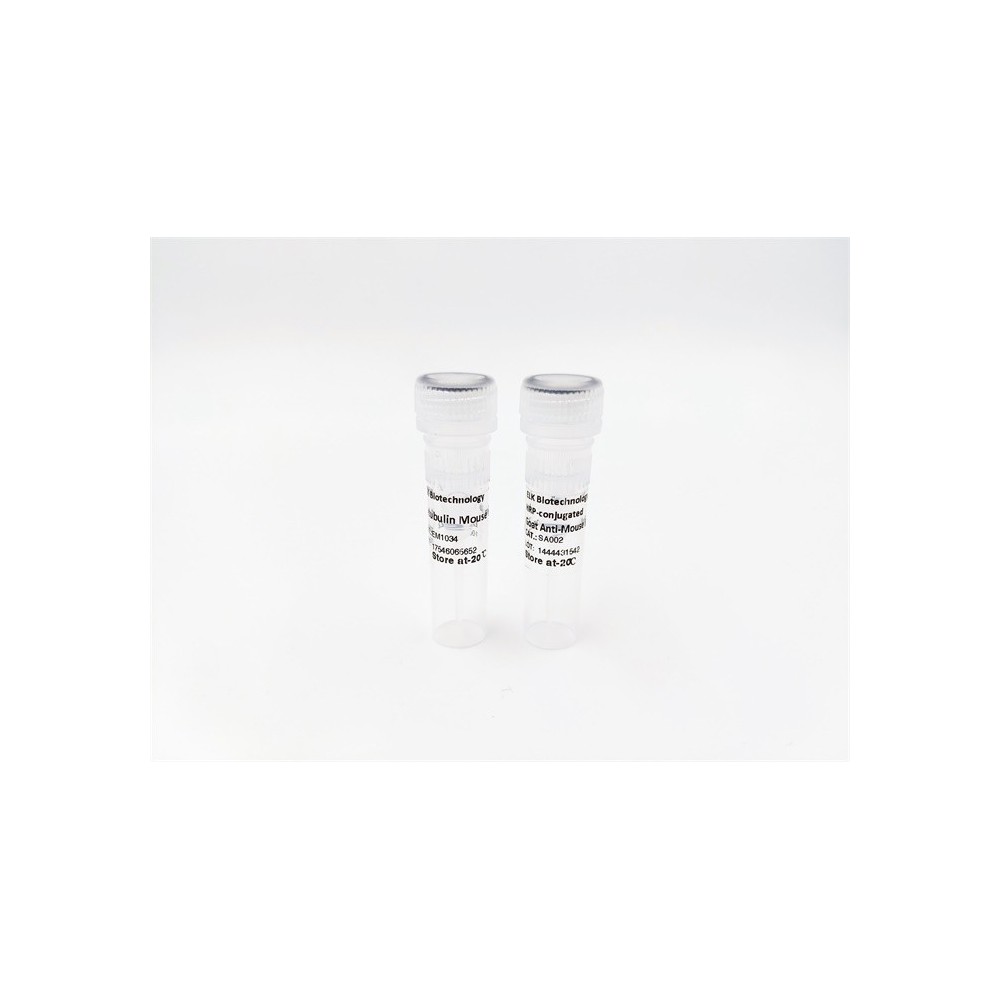

| ELK.No | ES4927 |
| Product name | AR-β3 rabbit pAb |
| Reactivity | Human;Mouse;Rat |
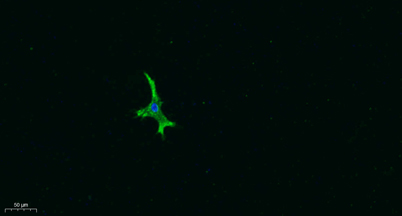
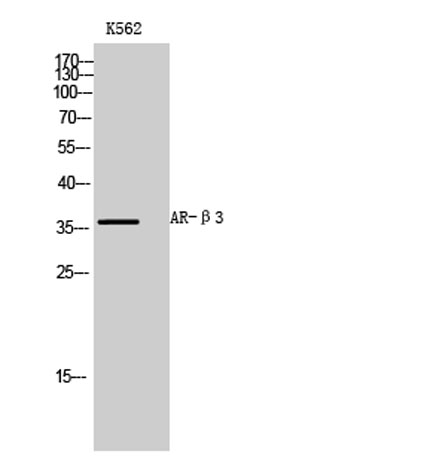
| Applications | WB IF;ELISA |
| Other name | ADRB3; ADRB3R; B3AR; Beta-3 adrenergic receptor; Beta-3 adrenoreceptor; Beta-3 adrenoceptor |
| Size | 100μL |
| Unit price ($) | 248 |
| Human gene ID | 155 |
| Human Swiss-Prot | P13945 |
| Source | Rabbit |
| Isotype | IgG |
| Target | AR-β3 |
| Fields | >>Calcium signaling pathway;>>cGMP-PKG signaling pathway;>>Neuroactive ligand-receptor interaction;>>Thermogenesis;>>Regulation of lipolysis in adipocytes;>>Renin secretion;>>Salivary secretion;>>Chemical carcinogenesis - receptor activation |
| Gene name | ADRB3 |
| Protein name | Beta-3 adrenergic receptor |
| Human gene link | View Human Gene |
| Human Swiss link | View Human Swiss-Prot |
| Mouse gene ID | 11556 |
| Mouse gene link | View Mouse Gene |
| Mouse Swiss-Prot | P25962 |
| Mouse Swiss link | View Mouse Swiss-Prot |
| Rat gene ID | 25645 |
| Rat gene link | View Rat Gene |
| Rat Swiss-Prot | P26255 |
| Rat Swiss link | View Rat Swiss-Prot |
| Immunogen | The antiserum was produced against synthesized peptide derived from human ADRB3. AA range:250-299 |
| Specificity | AR-β3 Polyclonal Antibody detects endogenous levels of AR-β3 protein. |
| Formulation | Liquid in PBS containing 50% glycerol, 0.5% BSA and 0.02% sodium azide. |
| Clonality | Polyclonal |
| Dilution | WB 1:500-2000 IF 1:100-300 ELISA 1:5000-20000 Not yet tested in other applications. |
| Purification | The antibody was affinity-purified from rabbit antiserum by affinity-chromatography using epitope-specific immunogen. |
| Concentration | 1 mg/ml |
| Storage stability | -20°C/1 year |
| Molecular Weight (Da) | |
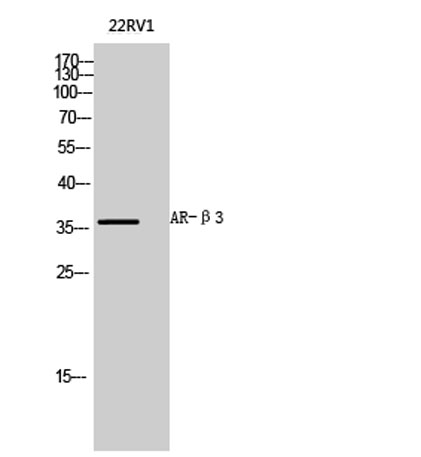
| Observed band (KD) | 36kD |
| Background | The protein encoded by this gene belongs to the family of beta adrenergic receptors, which mediate catecholamine-induced activation of adenylate cyclase through the action of G proteins. This receptor is located mainly in the adipose tissue and is involved in the regulation of lipolysis and thermogenesis. [provided by RefSeq, Feb 2009], |
| Function | function:Beta-adrenergic receptors mediate the catecholamine-induced activation of adenylate cyclase through the action of G proteins. Beta-3 is involved in the regulation of lipolysis and thermogenesis.,polymorphism:The variant Arg-64 seems to be associated with weight gain (obesity) and to is also associated with susceptibility to non-insulin-dependent diabetes mellitus (NIDDM).,similarity:Belongs to the G-protein coupled receptor 1 family.,tissue specificity:Expressed mainly in adipose tissues., |
| Subcellular location | Cell membrane; Multi-pass membrane protein. |
| Expression | Expressed mainly in adipose tissues. |

Use collapsible tabs for more detailed information that will help customers make a purchasing decision.
Ex: Shipping and return policies, size guides, and other common questions.