 Français
 English
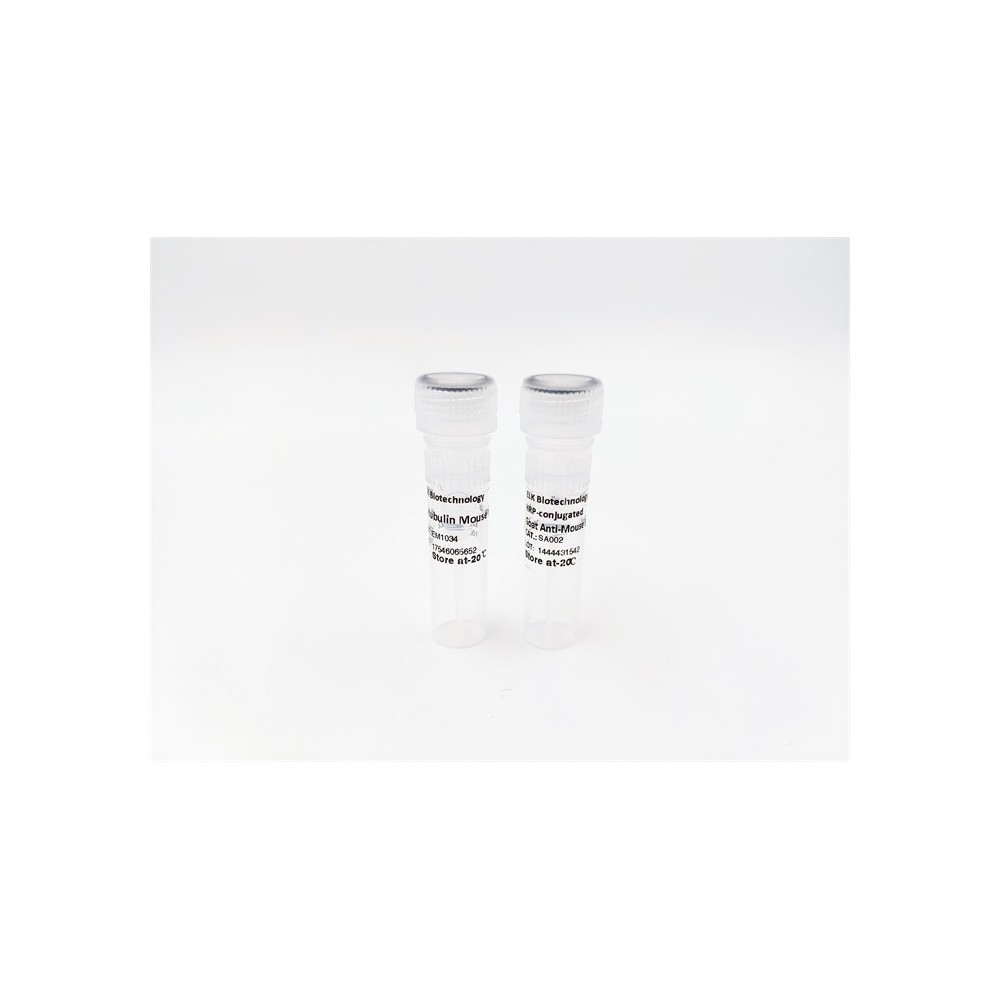

| ELK.No | ES5158 |
| Product name | ERCC1 rabbit pAb |
| Reactivity | Human;Mouse |
| Applications | WB;IHC;IF;ELISA |
| Other name | ERCC1; DNA excision repair protein ERCC-1 |
| Size | 50μL |
| Unit price ($) | 148 |
| Human gene ID | 2067 |
| Human Swiss-Prot | P07992 |
| Source | Rabbit |
| Isotype | IgG |
| Target | ERCC1 |
| Fields | >>Platinum drug resistance;>>Nucleotide excision repair;>>Fanconi anemia pathway |
| Gene name | ERCC1 |
| Protein name | DNA excision repair protein ERCC-1 |
| Human gene link | View Human Gene |
| Human Swiss link | View Human Swiss-Prot |
| Mouse gene ID | 13870 |
| Mouse gene link | View Mouse Gene |
| Mouse Swiss-Prot | P07903 |
| Mouse Swiss link | View Mouse Swiss-Prot |
| Rat gene ID | |
| Rat gene link | |
| Rat Swiss-Prot | |
| Rat Swiss link | |
| Immunogen | The antiserum was produced against synthesized peptide derived from human ERCC1. AA range:141-190 |
| Specificity | ERCC1 Polyclonal Antibody detects endogenous levels of ERCC1 protein. |
| Formulation | Liquid in PBS containing 50% glycerol, 0.5% BSA and 0.02% sodium azide. |
| Clonality | Polyclonal |
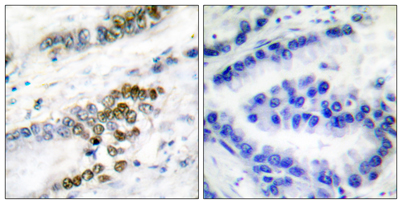
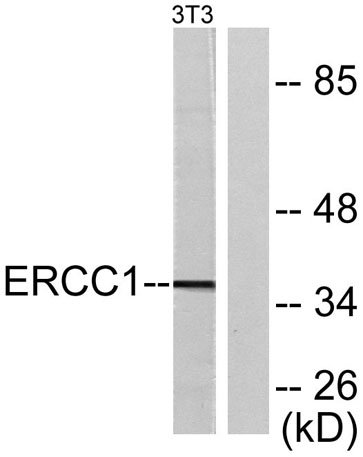
| Dilution | Western Blot: 1/500 - 1/2000. Immunohistochemistry: 1/100 - 1/300. ELISA: 1/20000. Not yet tested in other applications. |
| Purification | The antibody was affinity-purified from rabbit antiserum by affinity-chromatography using epitope-specific immunogen. |
| Concentration | 1 mg/ml |
| Storage stability | -20°C/1 year |
| Molecular Weight (Da) | |
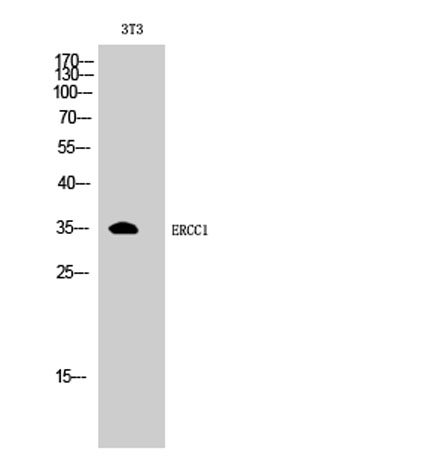
| Observed band (KD) | 36kD |
| Background | The product of this gene functions in the nucleotide excision repair pathway, and is required for the repair of DNA lesions such as those induced by UV light or formed by electrophilic compounds including cisplatin. The encoded protein forms a heterodimer with the XPF endonuclease (also known as ERCC4), and the heterodimeric endonuclease catalyzes the 5' incision in the process of excising the DNA lesion. The heterodimeric endonuclease is also involved in recombinational DNA repair and in the repair of inter-strand crosslinks. Mutations in this gene result in cerebrooculofacioskeletal syndrome, and polymorphisms that alter expression of this gene may play a role in carcinogenesis. Multiple transcript variants encoding different isoforms have been found for this gene. The last exon of this gene overlaps with the CD3e molecule, epsilon associated protein ge |
| Function | disease:Defects in ERCC1 are the cause of cerebro-oculo-facio-skeletal syndrome type 4 (COFS4) [MIM:610758]. COFS is a degenerative autosomal recessive disorder of prenatal onset affecting the brain, eye and spinal cord. After birth, it leads to brain atrophy, hypoplasia of the corpus callosum, hypotonia, cataracts, microcornea, optic atrophy, progressive joint contractures and growth failure. Facial dysmorphism is a constant feature. Abnormalities of the skull, eyes, limbs, heart and kidney also occur.,function:Structure-specific DNA repair endonuclease responsible for the 5'-incision during DNA repair.,similarity:Belongs to the ERCC1/RAD10/SWI10 family.,subunit:Heterodimer composed of ERCC1 and XPF/ERRC4., |
| Subcellular location | [Isoform 1]: Nucleus .; [Isoform 2]: Cytoplasm . Nucleus .; [Isoform 3]: Nucleus .; [Isoform 4]: Nucleus . |
| Expression | Cerebellum,Lung,Ovarian cancer,Uterus, |

Use collapsible tabs for more detailed information that will help customers make a purchasing decision.
Ex: Shipping and return policies, size guides, and other common questions.