 Français
 English
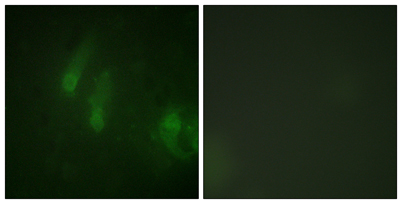
FANCA (phospho Ser1149) rabbit pAb
AO-06-ES5193-100

| ELK.No | ES5193 |
| Product name | FANCA (phospho Ser1149) rabbit pAb |
| Reactivity | Human;Rat;Mouse; |
| Applications | WB;IHC;IF;ELISA |
| Other name | FANCA; FAA; FACA; FANCH; Fanconi anemia group A protein; Protein FACA |
| Size | 100μL |
| Unit price ($) | 248 |
| Human gene ID | 2175 |
| Human Swiss-Prot | O15360 |
| Source | Rabbit |
| Isotype | IgG |
| Target | FANCA |
| Fields | >>Fanconi anemia pathway |
| Gene name | FANCA |
| Protein name | Fanconi anemia group A protein |
| Human gene link | View Human Gene |
| Human Swiss link | View Human Swiss-Prot |
| Mouse gene ID | |
| Mouse gene link | |
| Mouse Swiss-Prot | Q9JL70 |
| Mouse Swiss link | View Mouse Swiss-Prot |
| Rat gene ID | |
| Rat gene link | |
| Rat Swiss-Prot | |
| Rat Swiss link | |
| Immunogen | The antiserum was produced against synthesized peptide derived from human FANCA around the phosphorylation site of Ser1149. AA range:1121-1170 |
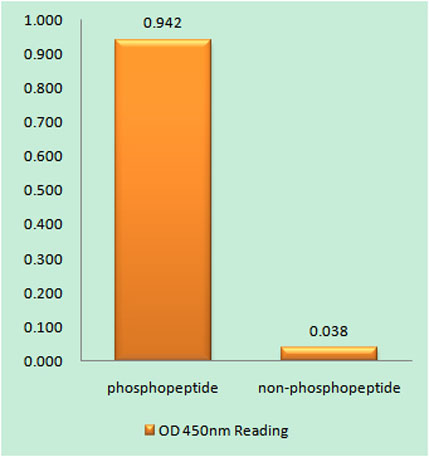
| Specificity | Phospho-FANCA (S1149) Polyclonal Antibody detects endogenous levels of FANCA protein only when phosphorylated at S1149. |
| Formulation | Liquid in PBS containing 50% glycerol, 0.5% BSA and 0.02% sodium azide. |
| Clonality | Polyclonal |
| Dilution | Western Blot: 1/500 - 1/2000. Immunohistochemistry: 1/100 - 1/300. Immunofluorescence: 1/200 - 1/1000. ELISA: 1/5000. Not yet tested in other applications. |
| Purification | The antibody was affinity-purified from rabbit antiserum by affinity-chromatography using epitope-specific immunogen. |
| Concentration | 1 mg/ml |
| Storage stability | -20°C/1 year |
| Molecular Weight (Da) | |
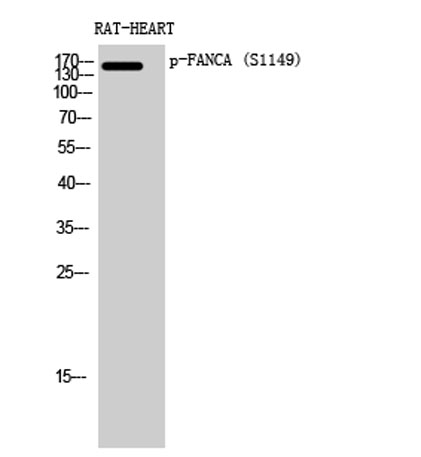
| Observed band (KD) | 162kD |
| Background | The Fanconi anemia complementation group (FANC) currently includes FANCA, FANCB, FANCC, FANCD1 (also called BRCA2), FANCD2, FANCE, FANCF, FANCG, FANCI, FANCJ (also called BRIP1), FANCL, FANCM and FANCN (also called PALB2). The previously defined group FANCH is the same as FANCA. Fanconi anemia is a genetically heterogeneous recessive disorder characterized by cytogenetic instability, hypersensitivity to DNA crosslinking agents, increased chromosomal breakage, and defective DNA repair. The members of the Fanconi anemia complementation group do not share sequence similarity; they are related by their assembly into a common nuclear protein complex. This gene encodes the protein for complementation group A. Alternative splicing results in multiple transcript variants encoding different isoforms. Mutations in this gene are the most common cause of Fanconi anemia. [provided by RefSeq, Jul |
| Function | disease:Defects in FANCA are a cause of Fanconi anemia (FA) [MIM:227650]. FA is a genetically heterogeneous, autosomal recessive disorder characterized by progressive pancytopenia, a diverse assortment of congenital malformations, and a predisposition to the development of malignancies. At the cellular level it is associated with hypersensitivity to DNA-damaging agents, chromosomal instability (increased chromosome breakage), and defective DNA repair.,function:DNA repair protein that may operate in a postreplication repair or a cell cycle checkpoint function. May be involved in interstrand DNA cross-link repair and in the maintenance of normal chromosome stability.,PTM:Phosphorylated upon DNA damage, probably by ATM or ATR. Phosphorylation is required for the formation of the nuclear complex. Not phosphorylated in cells derived from groups A, B, C, E, F, G, and H.,subcellular location:Th |
| Subcellular location | Nucleus. Cytoplasm. The major form is nuclear. The minor form is cytoplasmic. |
| Expression | Cervix,Epithelium,Lymphoblast,Ovary,PCR rescued clones, |

Use collapsible tabs for more detailed information that will help customers make a purchasing decision.
Ex: Shipping and return policies, size guides, and other common questions.