 Français
 English
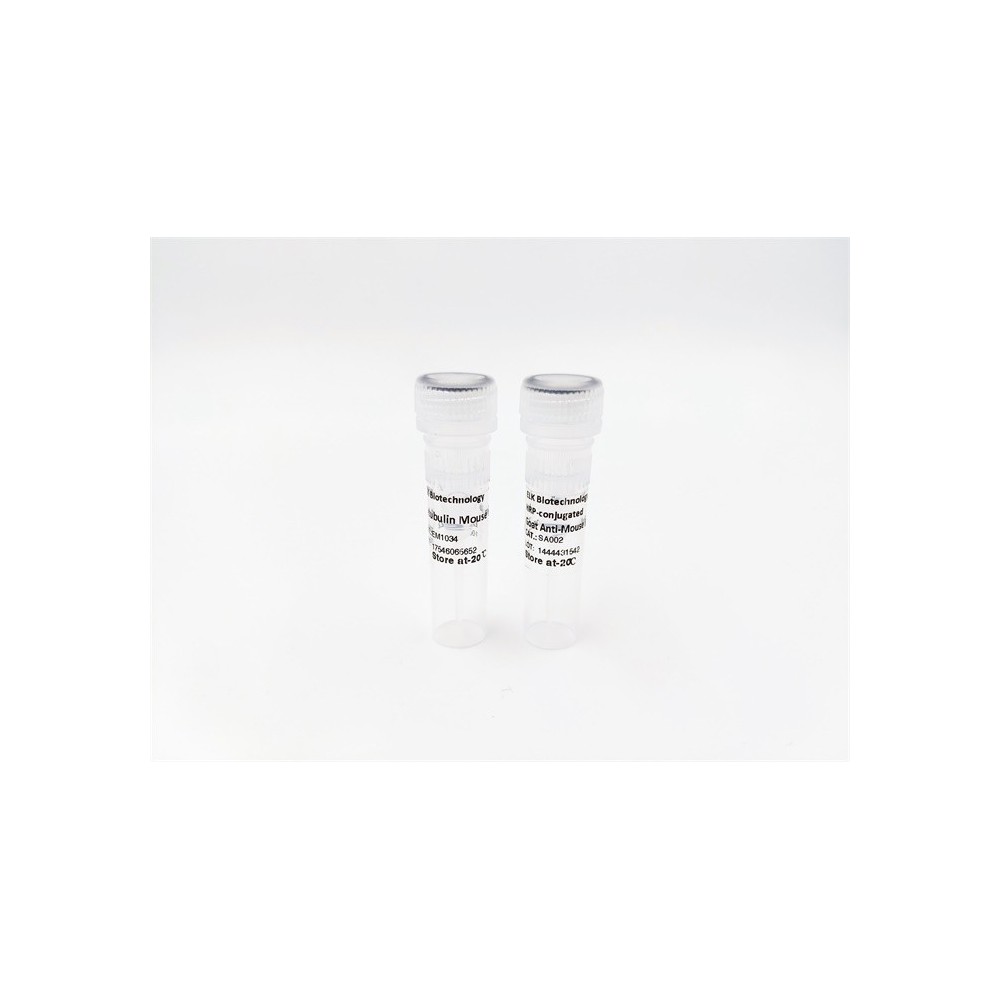
FoxO1 (phospho Ser256) rabbit pAb
AO-06-ES5300-100

| ELK.No | ES5300 |
| Product name | FoxO1 (phospho Ser256) rabbit pAb |
| Reactivity | Human;Mouse;Rat;Drosophila |
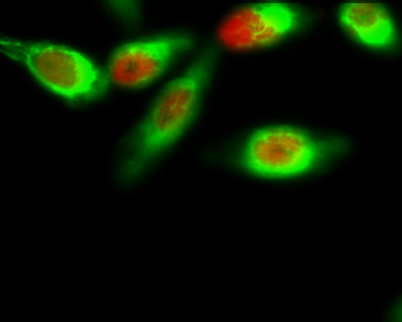
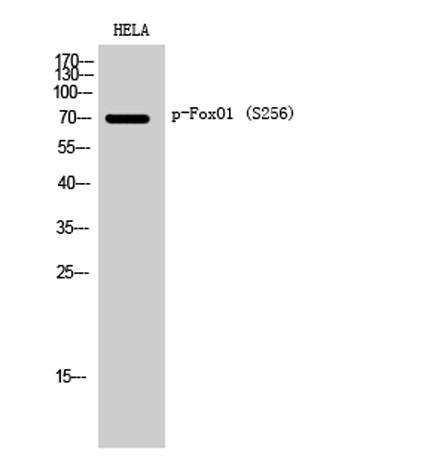
| Applications | WB;IHC;IF;ELISA |
| Other name | FOXO1; FKHR; FOXO1A; Forkhead box protein O1; Forkhead box protein O1A; Forkhead in rhabdomyosarcoma |
| Size | 100μL |
| Unit price ($) | 248 |
| Human gene ID | 2308 |
| Human Swiss-Prot | Q12778 |
| Source | Rabbit |
| Isotype | IgG |
| Target | FoxO1 |
| Fields | >>FoxO signaling pathway;>>AMPK signaling pathway;>>Longevity regulating pathway;>>Longevity regulating pathway - multiple species;>>Cellular senescence;>>Insulin signaling pathway;>>Thyroid hormone signaling pathway;>>Glucagon signaling pathway;>>Insulin resistance;>>AGE-RAGE signaling pathway in diabetic complications;>>Alcoholic liver disease;>>Shigellosis;>>Human papillomavirus infection;>>Pathways in cancer;>>Transcriptional misregulation in cancer;>>Prostate cancer |
| Gene name | FOXO1 |
| Protein name | Forkhead box protein O1 |
| Human gene link | View Human Gene |
| Human Swiss link | View Human Swiss-Prot |
| Mouse gene ID | 56458 |
| Mouse gene link | View Mouse Gene |
| Mouse Swiss-Prot | Q9R1E0 |
| Mouse Swiss link | View Mouse Swiss-Prot |
| Rat gene ID | 84482 |
| Rat gene link | View Rat Gene |
| Rat Swiss-Prot | G3V7R4 |
| Rat Swiss link | View Rat Swiss-Prot |
| Immunogen | The antiserum was produced against synthesized peptide derived from human FKHR around the phosphorylation site of Ser256. AA range:223-272 |
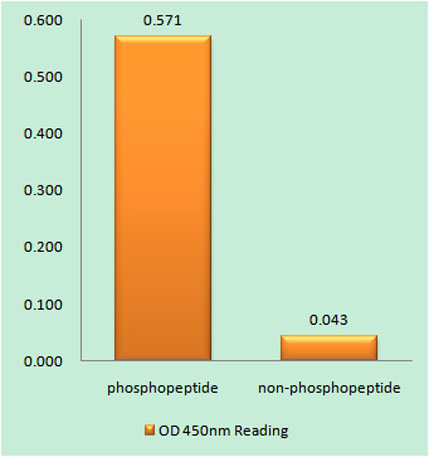
| Specificity | Phospho-FoxO1 (S256) Polyclonal Antibody detects endogenous levels of FoxO1 protein only when phosphorylated at S256. |
| Formulation | Liquid in PBS containing 50% glycerol, 0.5% BSA and 0.02% sodium azide. |
| Clonality | Polyclonal |
| Dilution | Western Blot: 1/500 - 1/2000. Immunohistochemistry: 1/100 - 1/300. Immunofluorescence: 1/200 - 1/1000. ELISA: 1/20000. Not yet tested in other applications. |
| Purification | The antibody was affinity-purified from rabbit antiserum by affinity-chromatography using epitope-specific immunogen. |
| Concentration | 1 mg/ml |
| Storage stability | -20°C/1 year |
| Molecular Weight (Da) | |
| Observed band (KD) | 82kD |
| Background | This gene belongs to the forkhead family of transcription factors which are characterized by a distinct forkhead domain. The specific function of this gene has not yet been determined; however, it may play a role in myogenic growth and differentiation. Translocation of this gene with PAX3 has been associated with alveolar rhabdomyosarcoma. [provided by RefSeq, Jul 2008], |
| Function | disease:Chromosomal aberrations involving FOXO1 are a cause of rhabdomyosarcoma 2 (RMS2) [MIM:268220]; also known as alveolar rhabdomyosarcoma. Translocation (2;13)(q35;q14) with PAX3; translocation t(1;13)(p36;q14) with PAX7. The resulting protein is a transcriptional activator.,function:Transcription factor.,PTM:Phosphorylated by AKT1; insulin-induced (By similarity). IGF1 rapidly induces phosphorylation of Ser-256, Thr-24, and Ser-319. Phosphorylation of Ser-256 decreases DNA-binding activity and promotes the phosphorylation of Thr-24, and Ser-319, permitting phosphorylation of Ser-322 and Ser-325, probably by CK1, leading to nuclear exclusion and loss of function. Phosphorylation of Ser-329 is independent of IGF1 and leads to reduced function. Phosphorylated upon DNA damage, probably by ATM or ATR.,similarity:Contains 1 fork-head DNA-binding domain.,subcellular location:Shuttles betw |
| Subcellular location | Cytoplasm . Nucleus . Shuttles between the cytoplasm and nucleus. Largely nuclear in unstimulated cells (PubMed:11311120, PubMed:12228231, PubMed:19221179, PubMed:21245099, PubMed:20543840, PubMed:25009184). In osteoblasts, colocalizes with ATF4 and RUNX2 in the nucleus (By similarity). Serum deprivation increases localization to the nucleus, leading to activate expression of SOX9 and subsequent chondrogenesis (By similarity). Insulin-induced phosphorylation at Ser-256 by PKB/AKT1 leads, via stimulation of Thr-24 phosphorylation, to binding of 14-3-3 proteins and nuclear export to the cytoplasm where it is degraded by the ubiquitin-proteosomal pathway (PubMed:11237865, PubMed:12228231). Phosphorylation at Ser-249 by CDK1 disrupts binding of 14-3-3 proteins and promotes nuclear accumulation |
| Expression | Ubiquitous. |

Use collapsible tabs for more detailed information that will help customers make a purchasing decision.
Ex: Shipping and return policies, size guides, and other common questions.