 Français
 English
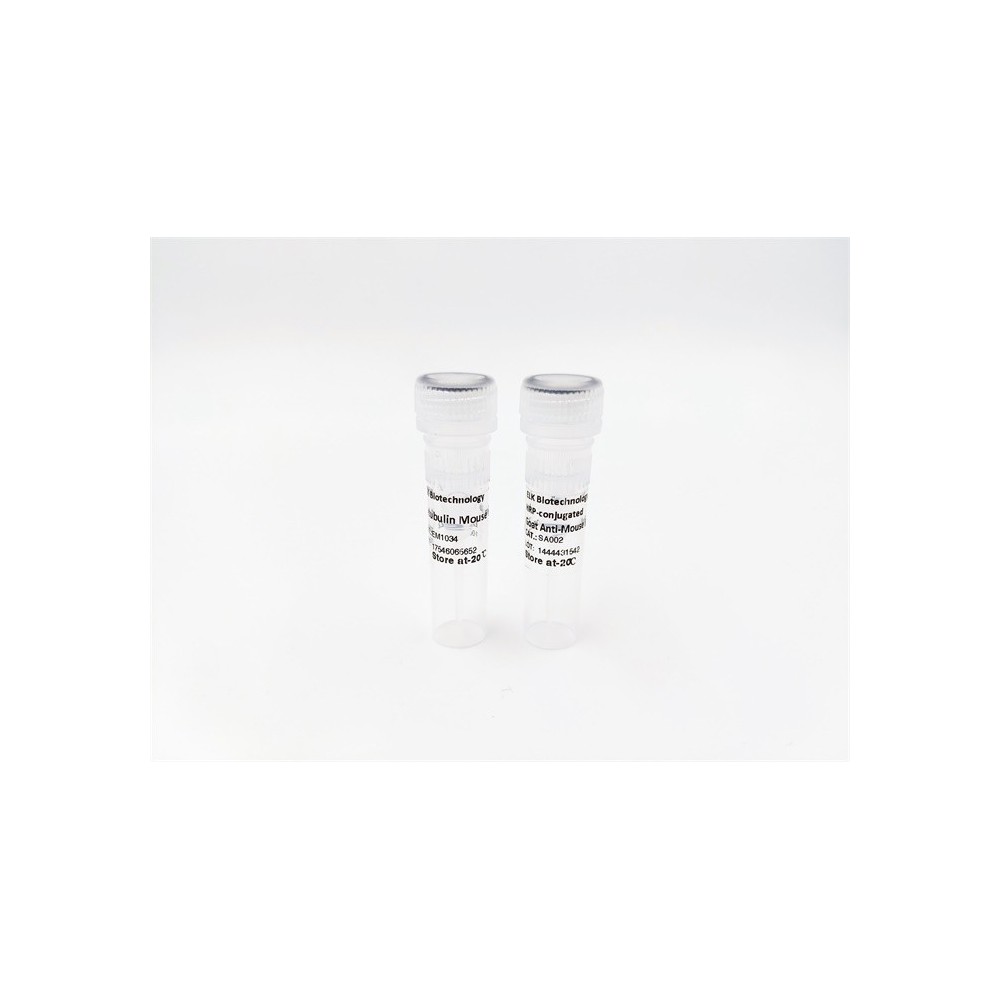

| ELK.No | ES5529 |
| Product name | Dynein IC1 rabbit pAb |
| Reactivity | Human;Mouse;Rat |
| Applications | WB;ELISA |
| Other name | DNAI1; Dynein intermediate chain 1; axonemal; Axonemal dynein intermediate chain 1 |
| Size | 50μL |
| Unit price ($) | 148 |
| Human gene ID | 27019 |
| Human Swiss-Prot | Q9UI46 |
| Source | Rabbit |
| Isotype | IgG |
| Target | Dynein IC1 |
| Fields | >>Amyotrophic lateral sclerosis;>>Huntington disease;>>Pathways of neurodegeneration - multiple diseases |
| Gene name | DNAI1 |
| Protein name | Dynein intermediate chain 1 axonemal |
| Human gene link | View Human Gene |
| Human Swiss link | View Human Swiss-Prot |
| Mouse gene ID | 68922 |
| Mouse gene link | View Mouse Gene |
| Mouse Swiss-Prot | Q8C0M8 |
| Mouse Swiss link | View Mouse Swiss-Prot |
| Rat gene ID | 500442 |
| Rat gene link | View Rat Gene |
| Rat Swiss-Prot | Q5XIL8 |
| Rat Swiss link | View Rat Swiss-Prot |
| Immunogen | The antiserum was produced against synthesized peptide derived from human DNAI1. AA range:211-260 |
| Specificity | Dynein IC1 Polyclonal Antibody detects endogenous levels of Dynein IC1 protein. |
| Formulation | Liquid in PBS containing 50% glycerol, 0.5% BSA and 0.02% sodium azide. |
| Clonality | Polyclonal |
| Dilution | Western Blot: 1/500 - 1/2000. ELISA: 1/20000. Not yet tested in other applications. |
| Purification | The antibody was affinity-purified from rabbit antiserum by affinity-chromatography using epitope-specific immunogen. |
| Concentration | 1 mg/ml |
| Storage stability | -20°C/1 year |
| Molecular Weight (Da) | |
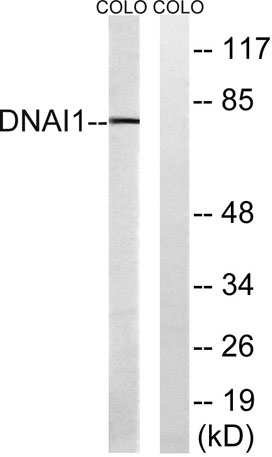
| Observed band (KD) | 79kD |
| Background | This gene encodes a member of the dynein intermediate chain family. The encoded protein is part of the dynein complex in respiratory cilia. The inner- and outer-arm dyneins, which bridge between the doublet microtubules in axonemes, are the force-generating proteins responsible for the sliding movement in axonemes. The intermediate and light chains, thought to form the base of the dynein arm, help mediate attachment and may also participate in regulating dynein activity. Mutations in this gene result in abnormal ciliary ultrastructure and function associated with primary ciliary dyskinesia and Kartagener syndrome. Alternative splicing results in multiple transcript variants. [provided by RefSeq, Jul 2013], |
| Function | disease:Defects in DNAI1 are the cause of Kartagener syndrome (KTGS) [MIM:244400]. KTGS is an autosomal recessive disorder characterized by the association of primary ciliary dyskinesia with situs inversus. Clinical features include recurrent respiratory infections, bronchiectasis, infertility, and lateral transposition of the viscera of the thorax and abdomen. The situs inversus is most often total, although it can be partial in some cases (isolated dextrocardia or isolated transposition of abdominal viscera).,disease:Defects in DNAI1 are the cause of primary ciliary dyskinesia type 1 (CILD1) [MIM:244400]. CILD1 is an autosomal recessive disorder characterized by axonemal abnormalities of motile cilia. Respiratory infections leading to chronic inflammation and bronchiectasis are recurrent, due to defects in the respiratory cilia; reduced fertility is often observed in male patients due |
| Subcellular location | Dynein axonemal particle . Cytoplasm, cytoskeleton, cilium axoneme . |
| Expression | Expressed in respiratory ciliated cells (at protein level). |

Use collapsible tabs for more detailed information that will help customers make a purchasing decision.
Ex: Shipping and return policies, size guides, and other common questions.