 Français
 English
FAS (phospho Tyr291) rabbit pAb
AO-06-ES5864-100

| ELK.No | ES5864 |
| Product name | FAS (phospho Tyr291) rabbit pAb |
| Reactivity | Human;Rat;Mouse; |
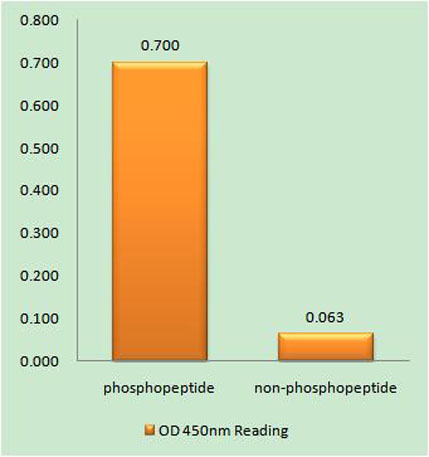
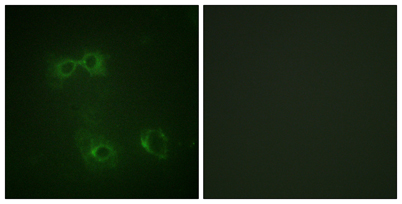
| Applications | IF;ELISA |
| Other name | FAS; APT1; FAS1; TNFRSF6; Tumor necrosis factor receptor superfamily member 6; Apo-1 antigen; Apoptosis-mediating surface antigen FAS; FASLG receptor; CD antigen CD95 |
| Size | 100μL |
| Unit price ($) | 248 |
| Human gene ID | 355 |
| Human Swiss-Prot | P25445 |
| Source | Rabbit |
| Isotype | IgG |
| Target | FAS |
| Fields | >>Platinum drug resistance;>>MAPK signaling pathway;>>Cytokine-cytokine receptor interaction;>>p53 signaling pathway;>>Apoptosis;>>Necroptosis;>>Natural killer cell mediated cytotoxicity;>>TNF signaling pathway;>>Non-alcoholic fatty liver disease;>>Alcoholic liver disease;>>Type I diabetes mellitus;>>Alzheimer disease;>>Pathways of neurodegeneration - multiple diseases;>>Pathogenic Escherichia coli infection;>>Chagas disease;>>African trypanosomiasis;>>Hepatitis C;>>Hepatitis B;>>Measles;>>Human cytomegalovirus infection;>>Influenza A;>>Human papillomavirus infection;>>Kaposi sarcoma-associated herpesvirus infection;>>Herpes simplex virus 1 infection;>>Epstein-Barr virus infection;>>Human immunodeficiency virus 1 infection;>>Pathways in cancer;>>Proteoglycans in cancer;>>Autoimmune thyroid disease;>>Allograft rejection;>>Graft-versus-host disease;>>Lipid and atherosclerosis |
| Gene name | FAS |
| Protein name | Tumor necrosis factor receptor superfamily member 6 |
| Human gene link | View Human Gene |
| Human Swiss link | View Human Swiss-Prot |
| Mouse gene ID | |
| Mouse gene link | |
| Mouse Swiss-Prot | P25446 |
| Mouse Swiss link | View Mouse Swiss-Prot |
| Rat gene ID | |
| Rat gene link | |
| Rat Swiss-Prot | |
| Rat Swiss link | |
| Immunogen | The antiserum was produced against synthesized peptide derived from human FAS around the phosphorylation site of Tyr291. AA range:257-306 |
| Specificity | Phospho-FAS (Y291) Polyclonal Antibody detects endogenous levels of FAS protein only when phosphorylated at Y291. |
| Formulation | Liquid in PBS containing 50% glycerol, 0.5% BSA and 0.02% sodium azide. |
| Clonality | Polyclonal |
| Dilution | Immunofluorescence: 1/200 - 1/1000. ELISA: 1/5000. Not yet tested in other applications. |
| Purification | The antibody was affinity-purified from rabbit antiserum by affinity-chromatography using epitope-specific immunogen. |
| Concentration | 1 mg/ml |
| Storage stability | -20°C/1 year |
| Molecular Weight (Da) | 38kD |
| Observed band (KD) | |
| Background | The protein encoded by this gene is a member of the TNF-receptor superfamily. This receptor contains a death domain. It has been shown to play a central role in the physiological regulation of programmed cell death, and has been implicated in the pathogenesis of various malignancies and diseases of the immune system. The interaction of this receptor with its ligand allows the formation of a death-inducing signaling complex that includes Fas-associated death domain protein (FADD), caspase 8, and caspase 10. The autoproteolytic processing of the caspases in the complex triggers a downstream caspase cascade, and leads to apoptosis. This receptor has been also shown to activate NF-kappaB, MAPK3/ERK1, and MAPK8/JNK, and is found to be involved in transducing the proliferating signals in normal diploid fibroblast and T cells. Several alternatively spliced transcript variants have been described, s |
| Function | disease:Defects in FAS are the cause of autoimmune lymphoproliferative syndrome type 1A (ALPS1A) [MIM:601859]; also known as Canale-Smith syndrome (CSS). ALPS is a childhood syndrome involving hemolytic anemia and thrombocytopenia with massive lymphadenopathy and splenomegaly.,domain:Contains a death domain involved in the binding of FADD, and maybe to other cytosolic adapter proteins.,function:Receptor for TNFSF6/FASLG. The adapter molecule FADD recruits caspase-8 to the activated receptor. The resulting death-inducing signaling complex (DISC) performs caspase-8 proteolytic activation which initiates the subsequent cascade of caspases (aspartate-specific cysteine proteases) mediating apoptosis. FAS-mediated apoptosis may have a role in the induction of peripheral tolerance, in the antigen-stimulated suicide of mature T-cells, or both. The secreted isoforms 2 to 6 block apoptosis (in vit |
| Subcellular location | [Isoform 1]: Cell membrane ; Single-pass type I membrane protein . Membrane raft .; [Isoform 2]: Secreted.; [Isoform 3]: Secreted.; [Isoform 4]: Secreted.; [Isoform 5]: Secreted.; [Isoform 6]: Secreted. |
| Expression | Isoform 1 and isoform 6 are expressed at equal levels in resting peripheral blood mononuclear cells. After activation there is an increase in isoform 1 and decrease in the levels of isoform 6. |

Use collapsible tabs for more detailed information that will help customers make a purchasing decision.
Ex: Shipping and return policies, size guides, and other common questions.