 Français
 English

| ELK.No | ES5913 |
| Product name | PDX-1 rabbit pAb |
| Reactivity | Human;Mouse;Rat |
| Applications | WB;IHC |
| Other name | PDX1; IPF1; Pancreas/duodenum homeobox protein 1; PDX-1; Glucose-sensitive factor; GSF; Insulin promoter factor 1; IPF-1; Insulin upstream factor 1; IUF-1; Islet/duodenum homeobox-1; IDX-1; Somatostatin-transactivating factor 1; STF-1 |
| Size | 50μL |
| Unit price ($) | 148 |
| Human gene ID | 3651 |
| Human Swiss-Prot | P52945 |
| Source | Rabbit |
| Isotype | IgG |
| Target | PDX1 |
| Fields | >>Insulin secretion;>>Type II diabetes mellitus;>>Maturity onset diabetes of the young |
| Gene name | PDX1 |
| Protein name | Pancreas/duodenum homeobox protein 1 |
| Human gene link | View Human Gene |
| Human Swiss link | View Human Swiss-Prot |
| Mouse gene ID | 18609 |
| Mouse gene link | View Mouse Gene |
| Mouse Swiss-Prot | P52946 |
| Mouse Swiss link | View Mouse Swiss-Prot |
| Rat gene ID | 29535 |
| Rat gene link | View Rat Gene |
| Rat Swiss-Prot | P52947 |
| Rat Swiss link | View Rat Swiss-Prot |
| Immunogen | The antiserum was produced against synthesized peptide derived from human PDX1. AA range:27-76 |
| Specificity | PDX-1 Polyclonal Antibody detects endogenous levels of PDX-1 protein. |
| Formulation | Liquid in PBS containing 50% glycerol, 0.5% BSA and 0.02% sodium azide. |
| Clonality | Polyclonal |
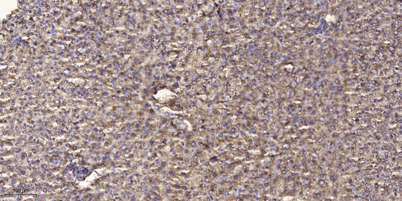
| Dilution | WB 1:500-2000;IHC-p 1:50-300 |
| Purification | The antibody was affinity-purified from rabbit antiserum by affinity-chromatography using epitope-specific immunogen. |
| Concentration | 1 mg/ml |
| Storage stability | -20°C/1 year |
| Molecular Weight (Da) | |
| Observed band (KD) | 42kD |
| Background | The protein encoded by this gene is a transcriptional activator of several genes, including insulin, somatostatin, glucokinase, islet amyloid polypeptide, and glucose transporter type 2. The encoded nuclear protein is involved in the early development of the pancreas and plays a major role in glucose-dependent regulation of insulin gene expression. Defects in this gene are a cause of pancreatic agenesis, which can lead to early-onset insulin-dependent diabetes mellitus (NIDDM), as well as maturity onset diabetes of the young type 4 (MODY4). [provided by RefSeq, Jul 2008], |
| Function | disease:Defects in PDX1 are a cause of pancreatic agenesis [MIM:260370]. This autosomal recessive disorder is characterized by absence or hypoplasia of pancreas, leading to early-onset insulin-dependent diabetes mellitus. This was found in a frameshift mutation that produces a truncated protein and results in a second initiation that produces a second protein that act as a dominant negative mutant.,disease:Defects in PDX1 are the cause of maturity onset diabetes noninsulin-dependent diabetes mellitus (NIDDM) [MIM:125853]; also known as diabetes mellitus type II.,disease:Defects in PDX1 are the cause of maturity onset diabetes of the young type 4 (MODY4) [MIM:606392]; also symbolized MODY-4. MODY [MIM:606391] is a form of diabetes mellitus characterized by an autosomal dominant mode of inheritance, age of onset of 25 years or younger and a primary defect in insulin secretion.,domain:The A |
| Subcellular location | Nucleus. Cytoplasm, cytosol . |
| Expression | Duodenum and pancreas (Langerhans islet beta cells and small subsets of endocrine non-beta-cells, at low levels in acinar cells). |


Use collapsible tabs for more detailed information that will help customers make a purchasing decision.
Ex: Shipping and return policies, size guides, and other common questions.