 Français
 English
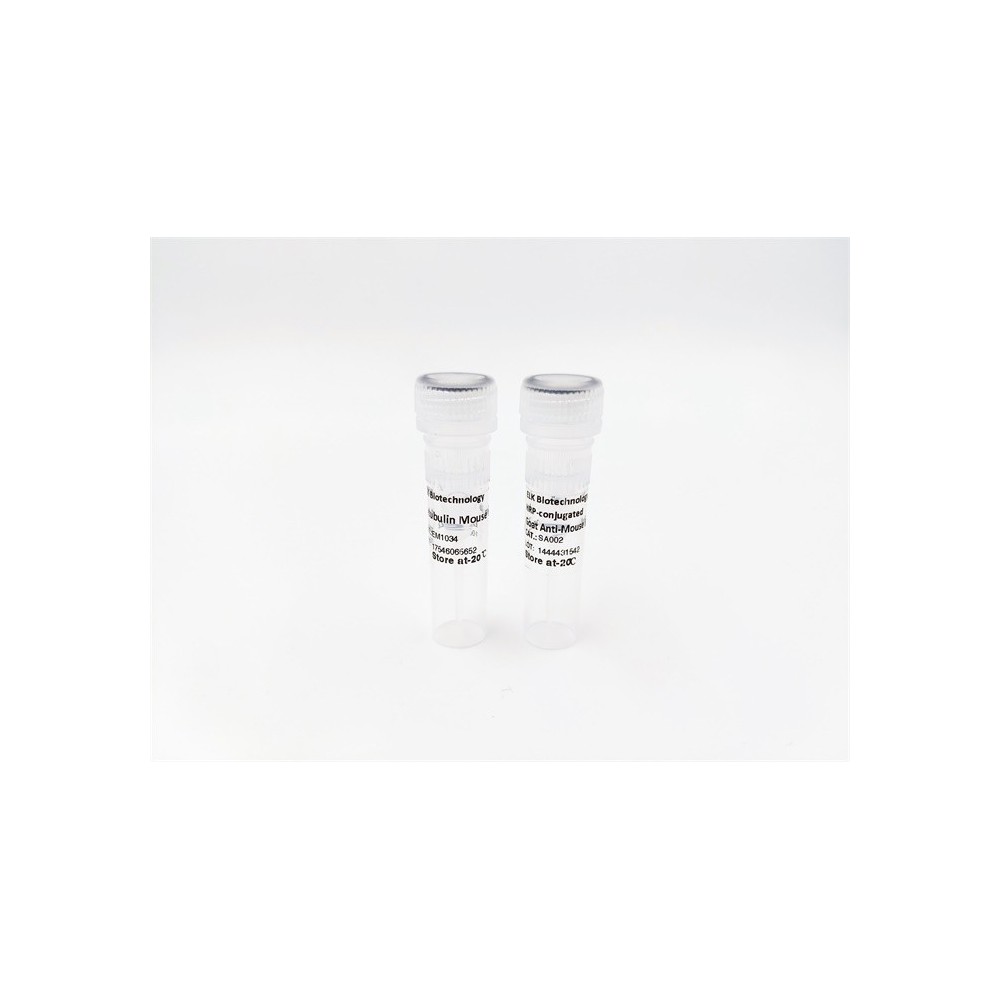

| ELK.No | ES6110 |
| Product name | LHR rabbit pAb |
| Reactivity | Human;Mouse;Rat |
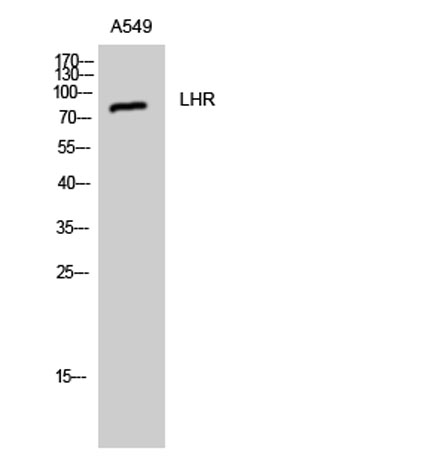
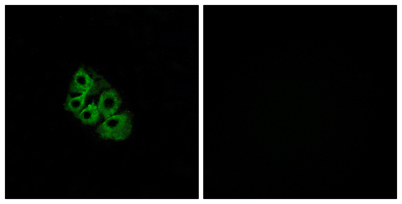
| Applications | WB;ELISA;IHC |
| Other name | LHCGR; LCGR; LGR2; LHRHR; Lutropin-choriogonadotropic hormone receptor; LH/CG-R; Luteinizing hormone receptor; LHR; LSH-R |
| Size | 100μL |
| Unit price ($) | 248 |
| Human gene ID | 3973 |
| Human Swiss-Prot | P22888 |
| Source | Rabbit |
| Isotype | IgG |
| Target | LHR |
| Fields | >>Calcium signaling pathway;>>cAMP signaling pathway;>>Neuroactive ligand-receptor interaction;>>Ovarian steroidogenesis;>>Prolactin signaling pathway |
| Gene name | LHCGR |
| Protein name | Lutropin-choriogonadotropic hormone receptor |
| Human gene link | View Human Gene |
| Human Swiss link | View Human Swiss-Prot |
| Mouse gene ID | 16867 |
| Mouse gene link | View Mouse Gene |
| Mouse Swiss-Prot | P30730 |
| Mouse Swiss link | View Mouse Swiss-Prot |
| Rat gene ID | 25477 |
| Rat gene link | View Rat Gene |
| Rat Swiss-Prot | P16235 |
| Rat Swiss link | View Rat Swiss-Prot |
| Immunogen | The antiserum was produced against synthesized peptide derived from human LSHR. AA range:621-670 |
| Specificity | LHR Polyclonal Antibody detects endogenous levels of LHR protein. |
| Formulation | Liquid in PBS containing 50% glycerol, 0.5% BSA and 0.02% sodium azide. |
| Clonality | Polyclonal |
| Dilution | WB 1:500-2000;IHC-p 1:50-300; ELISA 2000-20000 |
| Purification | The antibody was affinity-purified from rabbit antiserum by affinity-chromatography using epitope-specific immunogen. |
| Concentration | 1 mg/ml |
| Storage stability | -20°C/1 year |
| Molecular Weight (Da) | |
| Observed band (KD) | 80kD |
| Background | This gene encodes the receptor for both luteinizing hormone and choriogonadotropin. This receptor belongs to the G-protein coupled receptor 1 family, and its activity is mediated by G proteins which activate adenylate cyclase. Mutations in this gene result in disorders of male secondary sexual character development, including familial male precocious puberty, also known as testotoxicosis, hypogonadotropic hypogonadism, Leydig cell adenoma with precocious puberty, and male pseudohermaphtoditism with Leydig cell hypoplasia. [provided by RefSeq, Jul 2008], |
| Function | alternative products:Additional isoforms seem to exist,disease:Defects in LHCGR are a cause of familial male precocious puberty (FMPP) [MIM:176410]; also known as testotoxicosis. In FMPP the receptor is constitutively activated.,disease:Defects in LHCGR are a cause of Leydig cell hypoplasia (LCH) [MIM:152790]. LCH is an autosomal recessive disease characterized by male pseudohermaphroditism. In LCH the testes are small with marked immaturity of the Leydig cells which correlates with undetectable plasma testosterone levels and elevated gonadotropins.,function:Receptor for lutropin-choriogonadotropic hormone. The activity of this receptor is mediated by G proteins which activate adenylate cyclase.,online information:Glycoprotein-hormone Receptors Information System,similarity:Belongs to the G-protein coupled receptor 1 family.,similarity:Belongs to the G-protein coupled receptor 1 family. |
| Subcellular location | Cell membrane ; Multi-pass membrane protein . |
| Expression | Gonadal and thyroid cells. |

Use collapsible tabs for more detailed information that will help customers make a purchasing decision.
Ex: Shipping and return policies, size guides, and other common questions.