 Français
 English
HSL (phospho Ser855) rabbit pAb
AO-06-ES6120-50

| ELK.No | ES6120 |
| Product name | HSL (phospho Ser855) rabbit pAb |
| Reactivity | Human;Mouse;Rat |
| Applications | WB;IHC;IF;ELISA |
| Other name | LIPE; Hormone-sensitive lipase; HSL |
| Size | 50μL |
| Unit price ($) | 148 |
| Human gene ID | 3991 |
| Human Swiss-Prot | Q05469 |
| Source | Rabbit |
| Isotype | IgG |
| Target | HSL |
| Fields | >>cAMP signaling pathway;>>AMPK signaling pathway;>>Apelin signaling pathway;>>Thermogenesis;>>Insulin signaling pathway;>>Regulation of lipolysis in adipocytes;>>Aldosterone synthesis and secretion |
| Gene name | LIPE |
| Protein name | Hormone-sensitive lipase |
| Human gene link | View Human Gene |
| Human Swiss link | View Human Swiss-Prot |
| Mouse gene ID | 16890 |
| Mouse gene link | View Mouse Gene |
| Mouse Swiss-Prot | P54310 |
| Mouse Swiss link | View Mouse Swiss-Prot |
| Rat gene ID | 25330 |
| Rat gene link | View Rat Gene |
| Rat Swiss-Prot | P15304 |
| Rat Swiss link | View Rat Swiss-Prot |
| Immunogen | The antiserum was produced against synthesized peptide derived from human HSL around the phosphorylation site of Ser855/554. AA range:520-569 |
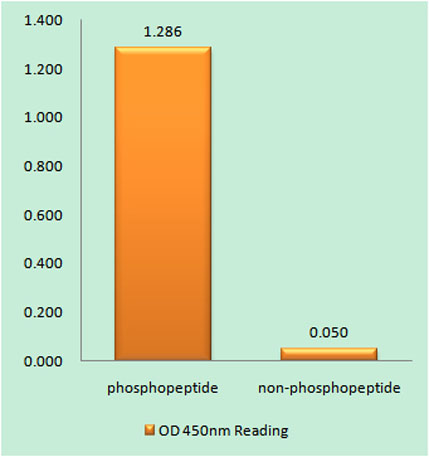
| Specificity | Phospho-HSL (S855) Polyclonal Antibody detects endogenous levels of HSL protein only when phosphorylated at S855. |
| Formulation | Liquid in PBS containing 50% glycerol, 0.5% BSA and 0.02% sodium azide. |
| Clonality | Polyclonal |
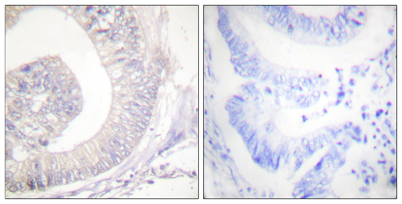
| Dilution | Western Blot: 1/500 - 1/2000. Immunohistochemistry: 1/100 - 1/300. ELISA: 1/20000. Not yet tested in other applications. |
| Purification | The antibody was affinity-purified from rabbit antiserum by affinity-chromatography using epitope-specific immunogen. |
| Concentration | 1 mg/ml |
| Storage stability | -20°C/1 year |
| Molecular Weight (Da) | |
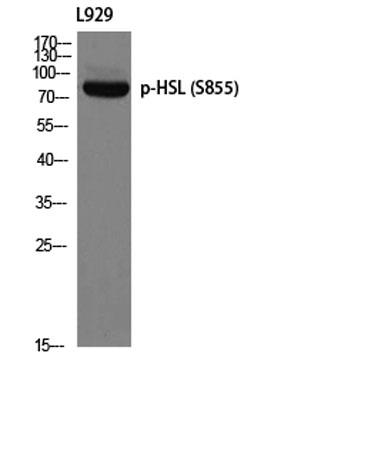
| Observed band (KD) | 81kD |
| Background | The protein encoded by this gene has a long and a short form, generated by use of alternative translational start codons. The long form is expressed in steroidogenic tissues such as testis, where it converts cholesteryl esters to free cholesterol for steroid hormone production. The short form is expressed in adipose tissue, among others, where it hydrolyzes stored triglycerides to free fatty acids. [provided by RefSeq, Jul 2008], |
| Function | catalytic activity:Diacylglycerol + H(2)O = monoacylglycerol + a carboxylate.,catalytic activity:Monoacylglycerol + H(2)O = glycerol + a carboxylate.,catalytic activity:Triacylglycerol + H(2)O = diacylglycerol + a carboxylate.,enzyme regulation:Rapidly activated by cAMP-dependent phosphorylation under the influence of catecholamines. Dephosphorylation and inactivation are controlled by insulin.,function:In adipose tissue and heart, it primarily hydrolyzes stored triglycerides to free fatty acids, while in steroidogenic tissues, it principally converts cholesteryl esters to free cholesterol for steroid hormone production.,pathway:Glycerolipid metabolism; triacylglycerol degradation.,similarity:Belongs to the 'GDXG' lipolytic enzyme family.,subcellular location:Found in the high-density caveolae. Translocates to the cytoplasm from the caveolae upon insulin stimulation.,subunit:Interacts wi |
| Subcellular location | Cell membrane . Membrane, caveola . Cytoplasm, cytosol . Lipid droplet . Found in the high-density caveolae. Translocates to the cytoplasm from the caveolae upon insulin stimulation (PubMed:17026959). Phosphorylation by AMPK reduces its translocation towards the lipid droplets (By similarity). . |
| Expression | Testis. |

Use collapsible tabs for more detailed information that will help customers make a purchasing decision.
Ex: Shipping and return policies, size guides, and other common questions.