 Français
 English
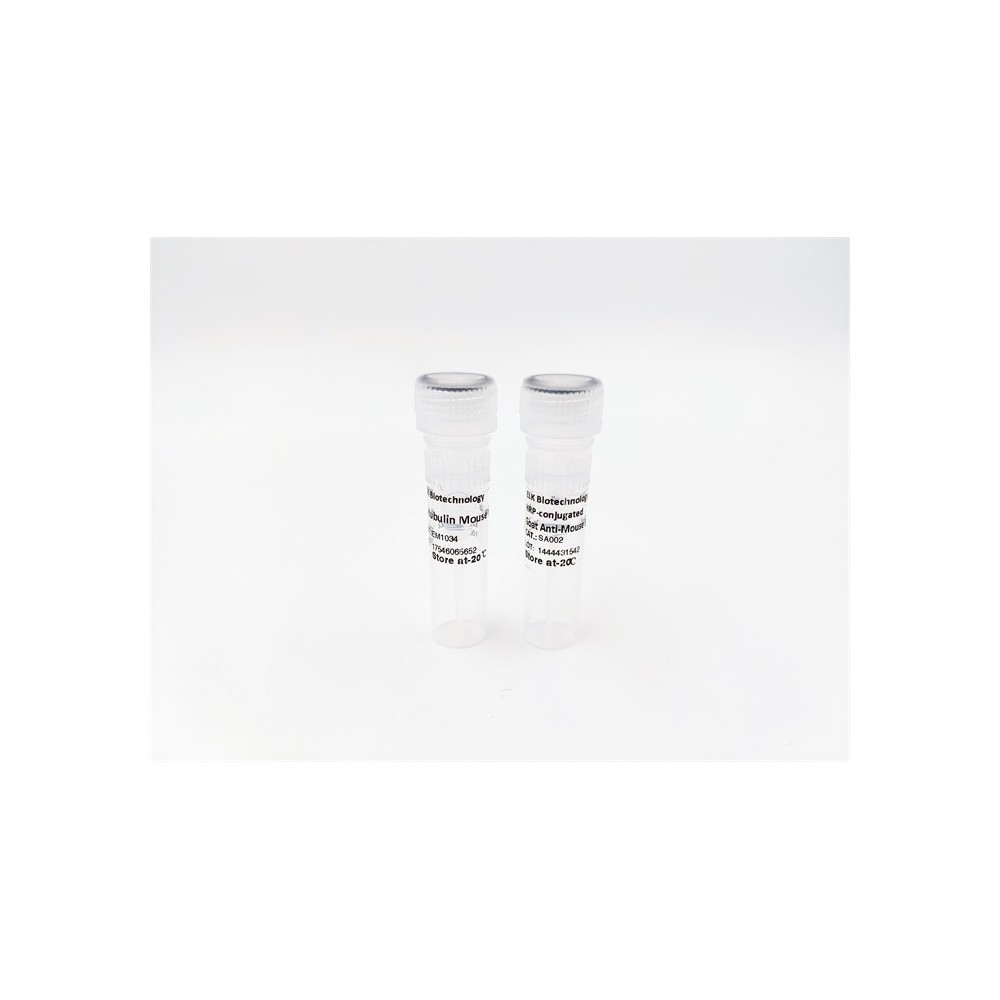

| ELK.No | ES6387 |
| Product name | IκB-ε rabbit pAb |
| Reactivity | Human;Mouse;Rat |
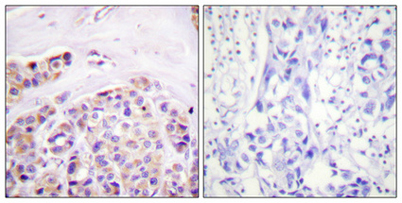
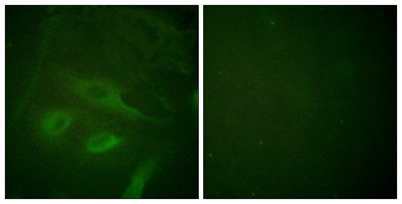
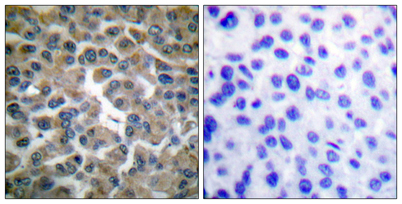
| Applications | WB;IHC;IF;ELISA |
| Other name | NFKBIE; IKBE; NF-kappa-B inhibitor epsilon; NF-kappa-BIE; I-kappa-B-epsilon; IkB-E; IkB-epsilon; IkappaBepsilon |
| Size | 50μL |
| Unit price ($) | 148 |
| Human gene ID | 4794 |
| Human Swiss-Prot | O00221 |
| Source | Rabbit |
| Isotype | IgG |
| Target | IκB-ε |
| Fields | >>Th1 and Th2 cell differentiation;>>Th17 cell differentiation;>>T cell receptor signaling pathway;>>B cell receptor signaling pathway;>>Neurotrophin signaling pathway;>>Adipocytokine signaling pathway;>>Epstein-Barr virus infection;>>PD-L1 expression and PD-1 checkpoint pathway in cancer |
| Gene name | NFKBIE |
| Protein name | NF-kappa-B inhibitor epsilon |
| Human gene link | View Human Gene |
| Human Swiss link | View Human Swiss-Prot |
| Mouse gene ID | 18037 |
| Mouse gene link | View Mouse Gene |
| Mouse Swiss-Prot | O54910 |
| Mouse Swiss link | View Mouse Swiss-Prot |
| Rat gene ID | |
| Rat gene link | |
| Rat Swiss-Prot | |
| Rat Swiss link | |
| Immunogen | The antiserum was produced against synthesized peptide derived from human IkappaB-epsilon. AA range:131-180 |
| Specificity | IκB-ε Polyclonal Antibody detects endogenous levels of IκB-ε protein. |
| Formulation | Liquid in PBS containing 50% glycerol, 0.5% BSA and 0.02% sodium azide. |
| Clonality | Polyclonal |
| Dilution | Western Blot: 1/500 - 1/2000. Immunohistochemistry: 1/100 - 1/300. Immunofluorescence: 1/200 - 1/1000. ELISA: 1/40000. Not yet tested in other applications. |
| Purification | The antibody was affinity-purified from rabbit antiserum by affinity-chromatography using epitope-specific immunogen. |
| Concentration | 1 mg/ml |
| Storage stability | -20°C/1 year |
| Molecular Weight (Da) | |
| Observed band (KD) | 45kD |
| Background | The protein encoded by this gene binds to components of NF-kappa-B, trapping the complex in the cytoplasm and preventing it from activating genes in the nucleus. Phosphorylation of the encoded protein targets it for destruction by the ubiquitin pathway, which activates NF-kappa-B by making it available to translocate to the nucleus. [provided by RefSeq, Sep 2011], |
| Function | function:Inhibits NF-kappa-B by complexing with and trapping it in the cytoplasm. Inhibits DNA-binding of NF-kappa-B p50-p65 and p50-c-Rel complexes.,PTM:Serine phosphorylated; followed by proteasome-dependent degradation.,similarity:Belongs to the NF-kappa-B inhibitor family.,similarity:Contains 6 ANK repeats.,subunit:Interacts with RELA, REL, NFKB1 nuclear factor NF-kappa-B p50 subunit and NFKB2 nuclear factor NF-kappa-B p52 subunit.,tissue specificity:Highly expressed in spleen, testis and lung, followed by kidney, pancreas, heart, placenta and brain. Also expressed in granulocytes and macrophages., |
| Subcellular location | Cytoplasm . |
| Expression | Highly expressed in spleen, testis and lung, followed by kidney, pancreas, heart, placenta and brain. Also expressed in granulocytes and macrophages. |

Use collapsible tabs for more detailed information that will help customers make a purchasing decision.
Ex: Shipping and return policies, size guides, and other common questions.