 Français
 English
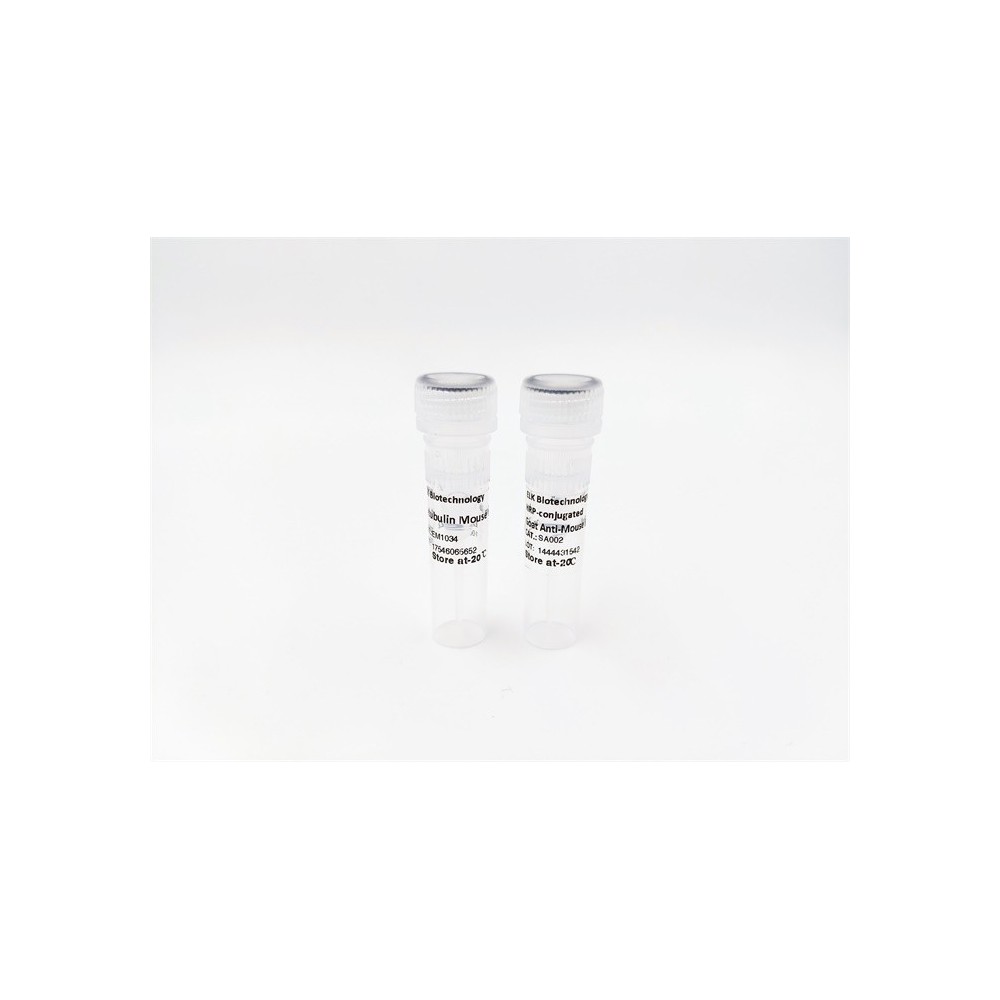

| ELK.No | ES6537 |
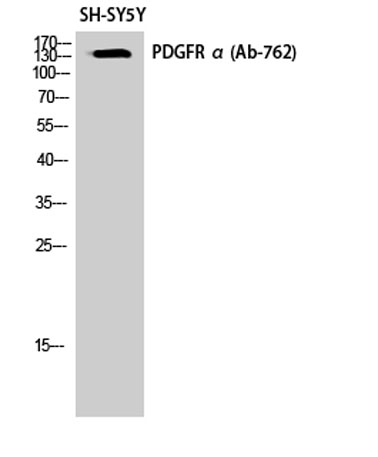
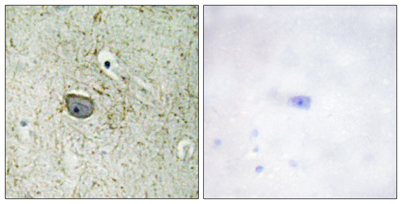
| Product name | PDGFR-α rabbit pAb |
| Reactivity | Human;Mouse;Rat |
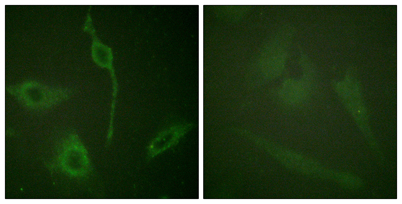
| Applications | WB;IHC;IF;ELISA |
| Other name | PDGFRA; PDGFR2; RHEPDGFRA; Platelet-derived growth factor receptor alpha; PDGF-R-alpha; PDGFR-alpha; Alpha platelet-derived growth factor receptor; Alpha-type platelet-derived growth factor receptor; CD140 antigen-like family member A; CD14 |
| Size | 100μL |
| Unit price ($) | 248 |
| Human gene ID | 5156 |
| Human Swiss-Prot | P16234 |
| Source | Rabbit |
| Isotype | IgG |
| Target | PDGF Receptor α |
| Fields | |
| Gene name | PDGFRA |
| Protein name | Platelet-derived growth factor receptor alpha |
| Human gene link | View Human Gene |
| Human Swiss link | View Human Swiss-Prot |
| Mouse gene ID | 18595 |
| Mouse gene link | View Mouse Gene |
| Mouse Swiss-Prot | P26618 |
| Mouse Swiss link | View Mouse Swiss-Prot |
| Rat gene ID | 25267 |
| Rat gene link | View Rat Gene |
| Rat Swiss-Prot | P20786 |
| Rat Swiss link | View Rat Swiss-Prot |
| Immunogen | The antiserum was produced against synthesized peptide derived from human PDGFR alpha. AA range:731-780 |
| Specificity | PDGFR-α Polyclonal Antibody detects endogenous levels of PDGFR-α protein. |
| Formulation | Liquid in PBS containing 50% glycerol, 0.5% BSA and 0.02% sodium azide. |
| Clonality | Polyclonal |
| Dilution | Immunohistochemistry: 1/100 - 1/300. Immunofluorescence: 1/200 - 1/1000. ELISA: 1/5000. Not yet tested in other applications. |
| Purification | The antibody was affinity-purified from rabbit antiserum by affinity-chromatography using epitope-specific immunogen. |
| Concentration | 1 mg/ml |
| Storage stability | -20°C/1 year |
| Molecular Weight (Da) | 122670 |
| Observed band (KD) | |
| Background | This gene encodes a cell surface tyrosine kinase receptor for members of the platelet-derived growth factor family. These growth factors are mitogens for cells of mesenchymal origin. The identity of the growth factor bound to a receptor monomer determines whether the functional receptor is a homodimer or a heterodimer, composed of both platelet-derived growth factor receptor alpha and beta polypeptides. Studies suggest that this gene plays a role in organ development, wound healing, and tumor progression. Mutations in this gene have been associated with idiopathic hypereosinophilic syndrome, somatic and familial gastrointestinal stromal tumors, and a variety of other cancers. [provided by RefSeq, Mar 2012], |
| Function | catalytic activity:ATP + a [protein]-L-tyrosine = ADP + a [protein]-L-tyrosine phosphate.,disease:A fusion of PDGFRA and FIP1L1 (FIP1L1-PDGFRA), due to an interstitial chromosomal deletion, is the cause of some cases of hypereosinophilic syndrome (HES) [MIM:607685]. HES is a rare hematologic disorder characterized by sustained overproduction of eosinophils in the bone marrow, eosinophilia, tissue infiltration and organ damage.,function:Receptor that binds both PDGFA and PDGFB and has a tyrosine-protein kinase activity.,similarity:Belongs to the protein kinase superfamily. Tyr protein kinase family. CSF-1/PDGF receptor subfamily.,similarity:Contains 1 protein kinase domain.,similarity:Contains 5 Ig-like C2-type (immunoglobulin-like) domains.,subunit:Homodimer, and heterodimer with PDGFRB. Interacts with the SH2 domain of SHB via phosphorylated Tyr-720 (By similarity). Interacts with the S |
| Subcellular location | Cell membrane ; Single-pass type I membrane protein . Cell projection, cilium . Golgi apparatus . |
| Expression | Detected in platelets (at protein level). Widely expressed. Detected in brain, fibroblasts, smooth muscle, heart, and embryo. Expressed in primary and metastatic colon tumors and in normal colon tissue. |

Use collapsible tabs for more detailed information that will help customers make a purchasing decision.
Ex: Shipping and return policies, size guides, and other common questions.