 Français
 English
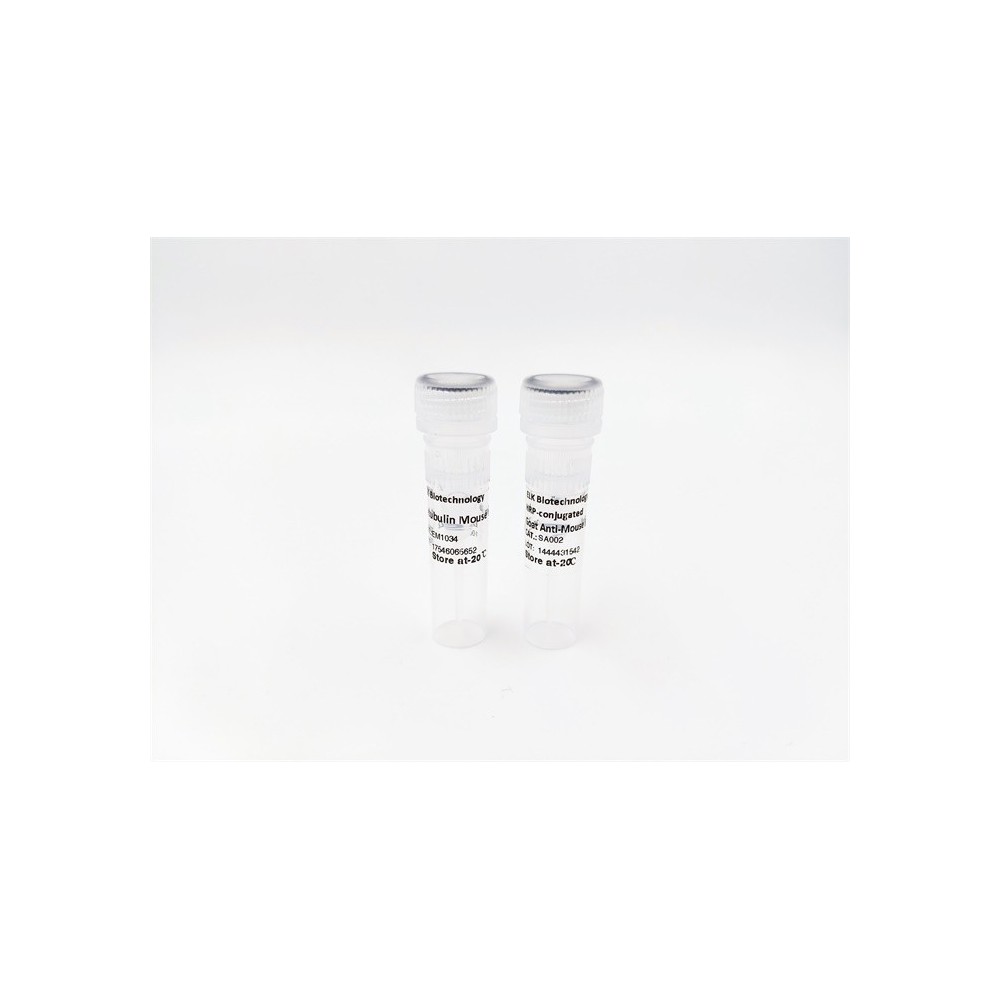

| ELK.No | ES6558 |
| Product name | GPRC5B rabbit pAb |
| Reactivity | Human;Rat;Mouse; |
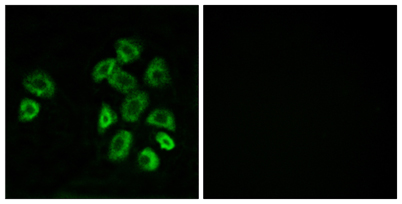
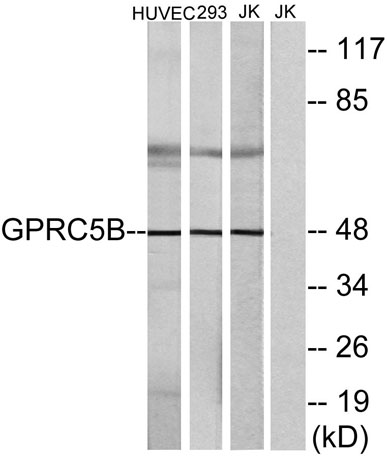
| Applications | WB;IF;ELISA |
| Other name | GPRC5B; RAIG2; G-protein coupled receptor family C group 5 member B; A-69G12.1; Retinoic acid-induced gene 2 protein; RAIG-2 |
| Size | 100μL |
| Unit price ($) | 248 |
| Human gene ID | 51704 |
| Human Swiss-Prot | Q9NZH0 |
| Source | Rabbit |
| Isotype | IgG |
| Target | GPRC5B |
| Fields | |
| Gene name | GPRC5B |
| Protein name | G-protein coupled receptor family C group 5 member B |
| Human gene link | View Human Gene |
| Human Swiss link | View Human Swiss-Prot |
| Mouse gene ID | |
| Mouse gene link | |
| Mouse Swiss-Prot | Q923Z0 |
| Mouse Swiss link | View Mouse Swiss-Prot |
| Rat gene ID | |
| Rat gene link | |
| Rat Swiss-Prot | |
| Rat Swiss link | |
| Immunogen | The antiserum was produced against synthesized peptide derived from human GPRC5B. AA range:61-110 |
| Specificity | GPRC5B Polyclonal Antibody detects endogenous levels of GPRC5B protein. |
| Formulation | Liquid in PBS containing 50% glycerol, 0.5% BSA and 0.02% sodium azide. |
| Clonality | Polyclonal |
| Dilution | Western Blot: 1/500 - 1/2000. Immunofluorescence: 1/200 - 1/1000. ELISA: 1/5000. Not yet tested in other applications. |
| Purification | The antibody was affinity-purified from rabbit antiserum by affinity-chromatography using epitope-specific immunogen. |
| Concentration | 1 mg/ml |
| Storage stability | -20°C/1 year |
| Molecular Weight (Da) | |
| Observed band (KD) | 48kD |
| Background | This gene encodes a member of the type 3 G protein-coupled receptor family. Members of this superfamily are characterized by a signature 7-transmembrane domain motif. The encoded protein may modulate insulin secretion and increased protein expression is associated with type 2 diabetes. Alternative splicing results in multiple transcript variants. [provided by RefSeq, Feb 2015], |
| Function | caution:It is uncertain whether Met-1 or Met-9 is the initiator.,function:Unknown. This retinoic acid-inducible G-protein coupled receptor provide evidence for a possible interaction between retinoid and G-protein signaling pathways.,induction:By all-trans retinoic acid (ATRA).,similarity:Belongs to the G-protein coupled receptor 3 family.,subcellular location:Localized in the plasma membrane and perinuclear vesicles.,tissue specificity:Expression is high in kidney, pancreas, and testis, medium in brain, heart, prostate, small intestine, and spleen, low in liver, placenta, skeletal muscle, colon, ovary, and thymus, and not detectable in lung and peripheral leukocyte. According to PubMed:10945465: highly expressed in most brain areas examined, with the highest levels observed in corpus callosum, caudate nucleus, putamen, substantia nigra, thalamus, hippocampus, and spinal chord as well as |
| Subcellular location | Cell membrane ; Multi-pass membrane protein . Cytoplasmic vesicle membrane ; Multi-pass membrane protein . Localized in the plasma membrane and perinuclear vesicles. |
| Expression | Expression is high in kidney, pancreas, and testis, medium in brain, heart, prostate, small intestine, and spleen, low in liver, placenta, skeletal muscle, colon, ovary, and thymus, and not detectable in lung and peripheral leukocyte. According to PubMed:10945465, highly expressed in most brain areas examined, with the highest levels observed in corpus callosum, caudate nucleus, putamen, substantia nigra, thalamus, hippocampus, and spinal cord as well as in dorsal root ganglia (DRG). In the periphery, expression levels are relatively low, compared to the CNS, with the strongest expression detected in pancreas, testis, uterus, and stomach. |

Use collapsible tabs for more detailed information that will help customers make a purchasing decision.
Ex: Shipping and return policies, size guides, and other common questions.