 Français
 English
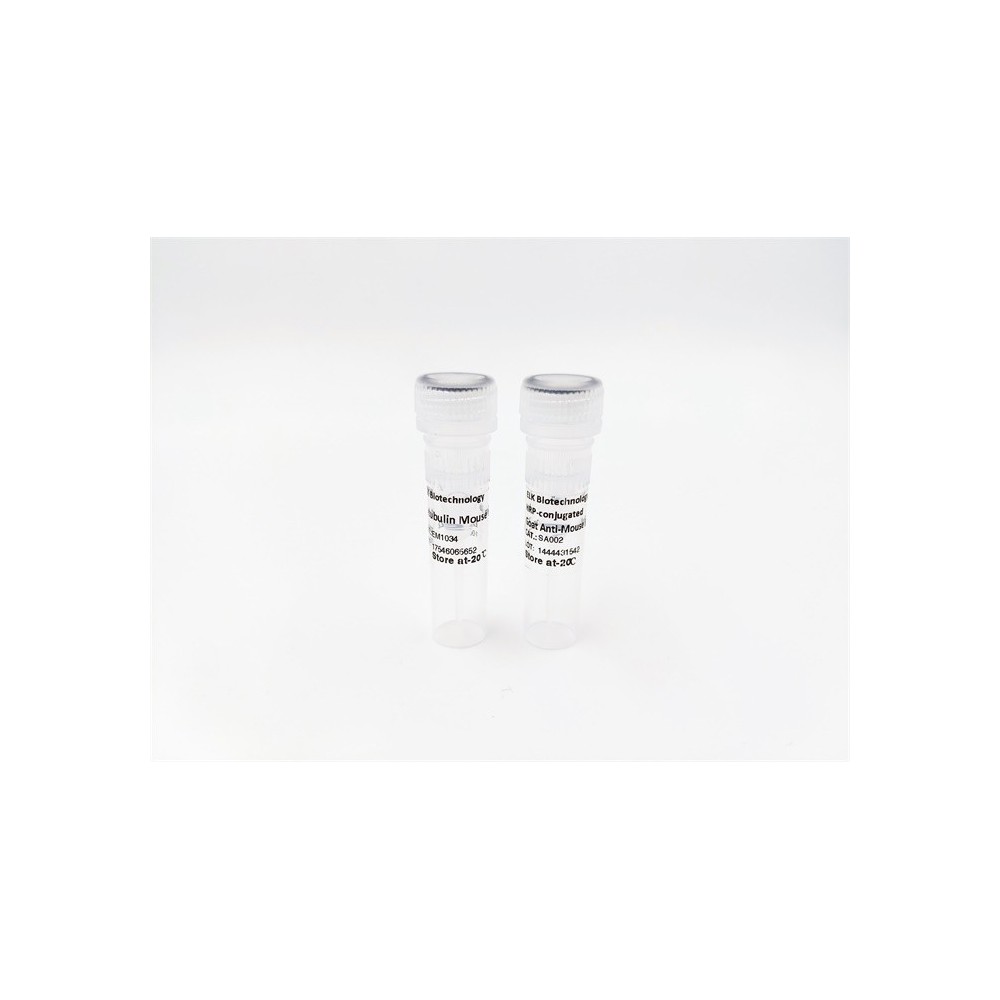

| ELK.No | ES6595 |
| Product name | Pin1 rabbit pAb |
| Reactivity | Human;Mouse;Rat |
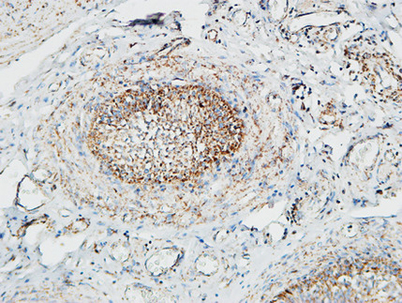
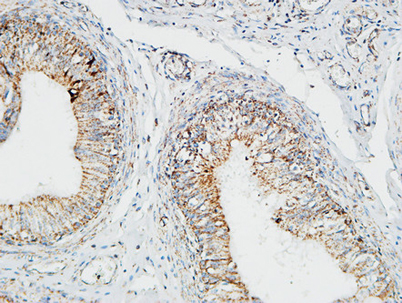
| Applications | IHC;IF;ELISA |
| Other name | PIN1; Peptidyl-prolyl cis-trans isomerase NIMA-interacting 1; Peptidyl-prolyl cis-trans isomerase Pin1; PPIase Pin1; Rotamase Pin1 |
| Size | 50μL |
| Unit price ($) | 148 |
| Human gene ID | 5300 |
| Human Swiss-Prot | Q13526 |
| Source | Rabbit |
| Isotype | IgG |
| Target | Pin1 |
| Fields | >>Viral life cycle - HIV-1;>>RIG-I-like receptor signaling pathway |
| Gene name | PIN1 |
| Protein name | Peptidyl-prolyl cis-trans isomerase NIMA-interacting 1 |
| Human gene link | View Human Gene |
| Human Swiss link | View Human Swiss-Prot |
| Mouse gene ID | 23988 |
| Mouse gene link | View Mouse Gene |
| Mouse Swiss-Prot | Q9QUR7 |
| Mouse Swiss link | View Mouse Swiss-Prot |
| Rat gene ID | |
| Rat gene link | |
| Rat Swiss-Prot | |
| Rat Swiss link | |
| Immunogen | The antiserum was produced against synthesized peptide derived from human Pin1. AA range:1-50 |
| Specificity | Pin1 Polyclonal Antibody detects endogenous levels of Pin1 protein. |
| Formulation | Liquid in PBS containing 50% glycerol, 0.5% BSA and 0.02% sodium azide. |
| Clonality | Polyclonal |
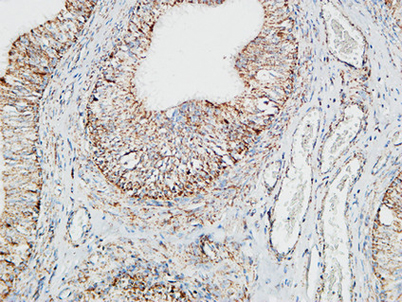
| Dilution | Immunohistochemistry: 1/100 - 1/300. Immunofluorescence: 1/200 - 1/1000. ELISA: 1/5000. Not yet tested in other applications. |
| Purification | The antibody was affinity-purified from rabbit antiserum by affinity-chromatography using epitope-specific immunogen. |
| Concentration | 1 mg/ml |
| Storage stability | -20°C/1 year |
| Molecular Weight (Da) | 18kD |
| Observed band (KD) | |
| Background | Peptidyl-prolyl cis/trans isomerases (PPIases) catalyze the cis/trans isomerization of peptidyl-prolyl peptide bonds. This gene encodes one of the PPIases, which specifically binds to phosphorylated ser/thr-pro motifs to catalytically regulate the post-phosphorylation conformation of its substrates. The conformational regulation catalyzed by this PPIase has a profound impact on key proteins involved in the regulation of cell growth, genotoxic and other stress responses, the immune response, induction and maintenance of pluripotency, germ cell development, neuronal differentiation, and survival. This enzyme also plays a key role in the pathogenesis of Alzheimer's disease and many cancers. Multiple alternatively spliced transcript variants have been found for this gene.[provided by RefSeq, Jun 2011], |
| Function | catalytic activity:Peptidylproline (omega=180) = peptidylproline (omega=0).,domain:The WW domain is required for the interaction with STIL and MPHOSPH1.,function:Essential PPIase that regulates mitosis presumably by interacting with NIMA and attenuating its mitosis-promoting activity. Displays a preference for an acidic residue N-terminal to the isomerized proline bond. Catalyzing pSer/Thr-Pro cis/trans isomerizations.,PTM:Phosphorylated upon DNA damage, probably by ATM or ATR.,similarity:Contains 1 PpiC domain.,similarity:Contains 1 WW domain.,subunit:Interacts with STIL (By similarity). Interacts with MPHOSPH1., |
| Subcellular location | Nucleus . Nucleus speckle . Cytoplasm . Colocalizes with NEK6 in the nucleus (PubMed:16476580). Mainly localized in the nucleus but phosphorylation at Ser-71 by DAPK1 results in inhibition of its nuclear localization (PubMed:21497122). . |
| Expression | Expressed in immune cells in the lung (at protein level) (PubMed:29686383). The phosphorylated form at Ser-71 is expressed in normal breast tissue cells but not in breast cancer cells. |

Use collapsible tabs for more detailed information that will help customers make a purchasing decision.
Ex: Shipping and return policies, size guides, and other common questions.