 Français
 English
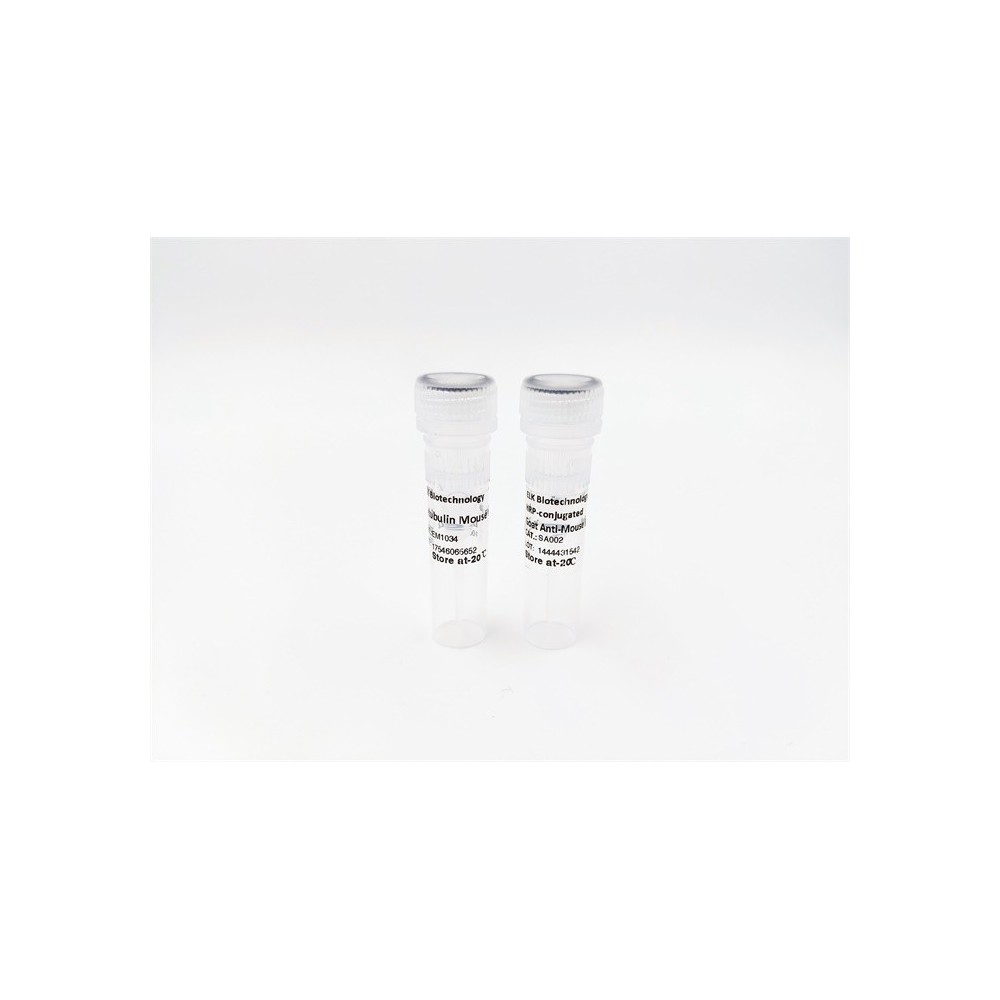

| ELK.No | ES6628 |
| Product name | FGFR-5 rabbit pAb |
| Reactivity | Human;Mouse |
| Applications | WB;ELISA |
| Other name | FGFRL1; FGFR5; FHFR; Fibroblast growth factor receptor-like 1; FGF receptor-like protein 1; FGF homologous factor receptor; FGFR-like protein; Fibroblast growth factor receptor 5; FGFR-5 |
| Size | 100μL |
| Unit price ($) | 248 |
| Human gene ID | 53834 |
| Human Swiss-Prot | Q8N441 |
| Source | Rabbit |
| Isotype | IgG |
| Target | FGFR-5 |
| Fields | |
| Gene name | FGFRL1 |
| Protein name | Fibroblast growth factor receptor-like 1 |
| Human gene link | View Human Gene |
| Human Swiss link | View Human Swiss-Prot |
| Mouse gene ID | 116701 |
| Mouse gene link | View Mouse Gene |
| Mouse Swiss-Prot | Q91V87 |
| Mouse Swiss link | View Mouse Swiss-Prot |
| Rat gene ID | |
| Rat gene link | |
| Rat Swiss-Prot | |
| Rat Swiss link | |
| Immunogen | Synthesized peptide derived from FGFR-5 . at AA range: 130-210 |
| Specificity | FGFR-5 Polyclonal Antibody detects endogenous levels of FGFR-5 protein. |
| Formulation | Liquid in PBS containing 50% glycerol, 0.5% BSA and 0.02% sodium azide. |
| Clonality | Polyclonal |
| Dilution | Western Blot: 1/500 - 1/2000. ELISA: 1/40000. Not yet tested in other applications. |
| Purification | The antibody was affinity-purified from rabbit antiserum by affinity-chromatography using epitope-specific immunogen. |
| Concentration | 1 mg/ml |
| Storage stability | -20°C/1 year |
| Molecular Weight (Da) | |
| Observed band (KD) | 54kD |
| Background | The protein encoded by this gene is a member of the fibroblast growth factor receptor (FGFR) family, where amino acid sequence is highly conserved between members and throughout evolution. FGFR family members differ from one another in their ligand affinities and tissue distribution. A full-length representative protein would consist of an extracellular region, composed of three immunoglobulin-like domains, a single hydrophobic membrane-spanning segment and a cytoplasmic tyrosine kinase domain. The extracellular portion of the protein interacts with fibroblast growth factors, setting in motion a cascade of downstream signals, ultimately influencing mitogenesis and differentiation. A marked difference between this gene product and the other family members is its lack of a cytoplasmic tyrosine kinase domain. The result is a transmembrane receptor that could interact with other |
| Function | function:Has a negative effect on cell proliferation.,similarity:Contains 3 Ig-like C2-type (immunoglobulin-like) domains.,subcellular location:Predominantly localized in the plasma membrane but also detected in the Golgi and in secretory vesicles.,subunit:Interacts with FGF2 with a low affinity.,tissue specificity:Expressed preferentially in cartilaginous tissues and pancreas. Highly expressed in the liver, kidney, heart, brain and skeletal muscle. Weakly expressed in the lung, small intestine and spleen., |
| Subcellular location | Membrane ; Single-pass type I membrane protein . Predominantly localized in the plasma membrane but also detected in the Golgi and in secretory vesicles. |
| Expression | Expressed preferentially in cartilaginous tissues and pancreas. Highly expressed in the liver, kidney, heart, brain and skeletal muscle. Weakly expressed in the lung, small intestine and spleen. |


Use collapsible tabs for more detailed information that will help customers make a purchasing decision.
Ex: Shipping and return policies, size guides, and other common questions.