 Français
 English
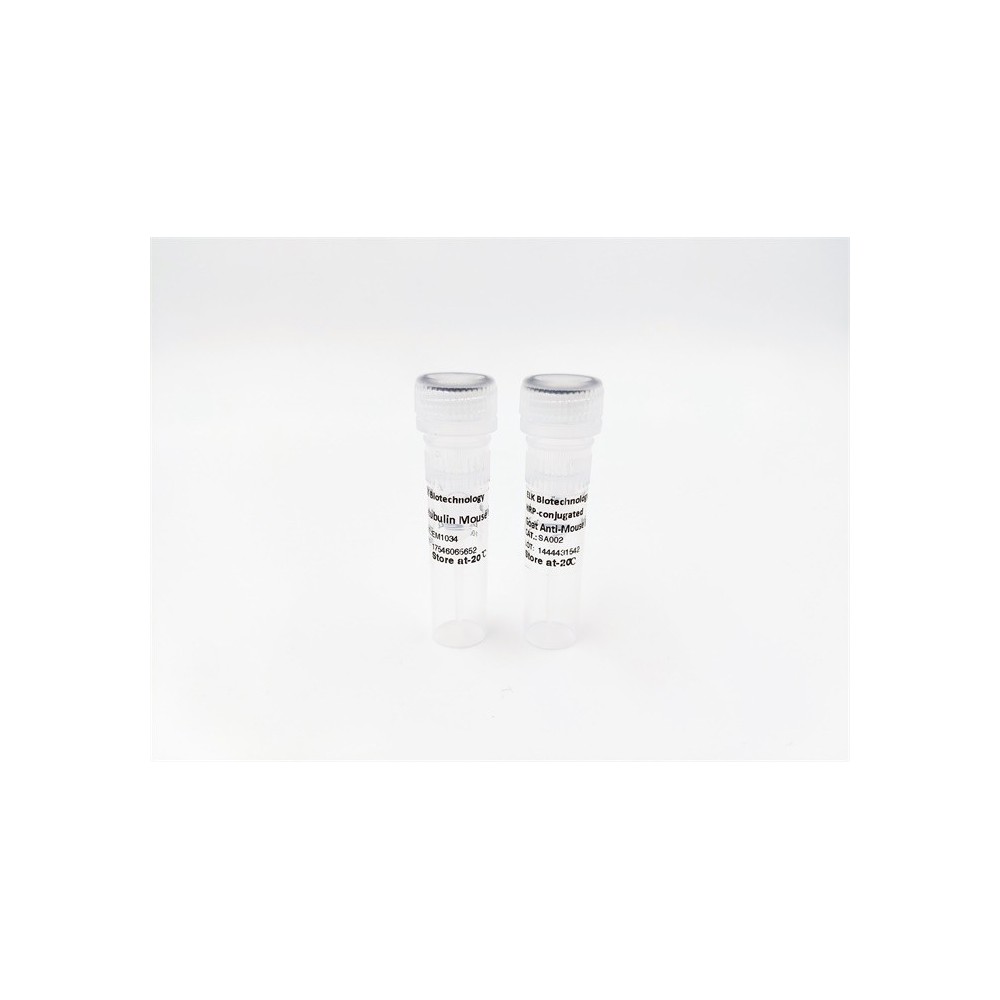

| ELK.No | ES6631 |
| Product name | Contactin 5 rabbit pAb |
| Reactivity | Human;Rat;Mouse; |
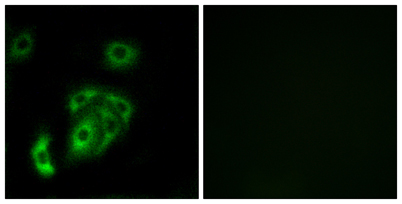
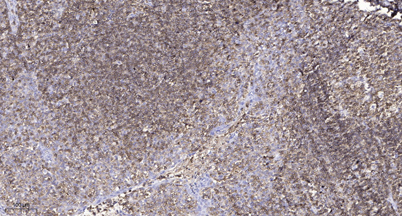
| Applications | IF;IHC;ELISA |
| Other name | CNTN5; Contactin-5; Neural recognition molecule NB-2; hNB-2 |
| Size | 100μL |
| Unit price ($) | 248 |
| Human gene ID | 53942 |
| Human Swiss-Prot | O94779 |
| Source | Rabbit |
| Isotype | IgG |
| Target | Contactin 5 |
| Fields | |
| Gene name | CNTN5 |
| Protein name | Contactin-5 |
| Human gene link | View Human Gene |
| Human Swiss link | View Human Swiss-Prot |
| Mouse gene ID | |
| Mouse gene link | |
| Mouse Swiss-Prot | P68500 |
| Mouse Swiss link | View Mouse Swiss-Prot |
| Rat gene ID | |
| Rat gene link | |
| Rat Swiss-Prot | |
| Rat Swiss link | |
| Immunogen | The antiserum was produced against synthesized peptide derived from human CNTN5. AA range:891-940 |
| Specificity | Contactin 5 Polyclonal Antibody detects endogenous levels of Contactin 5 protein. |
| Formulation | Liquid in PBS containing 50% glycerol, 0.5% BSA and 0.02% sodium azide. |
| Clonality | Polyclonal |
| Dilution | Immunofluorescence: 1/200 - 1/1000. ELISA: 1/20000. Not yet tested in other applications. |
| Purification | The antibody was affinity-purified from rabbit antiserum by affinity-chromatography using epitope-specific immunogen. |
| Concentration | 1 mg/ml |
| Storage stability | -20°C/1 year |
| Molecular Weight (Da) | 121kD |
| Observed band (KD) | |
| Background | The protein encoded by this gene is a member of the immunoglobulin superfamily, and contactin family, which mediate cell surface interactions during nervous system development. This protein is a glycosylphosphatidylinositol (GPI)-anchored neuronal membrane protein that functions as a cell adhesion molecule. It may play a role in the formation of axon connections in the developing nervous system. Alternatively spliced transcript variants encoding different isoforms have been described for this gene. [provided by RefSeq, Aug 2011], |
| Function | function:Contactins mediate cell surface interactions during nervous system development. Has some neurite outgrowth-promoting activity in the cerebral cortical neurons but not in hippocampal neurons. Probably involved in neuronal activity in the auditory system.,similarity:Belongs to the immunoglobulin superfamily. Contactin family.,similarity:Contains 4 fibronectin type-III domains.,similarity:Contains 6 Ig-like C2-type (immunoglobulin-like) domains.,tissue specificity:Expressed in brain and kidney and at very low level in placenta. Not expressed in other tissues. In brain, it is highly expressed in the occipital lobe, amygdala, cerebral cortex, frontal lobe, thalamus and temporal lobe. Expressed at moderate level in the cerebellum, substantia nigra, putamen, medulla and hippocampus. Weakly expressed in the spinal cord and caudate nucleus. Weakly or not expressed in the corpus callosum. |
| Subcellular location | Cell membrane ; Lipid-anchor, GPI-anchor . |
| Expression | Expressed in brain and kidney and at very low level in placenta. Not expressed in other tissues. In brain, it is highly expressed in the occipital lobe, amygdala, cerebral cortex, frontal lobe, thalamus and temporal lobe. Expressed at moderate level in the cerebellum, substantia nigra, putamen, medulla and hippocampus. Weakly expressed in the spinal cord and caudate nucleus. Weakly or not expressed in the corpus callosum. |

Use collapsible tabs for more detailed information that will help customers make a purchasing decision.
Ex: Shipping and return policies, size guides, and other common questions.